
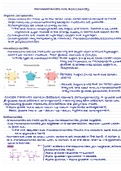
Monosaccharides and disaccharide
organiccompounds
carbon atoms up to four bonds Whencarbon atoms combine to make
can make
large molecules macromolecules biological molecules are produced
Carbohydratesare usable as energysources
The best known carbohydrates are sugars and starch Sucrose is the white
crystallinesugar Glucose is the energysupply in sports and health drinks
carbohydrates are made of hydrogenoxygen and hydrogen
carbohydratesvarycomplexity of molecules monosaccharides disaccharides
and polysaccharides
Monosaccharides
Monosaccharides are molecules containing oneoxygenatom and two hydrogen
atoms per carbon molecule Their general formula is otro n
Threetypes of monosaccharides Triose sugars n 3 Have three carbon atoms
they areimportantin mitochondria where
glucose is broken into trio se sugars in
respiration
Pentosesugars mas have five carbon
atoms
te xo se sugars n 6 Have six carbon atoms
They are the best known monosaccharide
they include glucosegalactose Eructose
Glucose molecules come in different isomers arrangements a glucose and
B glucose have different arrangementsmeaningthey form different bonds with
neighbouringglucose molecules this affects the polymers made
Alphaglucose has a down down up down hydroxidearrangement
Beta glucose has a up down up down hydroxidearrangement
Disaccharides
e Disaccharides are made
up of two monosaccharidesjoinedtogether
Two monosaccharidesjointogether in a condensation reaction where water
isgiven out
The link between two monosaccharides results in a covalent bond known
as a glycosidic bond
Numbers are used to show which carbons are involved in the bond IE carbon I
Ota monosaccharide bonds with a carbon Goethe other then a 1 6glycosidic
bond is formed
When different monosaccharides jointogetherdiceeren
disaccharide result
µ
Alphaglucoset galactose lactose
, Polysaccharides
Polysaccharide
Polysaccharidesaremany mono saccharine unitsjoinedbycondensationreactionsinwhich
theycormglycosidic bonds
Molecules with 3 losugarunits are calledoligosaccharides
Molecules with lit sugar units are calledpolysaccharides
Polysaccharidesare ideal storagemolecules because 1 Theycan Earn compact
molecules many can tit in on
cell
2 Glycosidicbonds areeasily
brokenallowing a rapidreleas
OEmonosaccharidesunits for
cellular respiration
3 Not soluble in water so hav
no effect on the water
concentration OE Cells no
Osmotic movements
Polysaccharides are joinedtogetherby glycosidic bonds In Order to
brake these bonds a hydrolisis reaction needs to occur Duringhydrolisis
Water molecule is added to the bond separating it
Starch
starch structures are long Chains OE a glucose
Starch is an insoluble and Compactenergy Store in plants
starch is Made up of a mixture OE two compounds
Amylase An unbranched polymer with 1 4 glycosidic bonds between
molecules Amylasegives a slow release OE glucose
Amy lopectin Branched polymer with a mixture OE 1 4 and 1 6 gly.cosidi
bonds This arrangement allows branching in the structure branching
gives more surface area for enzymes to act en so it isdecomposed
Easter allowing the respiration rate to increase
Glycogen
Glycogen is the onlycarbohydrateenergy store found in animals
Glycogen has more 1 6glycosidic bonds meaning that it has more branches
decompositionOEglucoseis even Easter so the respiration rate will increase
This makes glycogenappropriate for active tissues
Cellulose
Cell Walls in plants are made out Ofcellulose It is an important feature that
givesplants their rigitystrength and Support
cellulose is made up of a Long Chain OEalternatinginverted and non inverte
B glucose molecules In Order Ear the 1 4glycosidic bond to happen mo nome
Units have to be turned around
Thisflipping around at monomer units results in cellulose being alongstraigh
chain Hydrogen bonds cOrm between Chains to stop them from sliding
, Chemistry for life
water
Wateris a polarmoleculebecauseelectrons in theircovalent bond are notquiteevenlyspli
This allows water moleculesto form hydrogenbonds with other atoms
Electronsarecloserto the oxygen atom making it slightlynegativelycharged
slightlypositivehydrogen s attracts oppositelychargedoxygenatoms from other
watermoleculescreatinga hydrogenbond
An individual hydrogen bond is weak but the large amount of hydrogen
very
bondsgives water highmelting boilingpoints as much energy isrequired to
brake all these bonds
Importance of water
Vater is a polar solventmeaning that ionic substances dissolve in it and those
polar covalent substances will too
At 4 C maximum density is achieved Below 0 C particlesseparate to form
less dense ice floats that acts as a layerof insulation or the water beneath
Lots of energy to heat water so lakes seas and rivers usually have no
quickchanges intemperature
Water has a high surface tension because attraction between water
moleculesisstronger than the one between water and air
This creates a membrane at the surface that acts as a habitat
water molecules are cohesivemeaningthey stick togetherthroughhydrogen
bonds This is crucial for the movement of water from the roots to the leaves
Water is also adhesivemeaning that water particles are attracted to otherparticle
through hydrogenbonds This is crucial in plant transportsystems
Polar solvent allows chemical reactions to occur in cells
2 Transport medium carries nutrients through roots
3 Ice Allows to maintain water temperature stable ensuringlife
4 Highspecific heatcapacity Makes water a stable habitat or livingorganisms
s cohesive water transportagainstgravity
Adhesive transportsystems
7 Surfacetension Additional habitat
organiccompounds
carbon atoms up to four bonds Whencarbon atoms combine to make
can make
large molecules macromolecules biological molecules are produced
Carbohydratesare usable as energysources
The best known carbohydrates are sugars and starch Sucrose is the white
crystallinesugar Glucose is the energysupply in sports and health drinks
carbohydrates are made of hydrogenoxygen and hydrogen
carbohydratesvarycomplexity of molecules monosaccharides disaccharides
and polysaccharides
Monosaccharides
Monosaccharides are molecules containing oneoxygenatom and two hydrogen
atoms per carbon molecule Their general formula is otro n
Threetypes of monosaccharides Triose sugars n 3 Have three carbon atoms
they areimportantin mitochondria where
glucose is broken into trio se sugars in
respiration
Pentosesugars mas have five carbon
atoms
te xo se sugars n 6 Have six carbon atoms
They are the best known monosaccharide
they include glucosegalactose Eructose
Glucose molecules come in different isomers arrangements a glucose and
B glucose have different arrangementsmeaningthey form different bonds with
neighbouringglucose molecules this affects the polymers made
Alphaglucose has a down down up down hydroxidearrangement
Beta glucose has a up down up down hydroxidearrangement
Disaccharides
e Disaccharides are made
up of two monosaccharidesjoinedtogether
Two monosaccharidesjointogether in a condensation reaction where water
isgiven out
The link between two monosaccharides results in a covalent bond known
as a glycosidic bond
Numbers are used to show which carbons are involved in the bond IE carbon I
Ota monosaccharide bonds with a carbon Goethe other then a 1 6glycosidic
bond is formed
When different monosaccharides jointogetherdiceeren
disaccharide result
µ
Alphaglucoset galactose lactose
, Polysaccharides
Polysaccharide
Polysaccharidesaremany mono saccharine unitsjoinedbycondensationreactionsinwhich
theycormglycosidic bonds
Molecules with 3 losugarunits are calledoligosaccharides
Molecules with lit sugar units are calledpolysaccharides
Polysaccharidesare ideal storagemolecules because 1 Theycan Earn compact
molecules many can tit in on
cell
2 Glycosidicbonds areeasily
brokenallowing a rapidreleas
OEmonosaccharidesunits for
cellular respiration
3 Not soluble in water so hav
no effect on the water
concentration OE Cells no
Osmotic movements
Polysaccharides are joinedtogetherby glycosidic bonds In Order to
brake these bonds a hydrolisis reaction needs to occur Duringhydrolisis
Water molecule is added to the bond separating it
Starch
starch structures are long Chains OE a glucose
Starch is an insoluble and Compactenergy Store in plants
starch is Made up of a mixture OE two compounds
Amylase An unbranched polymer with 1 4 glycosidic bonds between
molecules Amylasegives a slow release OE glucose
Amy lopectin Branched polymer with a mixture OE 1 4 and 1 6 gly.cosidi
bonds This arrangement allows branching in the structure branching
gives more surface area for enzymes to act en so it isdecomposed
Easter allowing the respiration rate to increase
Glycogen
Glycogen is the onlycarbohydrateenergy store found in animals
Glycogen has more 1 6glycosidic bonds meaning that it has more branches
decompositionOEglucoseis even Easter so the respiration rate will increase
This makes glycogenappropriate for active tissues
Cellulose
Cell Walls in plants are made out Ofcellulose It is an important feature that
givesplants their rigitystrength and Support
cellulose is made up of a Long Chain OEalternatinginverted and non inverte
B glucose molecules In Order Ear the 1 4glycosidic bond to happen mo nome
Units have to be turned around
Thisflipping around at monomer units results in cellulose being alongstraigh
chain Hydrogen bonds cOrm between Chains to stop them from sliding
, Chemistry for life
water
Wateris a polarmoleculebecauseelectrons in theircovalent bond are notquiteevenlyspli
This allows water moleculesto form hydrogenbonds with other atoms
Electronsarecloserto the oxygen atom making it slightlynegativelycharged
slightlypositivehydrogen s attracts oppositelychargedoxygenatoms from other
watermoleculescreatinga hydrogenbond
An individual hydrogen bond is weak but the large amount of hydrogen
very
bondsgives water highmelting boilingpoints as much energy isrequired to
brake all these bonds
Importance of water
Vater is a polar solventmeaning that ionic substances dissolve in it and those
polar covalent substances will too
At 4 C maximum density is achieved Below 0 C particlesseparate to form
less dense ice floats that acts as a layerof insulation or the water beneath
Lots of energy to heat water so lakes seas and rivers usually have no
quickchanges intemperature
Water has a high surface tension because attraction between water
moleculesisstronger than the one between water and air
This creates a membrane at the surface that acts as a habitat
water molecules are cohesivemeaningthey stick togetherthroughhydrogen
bonds This is crucial for the movement of water from the roots to the leaves
Water is also adhesivemeaning that water particles are attracted to otherparticle
through hydrogenbonds This is crucial in plant transportsystems
Polar solvent allows chemical reactions to occur in cells
2 Transport medium carries nutrients through roots
3 Ice Allows to maintain water temperature stable ensuringlife
4 Highspecific heatcapacity Makes water a stable habitat or livingorganisms
s cohesive water transportagainstgravity
Adhesive transportsystems
7 Surfacetension Additional habitat



