

Topic 14 Nucleic acid structure
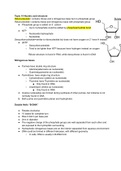
Ribonucleoside= contains ribose and a nitrogenous base but no phosphate group
Ribonucleotide= contains ribose and nitrogenous base with phosphate group
● Phosphate group is added on 5` carbon
○ Up to 3 phosphate could be added by phosphoanhydride bond
● NTP
○ Nucleoside triphosphate
○ Nucleotide
Deoxyribonucleotide=similar to ribonucleotide but does not have oxygen on 2` have H instead
● dNTP
○ Deoxyribonucleotide
○ Tend to be lighter than NTP because have hydrogen instead on oxygen
Ribose structure is found in RNA, while deoxyribose is found in DNA
Nitrogenous bases
● Purines-have double ring structure
○ Adenine(adenosine as nucleoside)
○ Guanine(guanosine as nucleoside)
● Pyrimidines- have single ring structure
○ Cytosine(have cytidine as nucleoside)
○ Thymine( have Thymidine as nucleoside)
■ Only found in DNA
○ Uracil(have Uridine as nucleoside)
■ Only found in RNA
A. Inosine nucleosides are formed during synthesis of other purines, but indosine is not
normally found in DNA
B. Both purine and pyrimidine planar and hydrophobic
Double Helix “B-DNA”
● Rotates clockwise
● 10 bases for complete turn
● Rise 0.34nm per base pair
● 2nm in diameter
● The negative charge of the phosphate groups are well separated from each other and
are exposed to the hydrophilic surrounding
● Hydrophobic nitrogenous bases are on the interior separated from aqueous environment
● DNA could be formed in different helicases, with different geometry
○ In cells, DNA is usually in B-DNA form
,Forces stabilizing the double helix
1. Base stacking-major contributor to stability of double helix
Planar base allows them to stack on top of each other. Stabilize by interaction between
transient induced dipoles on the ring (London Force). Is not sequence specific.
2. Base pairing
Hydrogen bond between chemical groups(G-C, A-T). Must be sequence specific(Follows
Watson-Crick base pairing).
Nucleic acid stability
● Strands separate(denature) when heated and anneal(renature) when cooled
● Tm increases as:
○ Length of the DNA strand increases-would have more hydrogen bond present
○ Percentage of GC pairs increase -GC have triple bond, and have more strength
○ Complementarity increases -more valid bond present, stronger bond
○ Salt concentration increases -Extrinsic factor
○ Organic solvent decreases - Extrinsic Factor
○ Urea or Formamide decreases - Extrinsic Factor
● Extreme of pH would lower Tm
Difference between DNA and RNA
1. DNA have deoxyribose, RNA have ribose
, 2. In DNA,Thymine is present, In RNA Uracil is used
3. DNA is larger than RNA. RNA is always shorter because it is made from DNA. DNA is
long because it holds genetic materials, while RNA also hold genetic materials but also
have other functions.
4. DNA tends to be double stranded. RNA single stranded, binds to it’s own complementary
strand
5. DNA have few base modification, but RNA have many base modification. Both DNA and
RNA could be modified but DNA less modification with less variation.
RNA structure
Example: tRNA
● Long RNA strand usually remain single stranded and form complex.
● 4 self-complementary are found in the core structure of a tRNA molecule
● Single stranded RNA would fold into each other
○ Would make internal helical structure
● Hair pin loop
○ Pair on antiparallel way, complementary to each other
● RNA structure is sequence dependent
Human DNA must be condensed
● Chromatin=DNA plus associated packaging proteins
● Histones are protein that packages DNA
○ Histones fewer than 200 amino acids
○ Positively charged to have attraction for DNA
● Histones sequence similar among different organisms. This is because of conserved
mutation. If there's a mutation in histone, organisms would not be able to survive.
Ribonucleoside= contains ribose and a nitrogenous base but no phosphate group
Ribonucleotide= contains ribose and nitrogenous base with phosphate group
● Phosphate group is added on 5` carbon
○ Up to 3 phosphate could be added by phosphoanhydride bond
● NTP
○ Nucleoside triphosphate
○ Nucleotide
Deoxyribonucleotide=similar to ribonucleotide but does not have oxygen on 2` have H instead
● dNTP
○ Deoxyribonucleotide
○ Tend to be lighter than NTP because have hydrogen instead on oxygen
Ribose structure is found in RNA, while deoxyribose is found in DNA
Nitrogenous bases
● Purines-have double ring structure
○ Adenine(adenosine as nucleoside)
○ Guanine(guanosine as nucleoside)
● Pyrimidines- have single ring structure
○ Cytosine(have cytidine as nucleoside)
○ Thymine( have Thymidine as nucleoside)
■ Only found in DNA
○ Uracil(have Uridine as nucleoside)
■ Only found in RNA
A. Inosine nucleosides are formed during synthesis of other purines, but indosine is not
normally found in DNA
B. Both purine and pyrimidine planar and hydrophobic
Double Helix “B-DNA”
● Rotates clockwise
● 10 bases for complete turn
● Rise 0.34nm per base pair
● 2nm in diameter
● The negative charge of the phosphate groups are well separated from each other and
are exposed to the hydrophilic surrounding
● Hydrophobic nitrogenous bases are on the interior separated from aqueous environment
● DNA could be formed in different helicases, with different geometry
○ In cells, DNA is usually in B-DNA form
,Forces stabilizing the double helix
1. Base stacking-major contributor to stability of double helix
Planar base allows them to stack on top of each other. Stabilize by interaction between
transient induced dipoles on the ring (London Force). Is not sequence specific.
2. Base pairing
Hydrogen bond between chemical groups(G-C, A-T). Must be sequence specific(Follows
Watson-Crick base pairing).
Nucleic acid stability
● Strands separate(denature) when heated and anneal(renature) when cooled
● Tm increases as:
○ Length of the DNA strand increases-would have more hydrogen bond present
○ Percentage of GC pairs increase -GC have triple bond, and have more strength
○ Complementarity increases -more valid bond present, stronger bond
○ Salt concentration increases -Extrinsic factor
○ Organic solvent decreases - Extrinsic Factor
○ Urea or Formamide decreases - Extrinsic Factor
● Extreme of pH would lower Tm
Difference between DNA and RNA
1. DNA have deoxyribose, RNA have ribose
, 2. In DNA,Thymine is present, In RNA Uracil is used
3. DNA is larger than RNA. RNA is always shorter because it is made from DNA. DNA is
long because it holds genetic materials, while RNA also hold genetic materials but also
have other functions.
4. DNA tends to be double stranded. RNA single stranded, binds to it’s own complementary
strand
5. DNA have few base modification, but RNA have many base modification. Both DNA and
RNA could be modified but DNA less modification with less variation.
RNA structure
Example: tRNA
● Long RNA strand usually remain single stranded and form complex.
● 4 self-complementary are found in the core structure of a tRNA molecule
● Single stranded RNA would fold into each other
○ Would make internal helical structure
● Hair pin loop
○ Pair on antiparallel way, complementary to each other
● RNA structure is sequence dependent
Human DNA must be condensed
● Chromatin=DNA plus associated packaging proteins
● Histones are protein that packages DNA
○ Histones fewer than 200 amino acids
○ Positively charged to have attraction for DNA
● Histones sequence similar among different organisms. This is because of conserved
mutation. If there's a mutation in histone, organisms would not be able to survive.


