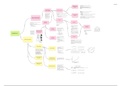
Proximity -Adjust
WLC
s
de
clu - Based on the idea of adjusting preferences
In according to the spatial relationship between
Weighted Linear alternatives, or an alternative and some
Combination reference locations:
es
lud
Criterion weights Inc
In
Weighted Linear des
clu
Inclu
des
Combination Associates with the ith decision alternative
de
(location) a set of criterion weights w1, w2,
s
Inclu
w3, etc. and combines the weights with the
Inc
criterion (attribute) values ai1, ai2 etc (1 =
lud
1,2..) as follows:
es
- Weighted Linear Combination (WLC) is the
Value functions Local WLC
most often used GIS-MADA method
- WLC model consists of two components:
- criterion weights:
- value functions: - The alternative characterized by the
highest value of V(Ai) is the most preferred
Confluence of the two research areas: one)
Includes
- The decision alternative with the highest value of is the most preferred
alternative in the q-th neighborhood
Assigning Weights of
Analytic Hierarchy Constructing an
Step 2 Importance through Step 3
Process steps overall priority rating
Pairwise comparison
Multi-Attribute es
lud
Decision Analysis Inclu
Inc
des AHP procedure involves three main steps:
- Normalization of Matrix C entries:
Analytic Hierarchy Process 1. Developing the AHP hierarchy
2. Assigning weights of importance to each element of the
hierarchical structure
- using the pairwise comparison method
- Then the weights are computes as follows:
Include
3. Constructing an overall priority rating
- One of the most comprehensive methods of
multicriteria decision analysis
s
- Based on three principles:
- Decomposition Hierarchical
- Requires that a decision problem be
decomposed into a hierarchy that captures Structure Analytic Hierarchy
the essential elements of the problem
Inclu Process
- Comparative judgment des
des
- Requires assessment of pairwise
Inclu
comparisons of the elements within a given level
of the hierarchical structure, with respect to their
parent in the next-higher level - Global Method
- Synthesis of priorities
- Takes each of the derived ratio scale priorities
in the various levels of the
hierarchy and constructs a composite set of priorities
for the elements at the
lowest level of the hierarchy (that is, alternatives) Four levels:
- Goal
- Objectives
- Attributes
- Alternatives
Ideal Point Methods Ideal Point Example Example
s
su
r
ve
Reference points
LC
- Based on evaluating decision
W
alternatives with reference to some and Separation Ideal Point Models
specific target or goal Measures
- Ordering a set of decision alternative
on the basis of their separations from
some ideal/reference point
- Reference point: any significant target or goal
against which the decision alternatives are
evaluated Positive model:
- This hypothetical alternative is often defined in
terms of the positive ideal (utopia) point, or
negative ideal (or anti-ideal or nadir) point
- Positive and negative ideal points are determined
as the best and worst possible value achievable by
any alternative, respectively:
Spatially explicit
Negative model:
ideal point model
WLC
s
de
clu - Based on the idea of adjusting preferences
In according to the spatial relationship between
Weighted Linear alternatives, or an alternative and some
Combination reference locations:
es
lud
Criterion weights Inc
In
Weighted Linear des
clu
Inclu
des
Combination Associates with the ith decision alternative
de
(location) a set of criterion weights w1, w2,
s
Inclu
w3, etc. and combines the weights with the
Inc
criterion (attribute) values ai1, ai2 etc (1 =
lud
1,2..) as follows:
es
- Weighted Linear Combination (WLC) is the
Value functions Local WLC
most often used GIS-MADA method
- WLC model consists of two components:
- criterion weights:
- value functions: - The alternative characterized by the
highest value of V(Ai) is the most preferred
Confluence of the two research areas: one)
Includes
- The decision alternative with the highest value of is the most preferred
alternative in the q-th neighborhood
Assigning Weights of
Analytic Hierarchy Constructing an
Step 2 Importance through Step 3
Process steps overall priority rating
Pairwise comparison
Multi-Attribute es
lud
Decision Analysis Inclu
Inc
des AHP procedure involves three main steps:
- Normalization of Matrix C entries:
Analytic Hierarchy Process 1. Developing the AHP hierarchy
2. Assigning weights of importance to each element of the
hierarchical structure
- using the pairwise comparison method
- Then the weights are computes as follows:
Include
3. Constructing an overall priority rating
- One of the most comprehensive methods of
multicriteria decision analysis
s
- Based on three principles:
- Decomposition Hierarchical
- Requires that a decision problem be
decomposed into a hierarchy that captures Structure Analytic Hierarchy
the essential elements of the problem
Inclu Process
- Comparative judgment des
des
- Requires assessment of pairwise
Inclu
comparisons of the elements within a given level
of the hierarchical structure, with respect to their
parent in the next-higher level - Global Method
- Synthesis of priorities
- Takes each of the derived ratio scale priorities
in the various levels of the
hierarchy and constructs a composite set of priorities
for the elements at the
lowest level of the hierarchy (that is, alternatives) Four levels:
- Goal
- Objectives
- Attributes
- Alternatives
Ideal Point Methods Ideal Point Example Example
s
su
r
ve
Reference points
LC
- Based on evaluating decision
W
alternatives with reference to some and Separation Ideal Point Models
specific target or goal Measures
- Ordering a set of decision alternative
on the basis of their separations from
some ideal/reference point
- Reference point: any significant target or goal
against which the decision alternatives are
evaluated Positive model:
- This hypothetical alternative is often defined in
terms of the positive ideal (utopia) point, or
negative ideal (or anti-ideal or nadir) point
- Positive and negative ideal points are determined
as the best and worst possible value achievable by
any alternative, respectively:
Spatially explicit
Negative model:
ideal point model