NURS 5334 Pharmacology Module 1 Quiz - See Attached Bundle
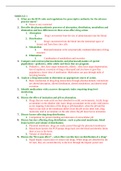
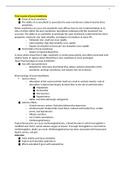
MODULE 1 1. What are the BON rules and regulations for prescriptive authority for the advance practice nurse? 1. Texas is very restricted 2. Describe the pharmacokinetic processes of absorption, distribution, metabolism and elimination and how differences in these areas affect drug action. 1. Absorption 1. Drug’s movement from the site of administration into the blood. 2. Distribution 1. Drug’s movement from the blood into the interstitial space of tissues and from there into cells. 3. Metabolism 1. Biotransformation is the enzymatically mediated alteration of drug structure. 4. Elimination 1. Combination of metabolism and excretion 3. Compare and contrast pharmacokinetics and pharmacodynamics of special populations—pediatrics, older adults and those that are pregnant. 1. Pediatrics—they have organ immaturity, elderly—they have organ degeneration, loss of nephrons, excretion of drug is decreased and you have to give this population a lower dose of medication. Medication can pass through milk of lactating females. 4. Analyze a drug interaction to determine an appropriate course of action. 1. Basic mechanism of drug-drug interactions through pharmacokinetic interactions are altered absorption, altered distribution, altered metabolism, and altered renal excretion. 5. Identify medications with a narrow therapeutic index requiring drug level monitoring. 1. 6. Discuss the effect of ionization and pH on absorption. 1. Drugs that are weak acids are best absorbed in acidic environments. Acidic drugs accumulate on the alkaline side, basic drugs accumulate on the acidic side known as ion trapping. Ionization of the drugs is pH dependent, when the pH and the fluid on one side of the membrane differs from the pH on the other side, drug molecules tend to accumulate on the side where the pH most favors ionization. 7. Discuss factors affecting drug distribution. 1. Competition for protein binding and alteration of extracellular pH 8. Discuss barriers affecting drug distribution—such as placental membrane, blood brain barrier and volume of distribution. 1. Placental membrane: drugs are easily passed through the placental membrance 2. Blood brain barrier: the PGP pumps drugs back into the blood and thereby limits their access to the brain. 3. Volume of distribution:
Written for
Document information
- Uploaded on
- November 5, 2022
- Number of pages
- 36
- Written in
- 2020/2021
- Type
- Exam (elaborations)
- Contains
- Questions & answers
Subjects
-
nurs 5334 pharmacology module 1 quiz see attached bundle

Also available in package deal