Created by: Cassandra Hanscombe Matric 2022
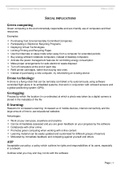
SOCIAL IMPLICATIONS
Green computing
Green computing is the environmentally responsible and eco-friendly use of computers and their
resources.
Examples:
Purchasing from Environmentally Committed Companies.
Participating in Electronic Recycling Programs.
Deploying Virtual Technologies.
Limiting Printing and Recycling Paper.
Use the hibernate or sleep mode when away from a computer for extended periods
Buy energy-efficient notebook computers, instead of desktop computers
Activate the power management features for controlling energy consumption
Make proper arrangements for safe electronic waste disposal
Turn off computers at the end of each day
Refill printer cartridges, rather than buying new ones
Instead of purchasing a new computer, try refurbishing an existing device
Drone technology:
A drone is a flying robot that can be remotely controlled or fly autonomously using software-
controlled flight plans in its embedded systems, that work in conjunction with onboard sensors and
a global positioning system (GPS).
Geotagging:
Process by which the location (in co-ordinates) at which a photo was taken by a digital camera is
stored in the metadata of the file
E-learning:
Reasons for increased e-learning: Increased us of mobile devices, internet connectivity and the
large amount of free to use educational websites
Advantages:
Work at your own pace, anywhere and anytime
Can be immediately assessed and you are given feedback on your progress by the software
Collaborate with other online
Promotes green computing when working with online content
Learning material can be easily updated and customised for different groups of learners
Motivated by immediate feedback and competing against yourself and others
AUP
Acceptable use policy: a policy which outlines he rights and responsibilities of its users, especially
in a network
Outlines what you may and may not do with the software
Page | 1
SOCIAL IMPLICATIONS
Green computing
Green computing is the environmentally responsible and eco-friendly use of computers and their
resources.
Examples:
Purchasing from Environmentally Committed Companies.
Participating in Electronic Recycling Programs.
Deploying Virtual Technologies.
Limiting Printing and Recycling Paper.
Use the hibernate or sleep mode when away from a computer for extended periods
Buy energy-efficient notebook computers, instead of desktop computers
Activate the power management features for controlling energy consumption
Make proper arrangements for safe electronic waste disposal
Turn off computers at the end of each day
Refill printer cartridges, rather than buying new ones
Instead of purchasing a new computer, try refurbishing an existing device
Drone technology:
A drone is a flying robot that can be remotely controlled or fly autonomously using software-
controlled flight plans in its embedded systems, that work in conjunction with onboard sensors and
a global positioning system (GPS).
Geotagging:
Process by which the location (in co-ordinates) at which a photo was taken by a digital camera is
stored in the metadata of the file
E-learning:
Reasons for increased e-learning: Increased us of mobile devices, internet connectivity and the
large amount of free to use educational websites
Advantages:
Work at your own pace, anywhere and anytime
Can be immediately assessed and you are given feedback on your progress by the software
Collaborate with other online
Promotes green computing when working with online content
Learning material can be easily updated and customised for different groups of learners
Motivated by immediate feedback and competing against yourself and others
AUP
Acceptable use policy: a policy which outlines he rights and responsibilities of its users, especially
in a network
Outlines what you may and may not do with the software
Page | 1