Case 2 – governance
Background information:
Bartolini (2011)
Co-production
Governance as a field: the space for norm production which is intermediate between the legal rules
according to constitutional procedures, and private dealings, traditional norms and social routines on
the other.
Governance: a system of co-production of norms (decisions, rules, policies) and public goods where
the co-producers are different kinds of actors (while the type of actors involved, the extent of
involvement of public authorities and of partners, the outcome and the production, the decision
procedures, the institutional context and the type and role of sanctions all vary).
In this course: What should be done, how it should be done, who should do it? So: co-production is a
specific mode of governance
o Classic national government model: Demands from citizens are transferred and aggregated by the
political system and then generate a policy response which is implemented by the public
administration.
o Classic community government: Initiatives are coming from the commission, mediated and
modified by the inter-governmental process and applied by national administrations.
Example: in negotiations between hospital and insurance companies are co-dependent on each other
because they both have the goal to create quality of care. But the hospital depends on the payment
by insurance and the insurance depends on the hospital to produce good quality of care.
The point of improving governance is to improve policy performance, meaning better formulated and
implemented policies. While better governance is always desirable, the key issue is that governance
must be ‘good enough’: good enough to permit a country to advance, and good enough to manage
the policies it must implement.
,Learning goals
1. Who are the main actors in health systems and how would you explain their governance
relationships?
Binkerhoff (2014)
Key actors in healthcare:
Governance: state-society problem solving in public arenas. Health governance framework: Different
actors:
1. State actors: politicians, policymakers and other government officials. Also other public
sectors than usually associated with health system (e.g. ministry of finance, judicial system)
Clearly, actors in the public sector health bureaucracy are central, such as the health ministry,
health and social insurance agencies and public pharmaceutical procurement and distribution
entities. However, other public sector actors beyond those usually associated with the health system
have roles as well.
2. Health service providers/institutions: public, private and voluntary sector providers: hospitals,
clinics, laboratories and educational institutions). Also includes organizations that support service
provision (insurance agencies, health maintenance organizations, pharmaceutical industry and
equipment manufacturers and suppliers).
3. Clients/citizens: service users, the general public and organized civil society. BY income.
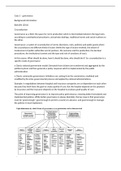
These actors are linked through the governance relationships illustrated in the figure. Their principal-
agent relationships are both instrumental (related to how governance helps to achieve health system
goals) and normative (reflecting commonly accepted principles of good governance).
Principal–Agent theory
Core Assumption is, that the goals of principals and agents diverge and that agents may take
advantage of ‘information asymmetry’. An agent acts on behalf of the principal.
Agents are able to maximize their interests at the expense of the principals’ aims in part because
they have better information than principals about what they are doing
, Principals seek to increase their control over agents without expensive efforts to overcome the
information gaps.
Client/citizens state actors
Exercise of voice: The expression of needs, preferences and demands to politicians, policymakers and
public officials.
Individuals: a citizen can visit his/her mayor or vote for a parliamentarian who has promised health
reforms
Collective efforts: Individuals that have come together to make their voice heard around common
interests is a key issue in health system governance: formal through political parties and elections,
less formal through advocacy and public information campaigns.
What could go wrong? If it is not allowed for individuals to come together in collective efforts.
State actors client/citizens
Responsiveness to client/citizen needs, preferences and demands
Examples: Wat could go wrong: This relationship varies in quality and degree: authoritarian state
actors may not see themselves as agents acting on behalf of citizen-principals.
State actors providers
Specify objectives, procedures and standards; provide resources and support; and exercise control
and oversight relative to providers, who function as their agents. In exchange for the resources,
providers carry out the agreed-upon desires and instructions of health policymakers.
Examples: health regulatory policies and procedures, auditing programmes, financing mechanisms
etc. Pay-for-performance is a tool that a number of countries are experimenting with to align
accountability with health outcomes.
What could go wrong: Due to information asymmetries, moral hazard (risicogedrag indien zij niet
meteen risico lopen voor hun eigen gedrag) and conflicts of interest.
Providers state actors
Reporting: the provision of information for purposes of monitoring and accountability. In theory this
would reduce the information asymmetry problem.
Also: furnish data for policy making. If health policymakers are to set direction based on evidence-
based policy, then providers have a critical role as an important source of evidence. What could go
wrong: Providers are not neutral sources of information: they have interests and exercise voice and
lobbying to influence state health policy and practices. Another problem: attribution. Whose
contributions made a difference, whose efforts fell short? Many factors are outside of the control or
influence of providers or health ministries.
Background information:
Bartolini (2011)
Co-production
Governance as a field: the space for norm production which is intermediate between the legal rules
according to constitutional procedures, and private dealings, traditional norms and social routines on
the other.
Governance: a system of co-production of norms (decisions, rules, policies) and public goods where
the co-producers are different kinds of actors (while the type of actors involved, the extent of
involvement of public authorities and of partners, the outcome and the production, the decision
procedures, the institutional context and the type and role of sanctions all vary).
In this course: What should be done, how it should be done, who should do it? So: co-production is a
specific mode of governance
o Classic national government model: Demands from citizens are transferred and aggregated by the
political system and then generate a policy response which is implemented by the public
administration.
o Classic community government: Initiatives are coming from the commission, mediated and
modified by the inter-governmental process and applied by national administrations.
Example: in negotiations between hospital and insurance companies are co-dependent on each other
because they both have the goal to create quality of care. But the hospital depends on the payment
by insurance and the insurance depends on the hospital to produce good quality of care.
The point of improving governance is to improve policy performance, meaning better formulated and
implemented policies. While better governance is always desirable, the key issue is that governance
must be ‘good enough’: good enough to permit a country to advance, and good enough to manage
the policies it must implement.
,Learning goals
1. Who are the main actors in health systems and how would you explain their governance
relationships?
Binkerhoff (2014)
Key actors in healthcare:
Governance: state-society problem solving in public arenas. Health governance framework: Different
actors:
1. State actors: politicians, policymakers and other government officials. Also other public
sectors than usually associated with health system (e.g. ministry of finance, judicial system)
Clearly, actors in the public sector health bureaucracy are central, such as the health ministry,
health and social insurance agencies and public pharmaceutical procurement and distribution
entities. However, other public sector actors beyond those usually associated with the health system
have roles as well.
2. Health service providers/institutions: public, private and voluntary sector providers: hospitals,
clinics, laboratories and educational institutions). Also includes organizations that support service
provision (insurance agencies, health maintenance organizations, pharmaceutical industry and
equipment manufacturers and suppliers).
3. Clients/citizens: service users, the general public and organized civil society. BY income.
These actors are linked through the governance relationships illustrated in the figure. Their principal-
agent relationships are both instrumental (related to how governance helps to achieve health system
goals) and normative (reflecting commonly accepted principles of good governance).
Principal–Agent theory
Core Assumption is, that the goals of principals and agents diverge and that agents may take
advantage of ‘information asymmetry’. An agent acts on behalf of the principal.
Agents are able to maximize their interests at the expense of the principals’ aims in part because
they have better information than principals about what they are doing
, Principals seek to increase their control over agents without expensive efforts to overcome the
information gaps.
Client/citizens state actors
Exercise of voice: The expression of needs, preferences and demands to politicians, policymakers and
public officials.
Individuals: a citizen can visit his/her mayor or vote for a parliamentarian who has promised health
reforms
Collective efforts: Individuals that have come together to make their voice heard around common
interests is a key issue in health system governance: formal through political parties and elections,
less formal through advocacy and public information campaigns.
What could go wrong? If it is not allowed for individuals to come together in collective efforts.
State actors client/citizens
Responsiveness to client/citizen needs, preferences and demands
Examples: Wat could go wrong: This relationship varies in quality and degree: authoritarian state
actors may not see themselves as agents acting on behalf of citizen-principals.
State actors providers
Specify objectives, procedures and standards; provide resources and support; and exercise control
and oversight relative to providers, who function as their agents. In exchange for the resources,
providers carry out the agreed-upon desires and instructions of health policymakers.
Examples: health regulatory policies and procedures, auditing programmes, financing mechanisms
etc. Pay-for-performance is a tool that a number of countries are experimenting with to align
accountability with health outcomes.
What could go wrong: Due to information asymmetries, moral hazard (risicogedrag indien zij niet
meteen risico lopen voor hun eigen gedrag) and conflicts of interest.
Providers state actors
Reporting: the provision of information for purposes of monitoring and accountability. In theory this
would reduce the information asymmetry problem.
Also: furnish data for policy making. If health policymakers are to set direction based on evidence-
based policy, then providers have a critical role as an important source of evidence. What could go
wrong: Providers are not neutral sources of information: they have interests and exercise voice and
lobbying to influence state health policy and practices. Another problem: attribution. Whose
contributions made a difference, whose efforts fell short? Many factors are outside of the control or
influence of providers or health ministries.