270 Pharmacology I Active Learning
Guide
Suggested Readings:
• Chapter 9: Drug Therapy for Coagulation Disorders
• Chapter 11: Drug Therapy for hematopoietic Disorders
CHAPTER 9: Drug Therapy for Coagulation Disorders
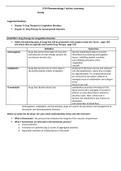
• Define the following types of drugs that will be presented in this chapter (under Key Terms – page 144)
and where they are typically used (under Drug Therapy– page 147)
Definition Typical Use
Anticoagulant drugs that prevent formation of new clots Normal endothelium helps to prevent
and extension of clots already present; do thrombosis by producing anticoagulant
not dissolve formed clots. factors, inhibiting platelet reactivity,
and inhibiting activation of the
coagulation
cascade
Antiplatelet drugs that prevent one or more steps in produced in the bone marrow and released
the prothrombotic activity of platelets into the bloodstream, where they circulate
for approximately 7 to 10 days before they
are removed by the spleen; adheres to
damaged areas of endothelium and collagen
in the
blood vessel wall
Thrombolytic drugs that dissolve blood clots endothelium promotes thrombosis if the
blood vessel wall is damaged, if function is
altered, or when blood flow is altered or
becomes static. After a blood clot is
formed, the endothelium also induces its
dissolution
and restoration of blood flow.
Anticoagulant, antiplatelet, and thrombolytic drugs are used in the prevention and management of
thrombotic and thromboembolic disorders.
Before we jump into the drugs, let’s get a basic understanding of how and why clots form.
• What is Hemostasis? the process that maintains the integrity of the vascular compartment
• What 4 mechanisms are activated in the hemostasis process?
o Vasoconstriction
o Formation of a platelet plug (a cluster of aggregated platelets)
o Sequential activation of clotting factors in the blood
, o Growth of fibrous tissue (fibrin) into the blood clot to make it more stable and to repair the
tear (opening) in the damaged blood vessel
• Review of the 3 activators and inhibitors of hemostasis and thrombosis: (Box 9.1)
o Endothelial cells:
▪ How does normal endothelium (tissues that line the blood vessels) help to prevent
thrombosis? Normal endothelium helps to prevent thrombosis by producing
anticoagulant
factors, inhibiting platelet reactivity, and inhibiting activation of the coagulation cascade.
▪ When does the endothelium promote thrombosis? promotes thrombosis if the blood
vessel wall is damaged, if function is altered, or when blood flow is altered or becomes
static
▪ After a blood clot is formed, what does the endothelium do? After a blood clot is formed, the
endothelium also induces its dissolution and restoration of blood flow
o Platelets:
▪ What is the only known function of platelets? hemostasis
▪ What is the normal production and life of platelets (aka thrombocytes)? are produced in the
bone marrow and released into the bloodstream, where they circulate for approximately 7 to 10
days before they are removed by the spleen
▪ What prevents platelets from adhering to normal endothelium? The cell membrane of a
platelet contains a coat of glycoproteins that prevents the platelet from adhering to normal
endothelium but allows it to adhere to damaged areas of endothelium and collagen in the
blood vessel wall.
▪ Describe what happens when the endothelium is damaged: Breakdown of the cell membrane
releases arachidonic acid (which can be metabolized to produce thromboxane A2 ) and allows
leakage of platelet contents (e.g., thromboplastin and other clotting factors), which function to
stop bleeding
▪ Describe what happens when the platelets come in contact with a damaged vascular surface:
they become activated and aggregate at a site of injury to help plug a hole in a torn blood vessel.
, o Blood coagulation
▪ The normal blood coagulation process causes hemostasis within: 1 to 2 minutes
▪ What is involved in this process? It involves sequential activation of clotting factors that are
normally present in blood and tissues as inactive precursors and formation of a meshwork
of fibrin strands that cements blood components together to form a stable, dense clot.
▪ What are the major phases in this process? Major phases include release of thromboplastin by
disintegrating platelets and damaged tissue; conversion of prothrombin to thrombin, which
requires thromboplastin and calcium ions; and conversion of fibrinogen to fibrin by thrombin
Now that we’ve reviewed how normal hemostasis is maintained, and the process that initiates a clot, let’s now take a
look at how this clot is broken down.
• Clot Lysis (back on page 145)
o What is plasminogen? inactive protein present in many body tissues and fluids
o Describe the function and process of plasminogen when a blood clot is formed: plasminogen is bound
to fibrin and becomes a component of the clot. After the outward blood flow is stopped and the tear in
the blood vessel is repaired, plasminogen is activated by plasminogen activator (produced by
endothelial cells or the coagulation cascade) to produce plasmin. Plasmin (also called fibrinolysin) is an
enzyme that breaks down the fibrin meshwork that stabilizes the clot; this fibrinolytic or thrombolytic
action dissolves the clot.
• Etiology
o List and define the 2 mechanisms that need to remain in balance for the blood to remain fluid with
unobstructed flow:
thrombogenesis (formation of blood clots) and thrombolysis (dissolution of blood clots)
o What happens when these mechanisms are out of balance? thrombotic or bleeding disorders ensue
o What are arterial thrombi usually associated with? atherosclerotic plaque, hypertension, and turbulent
blood flow
▪ What occurs if there is partial or temporary occlusion? local tissue ischemia (deficient blood
supply) occurs
▪ What occurs if there is complete or prolonged occlusion? local tissue death (infarction) occurs
o What are venous thrombi usually associated with? venous stasis
o Describe the process of venous thrombosis: When blood flows slowly, thrombin and other
procoagulant substances present in the blood become concentrated in local areas and initiate the
clotting process
o With a normal rate of blood flow, what happens with the procoagulant substances? these substances
are rapidly removed from the blood, primarily by Kupffer’s cells in the liver
o What can happen with a venous embolus? an embolus can easily become detached and travel to
other parts of the body
o What are the types of embolus? a thrombus, fat, air, amniotic fluid, tissue, or bacterial debris
o What are the 2 mechanisms that can cause disease from a venous thrombosis?
▪ First, thrombosis causes local congestion, edema, and perhaps inflammation by
impairing normal outflow of venous blood (e.g., thrombophlebitis, deep vein thrombosis
[DVT])
▪ Second, embolization obstructs the blood supply when the embolus becomes lodged.
o What are the common sites of embolization? pulmonary arteries
Guide
Suggested Readings:
• Chapter 9: Drug Therapy for Coagulation Disorders
• Chapter 11: Drug Therapy for hematopoietic Disorders
CHAPTER 9: Drug Therapy for Coagulation Disorders
• Define the following types of drugs that will be presented in this chapter (under Key Terms – page 144)
and where they are typically used (under Drug Therapy– page 147)
Definition Typical Use
Anticoagulant drugs that prevent formation of new clots Normal endothelium helps to prevent
and extension of clots already present; do thrombosis by producing anticoagulant
not dissolve formed clots. factors, inhibiting platelet reactivity,
and inhibiting activation of the
coagulation
cascade
Antiplatelet drugs that prevent one or more steps in produced in the bone marrow and released
the prothrombotic activity of platelets into the bloodstream, where they circulate
for approximately 7 to 10 days before they
are removed by the spleen; adheres to
damaged areas of endothelium and collagen
in the
blood vessel wall
Thrombolytic drugs that dissolve blood clots endothelium promotes thrombosis if the
blood vessel wall is damaged, if function is
altered, or when blood flow is altered or
becomes static. After a blood clot is
formed, the endothelium also induces its
dissolution
and restoration of blood flow.
Anticoagulant, antiplatelet, and thrombolytic drugs are used in the prevention and management of
thrombotic and thromboembolic disorders.
Before we jump into the drugs, let’s get a basic understanding of how and why clots form.
• What is Hemostasis? the process that maintains the integrity of the vascular compartment
• What 4 mechanisms are activated in the hemostasis process?
o Vasoconstriction
o Formation of a platelet plug (a cluster of aggregated platelets)
o Sequential activation of clotting factors in the blood
, o Growth of fibrous tissue (fibrin) into the blood clot to make it more stable and to repair the
tear (opening) in the damaged blood vessel
• Review of the 3 activators and inhibitors of hemostasis and thrombosis: (Box 9.1)
o Endothelial cells:
▪ How does normal endothelium (tissues that line the blood vessels) help to prevent
thrombosis? Normal endothelium helps to prevent thrombosis by producing
anticoagulant
factors, inhibiting platelet reactivity, and inhibiting activation of the coagulation cascade.
▪ When does the endothelium promote thrombosis? promotes thrombosis if the blood
vessel wall is damaged, if function is altered, or when blood flow is altered or becomes
static
▪ After a blood clot is formed, what does the endothelium do? After a blood clot is formed, the
endothelium also induces its dissolution and restoration of blood flow
o Platelets:
▪ What is the only known function of platelets? hemostasis
▪ What is the normal production and life of platelets (aka thrombocytes)? are produced in the
bone marrow and released into the bloodstream, where they circulate for approximately 7 to 10
days before they are removed by the spleen
▪ What prevents platelets from adhering to normal endothelium? The cell membrane of a
platelet contains a coat of glycoproteins that prevents the platelet from adhering to normal
endothelium but allows it to adhere to damaged areas of endothelium and collagen in the
blood vessel wall.
▪ Describe what happens when the endothelium is damaged: Breakdown of the cell membrane
releases arachidonic acid (which can be metabolized to produce thromboxane A2 ) and allows
leakage of platelet contents (e.g., thromboplastin and other clotting factors), which function to
stop bleeding
▪ Describe what happens when the platelets come in contact with a damaged vascular surface:
they become activated and aggregate at a site of injury to help plug a hole in a torn blood vessel.
, o Blood coagulation
▪ The normal blood coagulation process causes hemostasis within: 1 to 2 minutes
▪ What is involved in this process? It involves sequential activation of clotting factors that are
normally present in blood and tissues as inactive precursors and formation of a meshwork
of fibrin strands that cements blood components together to form a stable, dense clot.
▪ What are the major phases in this process? Major phases include release of thromboplastin by
disintegrating platelets and damaged tissue; conversion of prothrombin to thrombin, which
requires thromboplastin and calcium ions; and conversion of fibrinogen to fibrin by thrombin
Now that we’ve reviewed how normal hemostasis is maintained, and the process that initiates a clot, let’s now take a
look at how this clot is broken down.
• Clot Lysis (back on page 145)
o What is plasminogen? inactive protein present in many body tissues and fluids
o Describe the function and process of plasminogen when a blood clot is formed: plasminogen is bound
to fibrin and becomes a component of the clot. After the outward blood flow is stopped and the tear in
the blood vessel is repaired, plasminogen is activated by plasminogen activator (produced by
endothelial cells or the coagulation cascade) to produce plasmin. Plasmin (also called fibrinolysin) is an
enzyme that breaks down the fibrin meshwork that stabilizes the clot; this fibrinolytic or thrombolytic
action dissolves the clot.
• Etiology
o List and define the 2 mechanisms that need to remain in balance for the blood to remain fluid with
unobstructed flow:
thrombogenesis (formation of blood clots) and thrombolysis (dissolution of blood clots)
o What happens when these mechanisms are out of balance? thrombotic or bleeding disorders ensue
o What are arterial thrombi usually associated with? atherosclerotic plaque, hypertension, and turbulent
blood flow
▪ What occurs if there is partial or temporary occlusion? local tissue ischemia (deficient blood
supply) occurs
▪ What occurs if there is complete or prolonged occlusion? local tissue death (infarction) occurs
o What are venous thrombi usually associated with? venous stasis
o Describe the process of venous thrombosis: When blood flows slowly, thrombin and other
procoagulant substances present in the blood become concentrated in local areas and initiate the
clotting process
o With a normal rate of blood flow, what happens with the procoagulant substances? these substances
are rapidly removed from the blood, primarily by Kupffer’s cells in the liver
o What can happen with a venous embolus? an embolus can easily become detached and travel to
other parts of the body
o What are the types of embolus? a thrombus, fat, air, amniotic fluid, tissue, or bacterial debris
o What are the 2 mechanisms that can cause disease from a venous thrombosis?
▪ First, thrombosis causes local congestion, edema, and perhaps inflammation by
impairing normal outflow of venous blood (e.g., thrombophlebitis, deep vein thrombosis
[DVT])
▪ Second, embolization obstructs the blood supply when the embolus becomes lodged.
o What are the common sites of embolization? pulmonary arteries