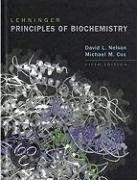
TestBank Lehninger Principles of Biochemistry 7e Nelson TB
TestBank Lehninger Principles of Biochemistry 7e Nelson TB TestBank Lehninger Principles of Biochemistry 7e Nelson TBPage 1 1. In a bacterial cell, the DNA is in the: A) cell envelope. B) cell membrane. C) nucleoid. D) nucleus. E) ribosomes. 2. A major change occurring in the evolution of eukaryotes from prokaryotes was the development of: A) DNA. B) photosynthetic capability. C) plasma membranes. D) ribosomes. E) the nucleus. 3. In eukaryotes, the nucleus is enclosed by a double membrane called the: A) cell membrane. B) nuclear envelope. C) nucleolus. D) nucleoplasm. E) nucleosome. 4. The dimensions of living cells are limited, on the lower end by the minimum number of biomolecules necessary for function, and on the upper end by the rate of diffusion of solutes such as oxygen. Except for highly elongated cells, they usually have lengths and diameters in the range of: A) 0.1 m to 10 m. B) 0.3 m to 30 m. C) 0.3 m to 100 m. D) 1 m to 100 m. E) 1 m to 300 m. 5. Which group of single-celled microorganisms has many members found growing in extreme environments? A) bacteria B) archaea C) eukaryotes D) heterotrophs E) None of the answers is correct.Page 2 6. The bacterium E. coli requires simple organic molecules for growth and energy—it is therefore a: A) chemoautotroph. B) chemoheterotroph. C) lithotroph. D) photoautotroph. E) photoheterotroph. 7. Which is a list of organelles? A) mitochondria, chromatin, endoplasmic reticulum B) peroxisomes, lysosomes, plasma membrane C) proteasomes, peroxisomes, lysosomes D) mitochondria, endoplasmic reticulum, peroxisomes E) All of the answers are correct. 8. Which list has the cellular components arranged in order of INCREASING size? A) amino acid < protein < mitochondrion < ribosome B) amino acid < protein < ribosome < mitochondrion C) amino acid < ribosome < protein < mitochondrion D) protein < amino acid < mitochondrion < ribosome E) protein < ribosome < mitochondrion < amino acid 9. The three-dimensional structure of macromolecules is formed and maintained primarily through noncovalent interactions. Which one of the following is NOT considered a noncovalent interaction? A) carbon-carbon bonds B) hydrogen bonds C) hydrophobic interactions D) ionic interactions E) van der Waals interactions 10. Which element is NOT among the four most abundant in living organisms? A) carbon B) hydrogen C) nitrogen D) oxygen E) phosphorusPage 3 11. The four covalent bonds in methane (CH4) are arranged around carbon to give which geometry? A) linear B) tetrahedral C) trigonal bipyramidal D) trigonal planar E) trigonal pyramidal 12. What functional groups are present on this molecule? A) ether and aldehyde B) hydroxyl and aldehyde C) hydroxyl and carboxylic acid D) hydroxyl and ester E) hydroxyl and ketone 13. The macromolecules that serve in the storage and transmission of genetic information are: A) carbohydrates. B) lipids. C) membranes. D) nucleic acids. E) proteins. 14. Stereoisomers that are nonsuperimposable mirror images of each other are known as: A) anomers. B) cis-trans isomers. C) diastereoisomers. D) enantiomers. E) geometric isomers. 15. The catalog of all proteins functioning in a cell is the: A) metabolome. B) proteasome. C) lysosome. D) proteome. E) genome.Page 4 16. Use the terms a) chemoautotrophs, b) chemoheterotrophs, c) photoautotrophs, and d) photoheterotrophs and identify the answer that CORRECTLY finishes the statement: Carnivores are _____ and herbivores are _____. A) b; c B) b; d C) b; b D) a; b E) a; a 17. The enzyme fumarase catalyzes the reversible hydration of fumaric acid to l-malate, but it will not catalyze the hydration of maleic acid, the cis isomer of fumaric acid. This is an example of: A) biological activity. B) chiral activity. C) racemization. D) stereoisomerization. E) stereospecificity. 18. Humans maintain a nearly constant level of hemoglobin by continually synthesizing and degrading it. This is an example of a(n): A) dynamic steady state. B) equilibrium state. C) exergonic change. D) free-energy change. E) waste of energy. 19. If heat energy is absorbed by the system during a chemical reaction, the reaction is said to be: A) at equilibrium. B) endergonic. C) endothermic. D) exergonic. E) exothermic. 20. If the free energy change G for a reaction is –46.11 kJ/mol, the reaction is: A) at equilibrium. B) endergonic. C) endothermic. D) exergonic. E) exothermic.Page 5 21. The major carrier of chemical energy in all cells is: A) acetyl triphosphate. B) adenosine monophosphate. C) adenosine triphosphate. D) cytosine tetraphosphate. E) uridine diphosphate. 22. Enzymes are biological catalysts that enhance the rate of a reaction by: A) decreasing the activation energy. B) decreasing the amount of free energy released. C) increasing the activation energy. D) increasing the amount of free energy released. E) increasing the energy of the transition state. 23. Energy requiring metabolic pathways that yield complex molecules from simpler precursors are: A) amphibolic. B) anabolic. C) autotrophic. D) catabolic. E) heterotrophic. 24. Hereditary information (with the exception of some viruses) is preserved in: A) deoxyribonucleic acid. B) membrane structures. C) nuclei. D) polysaccharides. E) ribonucleic acid. 25. When a region of DNA must be repaired by removing and replacing some of the nucleotides, what ensures that the new nucleotides are in the correct sequence? A) DNA cannot be repaired and this explains why mutations occur. B) Specific enzymes bind the correct nucleotides. C) The new nucleotides base pair accurately with those on the complementary strand. D) The repair enzyme recognizes the removed nucleotide and brings in an identical one to replace it. E) The three-dimensional structure determines the order of nucleotides.Page 6 26. The three-dimensional structure of a protein is determined primarily by: A) electrostatic guidance from nucleic acid structure. B) how many amino acids are in the protein. C) hydrophobic interaction with lipids that provide a folding framework. D) modification during interactions with ribosomes. E) the sequence of amino acids in the protein. 27. According to Oparin's theory for the origin of life, the prebiotic atmosphere: A) already contained some primitive RNA molecules. B) basically was very similar to the atmosphere of today. C) contained many amino acids. D) had an abundance of methane, ammonia, and water. E) was rich in oxygen. 28. When two genes in an organism share detectable sequence similarity, those genes or their gene products, are said to be: A) homologues. B) orthologues. C) paralogues. D) both homologues and orthologues. E) both homologues and paralogues. F) both orthologues and paralogues. 29. Which statement is NOT a distinguishing feature of living organisms? A) There exists a high degree of organizational complexity. B) The structure of components influences their function. C) Organisms can reproduce themselves. D) Organisms do not need to interact with their environment. E) Organisms change over time. 30. Which organic molecules can be considered ―alive‖? A) proteins B) carbohydrates C) nucleic acids D) saccharides E) None of the answers is correct.Page 7 31. Which statement is NOT true regarding the plasma membrane? A) It is a physical barrier separating the inside of the cell from its surroundings. B) It is a flexible, hydrophobic structure. C) The individual lipids and proteins of the plasma membrane are covalently linked. D) The plasma membrane incorporates newly made lipid and protein components as a cell grows. E) Cell division occurs without loss of the membrane integrity. 32. The major difference between prokaryotes and eukaryotes is that: A) prokaryotes have a nucleus, while eukaryotes do not. B) eukaryotes have a nucleus, while prokaryotes do not. C) eukaryotes have double-stranded DNA, while prokaryotes have single-stranded DNA. D) prokaryotes have double-stranded DNA, while eukaryotes have single-stranded DNA. E) prokaryotes do not have ribosomes. 33. If an organism is a facultative anaerobe, which statement is TRUE? A) The organism requires sulfur to live. B) The organism will die if exposed to oxygen. C) The organism requires oxygen to live. D) The organism does not require oxygen to live but will not die if exposed to oxygen. E) The organism requires methane to live. 34. Which statement is TRUE regarding energy sources used by organisms? A) Phototrophs can use carbon dioxide as a carbon source. B) Phototrophs can use carbon dioxide as an energy source. C) All phototrophs are autotrophs. D) All chemotrophs are heterotrophs. E) All phototrophs are autotrophs that can use carbon dioxide as a carbon source. 35. Which statement is FALSE regarding bacterial and archaeal cells? A) Archaeal and bacterial plasma membranes consist of a thin bilayer of lipid molecules penetrated by proteins. B) Bacteria and archaea have group specific specializations in their cell envelope. C) Archaea can have a single- or double-layered membrane. D) Bacteria can have a single- or double-layered membrane. E) Both bacteria and archaea have a layer of peptidoglycan in their cell envelope.Page 8 36. Which organelle does NOT consist of a double membrane? A) mitochondrion B) ribosome C) chloroplast D) endoplasmic reticulum E) Golgi body 37. Which method is MOST useful when fractionating cellular organelles? A) centrifugation B) precipitation C) chromatography D) restriction digest E) peroxidation 38. Which organelle is NOT found in plant cells? A) ribosome B) lysosome C) chloroplast D) vacuole E) mitochondrion 39. Which reason is MOST probable for why carbon is used in living organisms but not silicon? A) Carbon can make four bonds, whereas silicon can only make three. B) Carbon can make double bonds, but silicon cannot. C) Carbon can form more preferred geometries when bonding. D) Carbon is lighter, and therefore its bonds are stronger. E) Silicon is heavier, and therefore its bonds are stronger. 40. Which group includes the four most abundant elements in living organisms? A) carbon, hydrogen, oxygen, iron B) carbon, hydrogen, nitrogen, oxygen C) carbon, hydrogen, phosphorous, oxygen D) carbon, nitrogen, phosphorous, oxygen E) carbon, hydrogen, sulfur, oxygenPage 9 41. What did Jacques Monod mean when he wrote, ―What is true of E. coli is true of the elephant?‖ A) Bacterial cells are identical to animal cells. B) Bacterial cells can synthesize ivory under certain conditions. C) Bacterial cells contain a chromosome similar to animal cells. D) Bacterial cells contain enzymes similar to those found in animal cells. E) Bacterial cells contain molecules with complexity similar to molecules found in in the ―mineral world.‖ 42. Which ranking CORRECTLY describes the rigidity of the red bond (the central bond) shown in the figure? A) 2 = most rigid, 3 = least rigid B) 1 = most rigid, 5 = least rigid C) 4 = most rigid, 3 = least rigid D) 2 = most rigid, 1 = least rigid E) 4 = most rigid, 1 = least rigid 43. Which choice CORRECTLY lists the molecular masses from smallest to largest? A) 18 kDa < 15,000 Da < 15,100 amu < 1.8 MDa < 1.8 mDa B) 1.8 mDa < 15,000 Da < 15,100 amu <18 kDa < 1.8 MDa C) 1.8 MDa < 15,000 Da < 15,100 amu <18 kDa < 1.8 mDa D) 1.8 mDa < 15,100 amu < 15,000 Da <18 kDa < 1.8 MDa E) 1.8 MDa < 18 kDa < 15,100 amu < 1.8 mDa <15,000 DaPage 10 44. Which substance is NOT a secondary metabolite? A) adenine B) morphine C) quinine D) nicotine E) salicylic acid 45. Which list of descriptive terms for biological molecules is placed in CORRECT order from smallest to largest? A) monomer, oligomer, polymer B) monomer, multimer, macromer C) oligomer, monomer, polymer D) polymer, oligomer, monomer E) metamer, oligomer, polymer 46. Which answer choice represents the LARGEST percentage, by weight, of an E. coli cell? A) RNA B) DNA C) protein D) lipids E) water 47. Which discipline uses an approach that tries to integrate information to give a molecular picture of all the activities of a cell under certain conditions? A) metabolomics B) genomics C) systems biology D) proteomics E) lipidomics 48. If a scientist wanted to know whether a particular hydrocarbon was in use in a cell's plasma membrane, they could search the organism's: A) metabolome. B) lipidome. C) glycome. D) proteome. E) genome.Page 11 49. Which types of molecules can serve as informational macromolecules in cells? A) proteins B) nucleic acids C) oligosaccharides D) both proteins and nucleic acids E) proteins, nucleic acids, and oligosaccharides 50. What is the CORRECT name for the configuration of the molecule shown in the figure? A) orthogonal B) trans C) cis D) zis E) chiros 51. Which statement CORRECTLY describes the molecules shown in the figure? A) A and D are enantiomers, and B and C are diastereomers. B) A and D are diastereomers, and B and C are enantiomers. C) A and C are enantiomers, and B and D are diastereomers. D) A and C are diastereomers, and B and D are enantiomers. E) All are diastereomers to each other.Page 12 52. It is possible to separate a racemic mixture by: A) combustion. B) crystallization. C) centrifugation. D) distillation. E) magnetism. 53. Which factor can be changed WITHOUT breaking covalent bonds? A) conformation B) configuration C) chirality D) stereochemistry E) None of the answers is correct. 54. Living cells produce only one chiral form of a biomolecule because: A) biomolecules, by definition, can exist as only one chiral form. B) living cells can only create L isomers. C) living cells choose to express only the correct isomer. D) living cells have enzymes that are also chiral. E) living cells can produce the opposite chiral form only under certain metabolic conditions. 55. Which statement about living systems is NOT true? A) Living organisms can be described as an open system. B) Living systems maintain a more-or-less constant composition. C) Living systems are in equilibrium with their surroundings. D) Living systems exist in a dynamic steady-state. E) Living systems have efficient mechanisms to convert chemical energy from one form into another. 56. When energy is used by a system, can it be ―used up‖? A) Yes, it is used up when the energy source is depleted. B) Yes, it is used up when all energy is converted into chemical energy. C) No, all energy is converted into potential energy. D) No, all energy is converted into kinetic energy. E) No, energy can be converted into kinetic and potential energy.Page 13 57. An increase in the entropy of a system can be described as an increase in the total amount of _____ of a system. A) kinetic energy B) potential energy C) oxidative energy D) disorder E) order 58. In an oxidation-reduction reaction, the oxidized reagent _____, and the reduced reagent _____. A) is energized; is deenergized B) is deenergized; is energized C) loses electrons; gains electrons D) gains electrons; loses electrons E) maintains the same number of electrons; loses electrons 59. The joining of two amino acids via a peptide bond (the process of protein synthesis) has a positive G value. What does this imply? A) Forming a peptide bond is endergonic and must be coupled to another reaction. B) Forming a peptide bond is exergonic and must be coupled to another reaction. C) Forming a peptide bond is spontaneous and does not need to be coupled to another reaction. D) Forming a peptide bond is spontaneous and can sometimes be coupled to another reaction. E) Forming a peptide bond increases the entropy of a system. 60. Reaction 1 has a G° of –12.3 kJ/mol, and Reaction 2 has a G° of 23.4 kJ/mol. Which statement is TRUE of these two reactions? A) Reaction 1 occurs faster. B) Reaction 2 occurs faster. C) Both reactions occur at the same rate. D) Reaction 2 will not occur. E) It is impossible to know which reaction occurs faster with this information.Page 14 61. Fructose-1-phosphate can be hydrolyzed into fructose + inorganic phosphate (Pi) with a G° of –16.0 kJ/mol. If ATP can be hydrolyzed into ADP + Pi with a G° of –30.5 kJ/mol, what is the free energy change for the reaction of fructose + ATP fructose 1-phospate + ADP? A) –46.5 kJ/mol B) –14.5 kJ/mol C) 46.5 kJ/mol D) 14.5 kJ/mol E) –1.4 Genetic Foundations5 kJ/mol 62. In general, increasing the temperature of a reaction will have what effect, based on the relationship between standard free energy change and the equilibrium constant? A) The reaction will be inhibited. B) The reaction will go faster. C) The reaction will become more spontaneous. D) The reaction will become less spontaneous. E) There will be no effect on the reaction. 63. _____ pathways _____ large molecules, _____ energy. A) Catabolic; break down; releasing B) Anabolic; break down; releasing C) Catabolic; break down; storing D) Anabolic; break down; storing E) Anabolic; build up; releasing 64. The diagram below is a generic example of what process? A) systems biology B) feedback inhibition C) positive feedback D) equilibrium E) catabolismPage 15 65. In double-stranded DNA, the two strands are held together by _____ bonds. A) covalent B) ionic C) polypeptide D) hydrogen E) phosphodiester 66. The precise three-dimensional structure, or _____ conformation, is critical to a protein's function. A) native B) molecular C) chaperone D) macromolecular E) high-affinity 67. Accurate folding of a protein does NOT depend on: A) proper pH. B) correct ionic strength. C) correct temperature. D) correct metal ion concentration. E) All of the conditions listed are important for correct folding of a protein. 68. The similarities of gene sequences and metabolic pathways across the three domains of life are evidence for: A) evolution. B) a common ancestor. C) cross-species genetic transfer. D) both evolution and a common ancestor. E) both a common ancestor and cross-species genetic transfer. 69. Which statement is NOT true about genetic mutations? A) Mutations arise from an unrepaired mistake in DNA replication. B) Mutations arise from incorrectly repaired damage to one of the DNA strands. C) Mutations in reproductive cells can be passed on to offspring. D) Mutations may better equip an organism or cell to survive in its environment. E) All of the statements are true.Page 16 70. When Stanley Miller, in Harold Urey's laboratory, subjected a gaseous mixture mimicking the prebiotic atmosphere on Earth to electrical sparks, he found that _____ were formed. A) amino acids B) aldehydes C) ribonucleotides D) both amino acids and aldehydes E) amino acids, aldehydes, and ribonucleotides 71. Which present-day observable piece of evidence supports the ―RNA world‖ hypothesis? A) RNA molecules participate in biologically significant reactions. B) RNA can serve as an information-carrying molecule. C) RNA nucleotides catalyze peptide bond formation. D) RNA molecules participate in biologically significant reactions, and RNA nucleotides catalyze peptide bond formation. E) RNA molecules participate in biologically significant reactions, RNA can serve as an information-carrying molecule, and RNA nucleotides catalyze peptide bond formation. 72. Which statement is NOT true about the formation of early organisms? A) The first organisms were anaerobic because the atmosphere was devoid of oxygen. B) The original electron donor for photosynthetic processes was probably H2S. C) Oxygen, a powerful oxidant, was probably welcomed by anaerobic organisms as a preferable choice for metabolic reactions. D) The transfer of electrons to O2 releases more energy than transferring electrons to SO42– E) Cyanobacteria are modern descendants of early photosynthetic oxygen-producers. 73. Which organelle probably originated as an endosymbiotic engulfing of an aerobic bacterium by a eukaryotic cell? A) ribosome B) mitochondrion C) Golgi body D) nucleus E) endoplasmic reticulumPage 17 74. Which statement is NOT true regarding orthologous genes? A) They share similar sequences. B) They usually have the same function. C) They usually have a similar three-dimensional structure. D) They presumably arose from a gene duplication event. E) All of the statements are true. 75. The _____ of homologous proteins can be used to estimate the degree of evolutionary divergence. A) three-dimensional structure B) expression profiles C) sequence similarity D) endosymbiotic nature E) chromosomes 76. _____ are typically expressed under all conditions and are not subject to regulation. A) Housekeeping genes B) Homologous genes C) Bacterial genomes D) Eukaryotic genomes E) Endosymbiotic genes 77. What six characteristics distinguish living organisms from inanimate objects? 78. All cells are surrounded by a plasma membrane composed of lipid and protein molecules. What is the function of the plasma membrane? 79. E. coli is known as a gram-negative bacterial species. (a) How is this determined? (b) How do gram-negative bacteria differ structurally from gram-positive bacteria? 80. Most cells of higher plants have a cell wall outside the plasma membrane. What is the function of the cell wall? 81. List the types of noncovalent interactions that are important in providing stability to the three-dimensional structures of macromolecules. (b) Why is it important that these interactions be noncovalent, rather than covalent, bonds?Page 18 82. What is the difference, if any, between cytosol and cytoplasm? 83. Provide a brief explanation for the observation that macromolecules diffuse at a slower rate in the cytosol than they do in dilute solution. 84. Draw the structures of the following functional groups in their un-ionized forms: (a) hydroxyl, (b) carboxyl, (c) amino, (d) phosphoryl. 85. What is the underlying, organizing biochemical principle that results in the chemical similarity of virtually all living things? Given this biochemical similarity, how is the structural and functional diversity of living things possible? 86. Explain the difference, if any, between a proteome and a proteasome. 87. Name two functions of (a) proteins, (b) nucleic acids, (c) polysaccharides, (d) lipids. 88. Why is an asymmetric carbon atom called a chiral center? 89. Differentiate between configuration and conformation. 90. What is optical activity? (b) How did Louis Pasteur arrive at an explanation for the phenomenon of optical activity? 91. A chemist working in a pharmaceutical lab synthesized a new drug as a racemic mixture. Why is it important that she separate the two enantiomers and test each for its biological activity? 92. Explain why living organisms are able to produce particular chiral forms of different biomolceules while laboratory chemical synthesis usually produces a racemic mixture. 93. Proteins are constantly being synthesized in a living cell. Why doesn't the number of protein molecules become too great for the cell to contain, leading to cell destruction?Page 19 94. Describe the relationship between a living organism and its surroundings in terms of both matter and energy. 95. The free-energy change for the formation of a protein from the individual amino acids is positive and is thus an endergonic reaction. How, then, do cells accomplish this process? 96. Instant cold packs get cold when the contents, usually solid urea and liquid water, are mixed, producing an aqueous solution of urea. Although this process is clearly spontaneous, the products are colder than the reactants. Explain how this is possible in terms of the difference between G and H. 97. (a) On the reaction coordinate diagram shown below, label the transition state and the overall free-energy change (G) for the uncatalyzed reaction A B. (b) Is this an exergonic or endergonic reaction? (c) Draw a second curve showing the energetics of the reaction if it were enzyme-catalyzed. 98. What is meant by feedback inhibition and why is it important in a living organism? 99. How is the genetic information encoded in DNA and how is a new copy of DNA synthesized? 100. Hereditary transmission of genetic information can be viewed as a balance between stability and change. Explain. 101. Discuss how a mutation in DNA could be harmful or beneficial to an organism.Page 20 102. Describe Stanley Miller's experiment (1953) and its relevance. 103. Describe the ―RNA world‖ hypothesis. 104. Describe how the rise of O2-producing bacteria might have led to the eventual predominance of aerobic organisms on earth. 105. What is meant by endosymbiotic association? How can this concept explain the evolution of eukaryotic cells that are capable of carrying out photosynthesis and/or aerobic metabolism? 106. List and explain the factors that limit the dimensions of living cells on both the lower and upper limits. 107. Briefly, compare and contrast the three domains of life. 108. A) What is the diagram below? B) Describe what it illustrates about the relationship between animals, halophiles, slime molds, and gram-positive bacteria. C) Explain the evidence used in construction of this diagram. 109. What is meant by the term ―in vitro‖? What are the challenges and benefits to studying enzymes ―in vitro‖? 110. Why is the use of the expression ―Mr = 18,000 daltons‖ incorrect?Page 21 Answer Key 1. C 2. E 3. B 4. C 5. B 6. B 7. D 8. B 9. A 10. E 11. B 12. B 13. D 14. D 15. D 16. C 17. E 18. A 19. C 20. D 21. C 22. A 23. B 24. A 25. C 26. E 27. D 28. E 29. D 30. E 31. C 32. B 33. D 34. A 35. C 36. B 37. A 38. B 39. D 40. B 41. D 42. C 43. B 44. APage 22 45. A 46. E 47. C 48. B 49. E 50. C 51. A 52. B 53. A 54. D 55. C 56. E 57. D 58. C 59. A 60. E 61. B 62. C 63. A 64. B 65. D 66. A 67. E 68. D 69. E 70. D 71. E 72. C 73. B 74. C 75. D 76. A 77. 78. 79. 80. 81. 82. 83. 84. 85. 86. 87. 88. 89. 90.Page 23 91. 92. 93. 94. 95. 96. 97. 98. 99. 100. 101. 102. 103. 104. 105. 106. 107. 108. 109. 110.Page 1 1. The dipole moment in a water molecule Which statement about hydrogen bonds is NOT true? A) Hydrogen bonds account for the anomalously high boiling point of water. B) In liquid water, the average water molecule forms hydrogen bonds with three to four other water molecules. C) Individual hydrogen bonds are much weaker than covalent bonds. D) Individual hydrogen bonds in liquid water exist for many seconds and sometimes for minutes. E) The strength of a hydrogen bond depends on the linearity of the three atoms involved in the bond. 2. A TRUE statement about hydrophobic interactions is that they: A) are the driving force in the formation of micelles of amphipathic compounds in water. B) do not contribute to the structure of water-soluble proteins. C) have bonding energies of approximately 20–40 Kjoule per mole. D) involve the ability of water to denature proteins. E) primarily involve the effect of polar solutes on the entropy of aqueous systems. 3. Hydrophobic interactions make important energetic contributions to: A) binding of a hormone to its receptor protein. B) enzyme-substrate interactions. C) membrane structure. D) three-dimensional folding of a polypeptide chain. E) All of the answers are correct. 4. Dissolved solutes alter some physical (colligative) properties of the solvent water because they change the: A) concentration of the water. B) hydrogen bonding of the water. C) ionic bonding of the water. D) pH of the water. E) temperature of the water. 5. Osmosis is movement of a: A) charged solute molecule (ion) across a membrane. B) gas molecule across a membrane. C) nonpolar solute molecule across a membrane. D) polar solute molecule across a membrane. E) water molecule across a membrane.Page 2 6. A hydronium ion: A) has the structure H3O+. B) is a hydrated hydrogen ion. C) is a hydrated proton. D) is the usual form of one of the dissociation products of water in solution. E) All of the answers are correct. 7. The pH of a solution of 1 M HCl is: A) 0. B) 0.1. C) 1. D) 10. E) –1. 8. The pH of a solution of 0.1 M NaOH is: A) 0.1. B) 1.0. C) 12.8. D) 13. E) 14. 9. Which statement is TRUE about the properties of aqueous solutions? A) A pH change from 5.0 to 6.0 reflects an increase in the hydroxide ion concentration ([OH–]) of 20%. B) A pH change from 8.0 to 6.0 reflects a decrease in the proton concentration ([H+]) by a factor of 100. C) Charged molecules are generally insoluble in water. D) Hydrogen bonds form readily in aqueous solutions. E) The pH can be calculated by adding 7 to the value of the pOH. 10. The pH of a sample of blood is 7.4, while gastric juice is pH 1.4. The blood sample has: A) 0.189 times the [H+] as the gastric juice. B) 5.29 times lower [H+] than the gastric juice. C) 6 times lower [H+] than the gastric juice. D) 6000 times lower [H+] than the gastric juice. E) one million times lower [H+] than the gastric juice.Page 3 11. The aqueous solution with the LOWEST pH is: A) 0.01 M HCl. B) 0.1 M acetic acid (pKa = 4.86). C) 0.1 M formic acid (pKa = 3.75). D) 0.1 M HCl. E) 10–12 M NaOH. 12. The aqueous solution with the HIGHEST pH is: A) 1 M HCl. B) 1 M NH3 (pKa = 9.25). C) 0.5 M NaHCO3 (pKa = 3.77). D) 0.1 M NaOH. E) 0.001 M NaOH. 13. Phosphoric acid is tribasic, with pKa's of 2.14, 6.86, and 12.4. The ionic form that predominates at pH 3.2 is: A) H3PO4. B) H2PO4–. C) HPO42–. D) PO43–. E) None of the answers is correct. 14. Which statement about buffers is TRUE? A) A buffer composed of a weak acid of pKa = 5 is stronger at pH 4 than at pH 6. B) At pH values lower than the pKa, the salt concentration is higher than that of the acid. C) The pH of a buffered solution remains constant no matter how much acid or base is added to the solution. D) The strongest buffers are those composed of strong acids and strong bases. E) When pH = pKa, the weak acid and salt concentrations in a buffer are equal. 15. A compound has a pKa of 7.4. To 100 mL of a 1.0 M solution of this compound at pH 8.0 is added 30 mL of 1.0 M hydrochloric acid. The resulting solution is pH: A) 6.5. B) 6.8. C) 7.2. D) 7.4. E) 7.5.Page 4 16. The Henderson-Hasselbalch equation: A) allows the graphic determination of the molecular weight of a weak acid from its pH alone. B) does not explain the behavior of di- or tri-basic weak acids. C) employs the same value for pKa for all weak acids. D) is equally useful with solutions of acetic acid and of hydrochloric acid. E) relates the pH of a solution to the pKa and the concentrations of acid and conjugate base. 17. Consider an acetate buffer, initially at the same pH as its pKa (4.76). When sodium hydroxide (NaOH) is mixed with this buffer, the: A) pH remains constant. B) pH rises more than if an equal amount of NaOH is added to an acetate buffer initially at pH 6.76. C) pH rises more than if an equal amount of NaOH is added to unbuffered water at pH 4.76. D) ratio of acetic acid to sodium acetate in the buffer falls. E) sodium acetate formed precipitates because it is less soluble than acetic acid. 18. A compound is known to have a free amino group with a pKa of 8.8, and one other ionizable group with a pKa between 5 and 7. To 100 mL of a 0.2 M solution of this compound at pH 8.2 was added 40 mL of a solution of 0.2 M hydrochloric acid. The pH changed to 6.2. The pKa of the second ionizable group is: A) The pH cannot be determined from this information. B) 5.4. C) 5.6. D) 6.0. E) 6.2.Page 5 19. Three buffers are made by combining a 1 M solution of acetic acid with a 1 M solution of sodium acetate in the ratios shown below. 1 M acetic acid 1 M sodium acetate Buffer 1: 10 mL 90 mL Buffer 2: 50 mL 50 mL Buffer 3: 90 mL 10 mL Which statement is TRUE of the resulting buffers? A) pH of buffer 1 < pH of buffer 2 < pH of buffer 3 B) pH of buffer 1 = pH of buffer 2 = pH of buffer 3 C) pH of buffer 1 > pH of buffer 2 > pH of buffer 3 D) The problem cannot be solved without knowing the value of pKa. E) None of the statements is true. 20. A 1.0 M solution of a compound with 2 ionizable groups (pKa's = 6.2 and 9.5; 100 mL total) has a pH of 6.8. If a biochemist adds 60 mL of 1.0 M HCl to this solution, the solution will change to pH: A) 5.60. B) 8.90. C) 9.13. D) 9.32. E) The pH cannot be determined from this information. 21. You want to maintain pH = 7.0 for an enzyme-catalyzed reaction that will produce hydrogen ions along with the desired product. At equal concentrations, which weak acid, if any, will serve as the better buffer for the reaction: acid A, with pKa = 6.5, or acid B, with pKa = 7.5? A) acid A B) Water is as good as either of the acids available. C) acid B D) Both are equally effective. 22. In which reaction does water NOT participate as a reactant (rather than as a product)? A) conversion of an acid anhydride to two acids B) conversion of an ester to an acid and an alcohol C) conversion of ATP to ADP D) photosynthesis E) production of gaseous carbon dioxide from bicarbonatePage 6 23. Which property of water does NOT contribute to the fitness of the aqueous environment for living organisms? A) cohesion of liquid water due to hydrogen bonding B) high heat of vaporization C) high specific heat D) the density of water being greater than the density of ice E) the very low molecular weight of water 24. The ionization of water is due to the strongly electronegative element: A) hydrogen donating an electron to oxygen. B) oxygen donating an electron to hydrogen. C) hydrogen receiving an electron from oxygen. D) oxygen receiving an electron from hydrogen. E) None of the answers is correct. 25. Which attribute contributes to water's unusual properties? A) the geometry of the molecule B) the polarity of the molecule C) the ability of water molecules to hydrogen bond D) the dipole moment in a water molecule E) All of the answers are correct. 26. Which factor contributes to the bent shape of a water molecule? A) the dipole moment in a water molecule B) the unshared electron pairs on the oxygen atom C) the electronegativity difference between hydrogen and oxygen D) the unequal electron sharing between hydrogen and oxygen E) All of the answers are correct. 27. Ice is _____ than water because _____. A) less dense; frozen water maintains more hydrogen bonds than liquid water B) less dense; liquid water maintains more hydrogen bonds than frozen water C) denser; frozen water maintains more hydrogen bonds than liquid water D) denser; liquid water maintains more hydrogen bonds than frozen water E) denser; frozen water cannot hydrogen bondPage 7 28. Which diagram CORRECTLY represent a hydrogen bond? A) A and D B) A and C C) B and C D) C and D E) B and D 29. Which statement about biologically important gases is TRUE? A) O2 and CO2 are the most important gases for living things and are therefore very soluble in water. B) O2 and CO2 are both polar and are therefore very soluble in water. C) O2 and CO2 are both nonpolar molecules and are therefore both poorly soluble in water. D) CO2 contains polar bonds but O2 is nonpolar; therefore, CO2 is very soluble in water, but O2 is poorly soluble in water. E) All biologically important gases are very soluble in water. 30. Which statement about hydrogen bonds is NOT true? A) Hydrogen bonds are highly directional. B) Hydrogen bonds are capable of holding molecules in a specific geometric arrangement. C) Hydrogen bonds are strongest when the three atoms in the bond are in a straight line. D) Hydrogen bonds are strongest when the oxygen atom is perpendicular to the hydrogen donor. E) Hydrogen bonds place a hydrogen ion directly between two partial negative charges.Page 8 31. Which compound would result in the formation of a clathrate structure? A) CH2O B) CH4 C) NH3 D) CH3CH2OH E) None of the answers is correct. 32. Which diagram CORRECTLY illustrates the clustering of lipids in the formation of a micelle? A) A B) B C) both A and B D) neither A nor B 33. Dissolving a nonpolar solute in water _____ the order of the solvent and _____ the dynamic interplay among water molecules that occurs in pure water. A) increases; decreases B) increases; increases C) decreases; decreases D) decreases; increases E) decreases; stabilizes 34. Which statement regarding long-chain fatty acids in aqueous solution is NOT true? A) Fatty acids in small concentrations are surrounded by highly ordered water molecules in a ―cage-like‖ structure. B) Fatty acids will cluster together to minimize the lipid surface area. C) Fatty acids will form micelles to sequester hydrophobic groups from water. D) The driving force of solubilizing fatty acids is increasing entropy of the fatty acid. E) All the statements are true.Page 9 35. Which statement CORRECTLY describes the forces that drive micelle formation from amphipathic molecules, such as fatty acids, dissolved in water? A) Head groups of the molecules are sequestered in the interior of the micelle, maximizing hydrogen bonding of the hydrophobic tail with surrounding solvent molecules. B) Head groups of the molecules are exposed on the outer surface of the micelle, maximizing hydrogen bonding between hydrophobic tails. C) Head groups of the molecules are exposed on the outer surface of the micelle, minimizing the order of the surrounding solvent molecules. D) Hydrophilic tails are exposed on the outer surface of the micelle, maximizing hydrogen bonding between the tails and surrounding solvent molecules. E) Hydrophobic tails are exposed on the outer surface of the micelle, maximizing hydrogen bonding between head groups. 36. Which force plays the GREATEST role in stabilizing biological structures in membranes? A) hydrogen bonding, because it a strong non-covalent bond B) hydrophobic interactions that increase solvent entropy C) covalent interactions, because they are very stable interactions D) electrostatic interactions between oppositely charged ions E) van der Waals interactions, because of the attraction between transient dipoles 37. Which result influences the lower limit for an atom's van der Waals radius? A) The electron clouds begin to repel each other. B) The nuclei begin to repel each other. C) The transient dipole is cancelled out by the neighboring atom. D) The electron clouds begin to attract each other. E) The nuclei begin to attract each other. 38. Which list correctly shows bond/interaction strength in DECREASING order (strongest to weakest)? A) covalent bond > hydrogen bond > ionic bond > van der Waals interaction B) covalent bond > ionic bond > hydrogen bond > van der Waals interaction C) ionic bond > covalent bond > hydrogen bond > van der Waals interaction D) covalent bond > van der Waals interaction > ionic bond > hydrogen bond E) hydrogen bond > ionic bond > van der Waals interaction > covalent bondPage 10 39. When two atoms are joined together covalently, the van der Waals radius of the atoms in the covalent bond are _____ than the radius of the atoms alone because the joined atoms are _____. A) shorter; pulled together by the shared electron pair B) shorter; pulled together by the attraction of the nucleus to the bonded atom C) shorter; pulled together by hydrogen bonding D) longer; repelled due to the shared electron pair E) longer; repelled due to the nuclear repulsion between bonded atoms 40. Which process would NOT disrupt the weak interactions between two biomolecules in solution? A) heating the solution B) cooling the solution C) lowering the pH of the solution D) increasing the ionic strength of the solution E) All of the answer choices would disrupt interactions between biomolecules 41. Which diagram illustrates an amphipathic molecule? 42. When water is found in a crystal structure of a biomolecule, which statement is NOT true? A) The properties of the bound water molecules are different from those of the ―bulk‖ water of the solvent. B) The bound water molecules may provide a path for ―proton hopping.‖ C) The bound water molecules can form an essential part of the protein's ligand binding site. D) The orientation of bound water molecules is precise. E) All of the statements are true.Page 11 43. Which of the following would have the GREATEST effect on osmotic pressure? A) M NaCl (MW = 58 g/mol) B) M CaCl2 (MW = 111 g/mol) C) M glucose (MW = 180 g/mol) D) M sucrose (MW = 342 g/mol) E) All of the answer choices would have the same effect. 44. Which statement CORRECTLY describes the situation of the cell in the diagram? The black dots represent solute molecules. A) The cell is in a hypotonic solution; water will move in and cause the cell to swell. B) The cell is in a hypotonic solution; solutes will move in and cause the cell to swell. C) The cell is in a hypotonic solution; water will move out and cause the cell to shrink. D) The cell is in a hypertonic solution; solutes will move in and cause the cell to swell. E) The cell is in a hypertonic solution; water will move out and cause the cell to shrink. 45. Which statement does NOT describe a strategy used by multicellular animals to maintain osmotic balance with their surroundings? A) Cells have a contractile vacuole, an organelle that pumps water out of the cell. B) Animals have a high concentration of albumin and other proteins in blood plasma. C) Cells actively pump out Na+ and other ions. D) Cells store fuel as a polysaccharide instead of as simple sugars. E) All of the statements describe a strategy to maintain osmotic balance.Page 12 46. ―Proton hopping‖ essentially means that: A) an individual proton ―jumps‖ from one electronegative group to the next. B) a free proton moves from one hydroxyl group of ionized water to the next. C) several protons move between hydrogen bonded water molecules causing the net movement of a photon over a long distance in a short time. D) individual protons are freer to move among and between water molecules in solution. E) hydronium ions are freer to move among and between water molecules in solution. 47. Distilled white vinegar has a pH of 2.4 Water as a Reactant. What is the [H+] of distilled white vinegar? A) 2.4 Water as a Reactant0 × 100 M B) 2.5 The Fitness of the Aqueous Environment1 × 10–12 M C) 2.5 The Fitness of the Aqueous Environment1 × 10–3M D) 3.98 × 10⁻³ M E) 3.98 × 10⁻⁶ M 48. If the pH of a solution is 5.5, what is the pOH? A) 8.5 B) –5.5 C) –8.5 D) 14 E) 6.5 49. Milk of magnesia has a pH of 10.2. What is the [OH–] of milk of magnesia? A) 6.31 × 10⁻¹¹ M B) 1.58 × 10⁻⁴ M C) 1.58 × 10⁻⁵ M D) 1.02 × 10⁻³ M E) 6.31 × 10⁻⁴ M 50. The H+ concentration of a solution is 5.6 × 10⁻⁵ M. What is the pH? A) –4.25 B) 4.25 C) 5.65 D) –9.75 E) 9.75Page 13 51. The OH– concentration of a solution is 4.3 × 10⁻¹⁰ M. What is the pH? A) –9.37 B) 9.37 C) –4.63 D) 4.63 E) 13.4 52. If the Ka of an acid is 1.38 × 10⁻⁷, what is the pKa? A) 6.86 B) 7.14 C) 8.68 D) 10.7 E) 1.38 53. The conjugate base of H2PO4 –1 is: A) H3PO4. B) H2PO42–. C) HPO42–. D) HPO43–. E) PO43–.Page 14 54. According to the titration curve to the right, acid A is _____ because the pH _____. A) weak; resists change when 50% titrated. B) strong; resists change when 50% titrated. C) weak; changes dramatically when 100% titrated. D) strong; changes dramatically when 100% titrated. E) It cannot be determined from the information given. 55. According to the titration curve to the right, acid A has a pKa of: A) 0.2. B) 0.5. C) 3.2. D) 3.8. E) 4.8. 56. According to the titration curve above, acid A has a buffering range of: A) 0.3 M to 0.8 M OH. B) 0.9 to 1.0 M OH. C) pH 3.5 to pH 4.2. D) pH 2.8 to pH 3.8. E) pH 2.8 to pH 4.8.Page 15 57. Formic acid is used in the venom of some species of ants. What is the pH of a 0.2 M solution of formic acid (Ka = 1.78 × 10⁻⁴ M)? A) 8.90 B) 4.45 C) 3.75 D) 2.2 Ionization of Water, Weak Acids, and Weak Bases2 E) 1.72 58. List the acids in INCREASING order of strength (weakest to strongest): nitrous acid (Ka = 4.0 × 10⁻⁴); carbonic acid (Ka = 4.4 × 10⁻⁷); acetic acid (Ka = 1.7 × 10⁻⁵); phosphoric acid (Ka = 7.3 × 10⁻³) A) acetic acid, carbonic acid, nitrous acid, phosphoric acid B) carbonic acid, acetic acid, nitrous acid, phosphoric acid C) acetic acid, nitrous acid, carbonic acid, phosphoric acid D) phosphoric acid, nitrous acid, acetic acid, carbonic acid E) carbonic acid, phosphoric acid, nitrous acid, acetic acid 59. A 0.6 M solution of a weak acid had a pH of 5.8. What is the pKa of the solution? A) 11.3 B) 10.5 C) 8.2 D) 5.7 E) 2.9Page 16 60. Ibuprofen is a weak acid with a pKa of 4.9 (shown with the ionizable hydrogen with a star). It is absorbed through the stomach and the small intestine as a function of polarity—charged and very polar molecules are absorbed slowly; neutral hydrophobic molecules absorb quickly. If the stomach pH is about 1.5 and the small intestine pH is about 6, where (and why) will more ibuprofen be absorbed into the bloodstream? A) More ibuprofen will be absorbed in the small intestine because it will be uncharged due to the pH being greater than the pKa. B) More ibuprofen will be absorbed in the stomach because it will be uncharged due to the pH being lower than the pKa. C) More ibuprofen will be absorbed in the small intestine because it will be charged due to the pH being greater than the pKa. D) More ibuprofen will be absorbed in the stomach because it will be charged due to the pH being lower than the pKa. E) Ibuprofen will be absorbed equally well in both the stomach and small intestine. 61. Which compound acts as a diprotic acid? A) CH3COOH B) NH4+ C) H2CO3 D) H3PO4 E) CH3CH2OHPage 17 62. Polar molecules cannot easily pass through the cell membrane, but hydrophobic molecules can easily pass through the membrane. The two molecules shown in the diagram both have effects that include raising blood pressure. Comparing two molecules to the right, which statement is TRUE? A) Ephedrine can more easily pass through the cell membrane than epinephrine. B) Epinephrine can more easily pass through the cell membrane than ephedrine. C) Both epinephrine and ephedrine can pass through the cell membrane equally well. D) Neither epinephrine nor ephedrine can pass through the cell membrane. E) None of the statements is true. 63. According to the Henderson-Hasselbalch equation, when is the pH equal to the pKa? A) when the concentration of acid is close to zero B) when the pH approaches 7 C) when the concentration of the conjugate base is equal to the ionization constant for water D) when the concentration of the conjugate base is equal to the concentration of the acid. E) None of the answers is correct. 64. If a person is suffering from acidosis, which treatment/action would NOT be a wise choice? A) intravenous administration of bicarbonate B) hyperventilating C) breathing into a paper bag D) vigorous exercise E) All of these treatments/actions could be used to counteract acidosis.Page 18 65. Biological buffering systems include: A) histidine. B) bicarbonate. C) phosphate. D) bicarbonate and phosphate. E) histidine, bicarbonate, and phosphate. 66. Of the seven the steps listed below, which four—in the CORRECT order—are needed to prepare 1 L of a 0.02M Tris buffer solution, pH 7.6? You have at your lab station a 0.1 M solution of Tris in its protonated form, 0.1 M solutions or HCl and NaOH, and plentiful distilled water. The Ka of Tris is 8.32 × 10⁻⁹. 1. Calculate the volume of 0.1 M Tris to use (C1V1 = C2V2). 2. Calculate the volume of 0.1 M HCl to use (C1V1 = C2V2). 3. Calculate the volume of 0.1 M NaOH to use (C1V1 = C2V2). 4. Use the Henderson-Hasselbalch equation to calculate the ratio of Tris base to protonated Tris. 5. Adjust the pH to 7.6 by adding 0.1 M NaOH. 6. Adjust the pH to 7.6 by adding 0.1 M HCl. 7. Fill to 1 L with distilled water. A) 1467 B) 1457 C) 1247 D) 1347 E) 1746Page 19 67. What is the CORRECT terminology for reactions A and B in the diagram? A) A = hydrolysis, B = condensation B) A = condensation, B = hydrolysis C) A = dehydrolysis, B = condensation D) A = phosphorylation, B = phosphatase E) A = metabolism, B = catabolism 68. Camels live in very dry habitats and do not need to consume water as frequently as animals in wetter habitats. What is a partial reason for this? A) Metabolic water is produced by oxidation of fuels such as glucose. B) Metabolic water is produced by acid/base dehydration reactions. C) Metabolic water is produced by symbiotic bacteria in the camel's gut. D) Metabolic water is produced by splitting carbon dioxide. E) None of the answers is correct. 69. Carbon dioxide, produced by glucose oxidation, is not very soluble. How does the body transport this molecule through blood to be exhaled from the lungs? A) CO2 can be directly bound to hemoglobin for transport. B) CO2 can be converted to the more soluble CO for transport. C) CO2 can be converted to the more soluble HCO3–1 for transport. D) CO2 can be bound by erythrocytes for transport. E) CO2 is only produced in the lungs. 70. Water can act as _____ in biological reactions. A) a solvent B) a reactant C) a product D) both a solvent and reactant E) a solvent, reactant, and productPage 20 71. Which statement does NOT describe a reason that water can act as a heat buffer for cells and organisms? A) Water has a high specific heat. B) Water has an extended hydrogen-bonding network. C) Water can auto-ionize. D) A large amount of heat is required to raise the temperature of water by 1 °C. E) All of the statements describe reasons that water can act as a heat buffer. 72. The high degree of cohesion of water molecules influences which processe? A) Plants can transport dissolved nutrients from roots to leaves. B) Water can combine with carbon dioxide to form glucose. C) Loss of water causes lettuce leaves to wilt. D) Water is split by the energy of sunlight through photosynthesis. E) Water can be used as a product in respiration. 73. Which property of water has had the MOST profound consequence for aquatic organisms? A) Water has a high specific heat. B) Water has a high heat of vaporization. C) Due to hydrogen bonding, solid water is less dense than liquid water. D) Water has a high melting point. E) Nonpolar molecules are poorly soluble in water. 74. Name and briefly define five types of noncovalent interactions that occur between biological molecules. 75. Explain the fact that ethanol (CH3CH2OH) is more soluble in water than is ethane (CH3CH3). 76. Explain the fact that triethylammonium chloride ((CH3CH2)3N-HCl) is more soluble in water than is triethylamine ((CH3CH2)3N). 77. Explain with an appropriate diagram why amphipathic molecules tend to form micelles in water. What force drives micelle formation? 78. Briefly define ―isotonic,‖ ―hypotonic,‖ and ―hypertonic‖ solutions. (b) Describe what happens when a cell is placed in each of these types of solutions.Page 21 79. For each of the pairs below, circle the conjugate base. RCOOH RCOO– RNH2 RNH3+ H2PO4– H3PO4 H2CO3 HCO3– 80. Phosphoric acid (H3PO4) has three dissociable protons, with the pKa's shown below. Which form of phosphoric acid predominates in a solution at pH 4? Explain your answer. Acid pKa H3PO4 2.14 H2PO4– 6.86 HPO42– 12.4 81. Define pKa for a weak acid in the following two ways: (1) in relation to its acid dissociation constant, Ka, and (2) by reference to a titration curve for the weak acid. 82. Give the general Henderson-Hasselbalch equation and indicate the region in which the buffering capacity of the system is greatest. 83. What is the pH of a solution containing 0.2 M acetic acid (pKa = 4.7) and 0.1 M sodium acetate? 84. You have just made a solution by combining 50 mL of a 0.1 M sodium acetate solution with 150 mL of 1 M acetic acid (pKa = 4.7). What is the pH of the resulting solution? 85. For a weak acid with a pKa of 6.0, show how you would calculate the ratio of acid to salt at pH 5. 86. Suppose you have just added 100 mL of a solution containing 0.5 mol of acetic acid per liter to 400 mL of 0.5 M NaOH. What is the final pH? (The pKa of acetic acid is 4.7.)Page 22 87. A weak acid HA, has a pKa of 5.0. If 1.0 mol of this acid and 0.1 mol of NaOH were dissolved in one liter of water, what would the final pH be? 88. In proteins, the amino acid histidine (His) plays an important role in many biological reactions. The pKa for the protonation of His to form HisH+ = 6.0. When pH = 7.0, what is the fraction of total histidine that will be in the HisH+ form? 89. H+ + HCO3- H2CO3 CO2 + H2O Severe diarrhea is accompanied by a loss of HCO3-. If untreated, will the condition result in acidosis or alkalosis? Use the bicarbonate buffer system given in the scheme above and Le Chatelier's Principle to explain your answer. 90. Give an example of a biological reaction in which water participates as a reactant and a reaction in which it participates as a product. 91. If ice were denser than water, how would that affect life on earth? 92. As two atoms get nearer to each other, do van der Waals attractive forces always increase? 93. Speculate why weak forces, not strong forces, are the basis for molecular recognition among biomolecules.Page 23 Answer Key 1. D 2. A 3. E 4. A 5. E 6. E 7. A 8. D 9. D 10. E 11. D 12. D 13. B 14. E 15. D 16. E 17. D 18. C 19. C 20. A 21. A 22. E 23. E 24. D 25. E 26. B 27. A 28. C 29. C 30. D 31. B 32. B 33. A 34. D 35. C 36. B 37. A 38. B 39. A 40. B 41. D 42. E 43. B 44. EPage 24 45. A 46. C 47. D 48. A 49. B 50. B 51. D 52. A 53. C 54. A 55. D 56. E 57. D 58. B 59. A 60. B 61. C 62. A 63. D 64. B 65. E 66. B 67. A 68. A 69. C 70. E 71. C 72. A 73. C 74. 75. 76. 77. 78. 79. 80. 81. 82. 83. 84. 85. 86. 87. 88. 89. 90.Page 25 91. 92. 93.Page 1 1. The chirality of an amino acid results from the fact that its carbon: A) has no net charge. B) is a carboxylic acid. C) is bonded to four different chemical groups. D) is in the L absolute configuration in naturally occurring proteins. E) is symmetric. 2. Of the 20 standard amino acids, only _____ is not optically active. The reason is that its side chain _____. A) alanine; is a simple methyl group B) glycine; is a hydrogen atom C) glycine; is unbranched D) lysine; contains only nitrogen E) proline; forms a covalent bond with the amino group 3. Two amino acids of the standard 20 contain sulfur atoms. They are: A) cysteine and serine. B) cysteine and threonine. C) methionine and cysteine D) methionine and serine E) threonine and serine. 4. All of the amino acids that are found in proteins, except for proline, contain a(n) _____ group. A) amino B) carbonyl C) carboxyl D) ester E) thiol 5. Which statement about aromatic amino acids is CORRECT? A) All are strongly hydrophilic. B) Histidine's ring structure results in its being categorized as aromatic or basic, depending on pH. C) On a molar basis, tryptophan absorbs more ultraviolet light than tyrosine. D) The major contribution to the characteristic absorption of light at 280 nm by proteins is the phenylalanine R group. E) The presence of a ring structure in its R group determines whether or not an amino acid is aromatic.Page 2 6. Which statement about cystine is CORRECT? A) Cystine forms when the —CH2—SH R group is oxidized to form a —CH2—S—S—CH2— disulfide bridge between two cysteines. B) Cystine is an example of a nonstandard amino acid, derived by linking two standard amino acids. C) Cystine is formed by the oxidation of the carboxylic acid group on cysteine. D) Cystine is formed through a peptide linkage between two cysteines. E) Two cystines are released when a —CH2—S—S—CH2— disulfide bridge is reduced to —CH2—SH. 7. The uncommon amino acid selenocysteine has an R group with the structure —CH2—SeH (pKa 5). In an aqueous solution, pH = 7.0, selenocysteine would: A) be a fully ionized zwitterion with no net charge. B) be found in proteins as D-selenocysteine. C) never be found in a protein. D) be nonionic. E) not be optically active. 8. Which two amino acids differ from each other by only one atom? A) Ser and Thr B) Leu and Ile C) Ala and Ser D) Asp and Asn E) Ser and Cys 9. Amino acids are ampholytes because they can function as either a(n): A) acid or a base. B) neutral molecule or an ion. C) polar or a nonpolar molecule. D) standard or a nonstandard monomer in proteins. E) transparent or a light-absorbing compound. 10. Titration of valine by a strong base, for example NaOH, reveals two pK's. The titration reaction occurring at pK2 (pK2 = 9.62) is: A) —COOH + OH– —COO– + H2O. B) —COOH + —NH2 —COO– + —NH2+. C) —COO– + —NH2+ —COOH + —NH2. D) —NH3+ + OH– —NH2 + H2O. E) —NH2 + OH– —NH– + H2O.Page 3 11. In a highly basic solution, pH = 13, the dominant form of glycine is: A) NH2—CH2—COOH. B) NH2—CH2—COO–. C) NH2—CH3+—COO–. D) NH3+—CH2—COOH. E) NH3+—CH2—COO–. 12. For amino acids with neutral R groups, at any pH below the pI of the amino acid, the population of amino acids in solution will have: A) a net negative charge. B) a net positive charge. C) no charged groups. D) no net charge. E) positive and negative charges in equal concentration. 13. At pH 7.0, converting a glutamic acid to -carboxyglutamate, will have what effect on the overall charge of the protein containing it? A) It will become more negative B) It will become more positive. C) It will stay the same. D) There is not enough information to answer the question. E) The answer depends on the salt concentration. 14. At pH 7.0, converting a proline to hydroxyproline, will have what effect on the overall charge of the protein containing it? A) It will become more negative B) It will become more positive. C) It will stay the same. D) There is not enough information to answer the question. E) The answer depends on the salt concentration. 15. What is the approximate charge difference between glutamic acid and -ketoglutarate at pH 9.5? A) 0 B) 1/2 C) 1 D) 11/2 E) 2Page 4 16. The formation of a peptide bond between two amino acids is an example of a(n) _____ reaction. A) cleavage B) condensation C) group transfer D) isomerization E) oxidation reduction 17. The peptide alanylglutamylglycylalanylleucine has: A) a disulfide bridge. B) five peptide bonds. C) four peptide bonds. D) no free carboxyl group. E) two free amino groups. 18. An octapeptide composed of four repeating glycylalanyl units has: A) one free amino group on an alanyl residue. B) one free amino group on an alanyl residue and one free carboxyl group on a glycyl residue. C) one free amino group on a glycyl residue and one free carboxyl group on an alanyl residue. D) two free amino and two free carboxyl groups. E) two free carboxyl groups, both on glycyl residues. 19. At the isoelectric pH of a tetrapeptide: A) only the amino and carboxyl termini contribute charge. B) the amino and carboxyl termini are not charged. C) the total net charge is zero. D) there are four ionic charges. E) two internal amino acids of the tetrapeptide cannot have ionizable R groups. 20. Which statement is CORRECT with respect to the amino acid composition of proteins? A) Larger proteins have a more uniform distribution of amino acids than smaller proteins. B) Proteins contain at least one each of the 20 different standard amino acids. C) Proteins with different functions usually differ significantly in their amino acid composition. D) Proteins with the same molecular weight have the same amino acid composition. E) The average molecular weight of an amino acid in a protein increases with the size of the protein.Page 5 21. The average molecular weight of the 20 standard amino acids is 138, but biochemists use 110 when estimating the number of amino acids in a protein of known molecular weight. Why? A) The number 110 is based on the fact that the average molecular weight of a protein is 110,000 with an average of 1000 amino acids. B) The number 110 reflects the higher proportion of small amino acids in proteins, as well as the loss of water when the peptide bond forms. C) The number 110 reflects the number of amino acids found in the typical small protein, and only small proteins have their molecular weight estimated this way. D) The number 110 takes into account the relatively small size of nonstandard amino acids. E) The number 138 represents the molecular weight of conjugated amino acids. 22. In a conjugated protein, a prosthetic group is: A) a fibrous region of a globular protein. B) a nonidentical subunit of a protein with many identical subunits. C) a part of the protein that is not composed of amino acids. D) a subunit of an oligomeric protein. E) synonymous with ―protomer.‖ 23. Prosthetic groups in the class of proteins known as glycoproteins are composed of: A) carbohydrates. B) flavin nucleotides. C) lipids. D) metals. E) phosphates. 24. For the study of a protein in detail, an effort is usually made to first: A) conjugate the protein to a known molecule. B) determine its amino acid composition. C) determine its amino acid sequence. D) determine its molecular weight. E) purify the protein. 25. In a mixture of the five proteins listed below, which should elute second in size-exclusion (gel- filtration) chromatography? A) cytochrome c Mr = 13,000 B) immunoglobulin G Mr = 145,000 C) ribonuclease A Mr = 13,700 D) RNA polymerase Mr = 450,000 E) serum albumin Mr = 68,500Page 6 26. By adding SDS (sodium dodecyl sulfate) during the electrophoresis of proteins, it is possible to: A) determine a protein's isoelectric point. B) determine an enzyme's specific activity. C) determine the amino acid composition of the protein. D) preserve a protein's native structure and biological activity. E) separate proteins exclusively on the basis of molecular weight. 27. To determine the isoelectric point of a protein, first establish that a gel: A) contains a denaturing detergent that can distribute uniform negative charges over the protein's surface. B) exhibits a stable pH gradient when ampholytes become distributed in an electric field. C) is washed with an antibody specific to the protein of interest. D) neutralizes all ionic groups on a protein by titrating them with strong bases. E) relates the unknown protein to a series of protein markers with known molecular weights, Mr. 28. The first step in two-dimensional gel electrophoresis generates a series of protein bands by isoelectric focusing. In a second step, a strip of this gel is turned 90 degrees, placed on another gel containing SDS, and electric current is again applied. In this second step: A) proteins with similar isoelectric points become further separated according to their molecular weights. B) the individual bands become stained so that the isoelectric focus pattern can be visualized. C) the individual bands become visualized by interacting with protein-specific antibodies in the second gel. D) the individual bands undergo a second, more intense isoelectric focusing. E) the proteins in the bands separate more completely because the second electric current is in the opposite polarity to the first current. 29. The term specific activity differs from the term activity in that specific activity: A) is measured only under optimal conditions. B) is the activity (enzyme units) in a milligram of protein. C) is the activity (enzyme units) of a specific protein. D) refers only to a purified protein. E) refers to proteins other than enzymes.Page 7 30. Which type of structure refers to particularly stable arrangements of amino acid residues in a protein that give rise to recurring patterns? A) primary structure B) secondary structure C) tertiary structure D) quaternary structure E) None of the answers is correct. 31. Which type of structure describes the overall three-dimensional folding of a polype
Written for
- Institution
- Principles of Biochemistry
- Course
- Principles of Biochemistry
Document information
- Uploaded on
- October 17, 2022
- Number of pages
- 560
- Written in
- 2022/2023
- Type
- Exam (elaborations)
- Contains
- Questions & answers
Subjects
-
testbank lehninger principles of biochemistry 7e nelson tb testbank lehninger principles of biochemistry 7e nelson tbpage 1 1 in a bacterial cell
-
the dna is in the a cell envelope b cell membran