ECB: Transcriptional control of gene expression
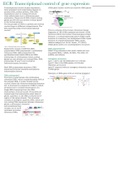
Transcriptional control of gene expression. rRNA gene cluster: active and inactive rRNA genes
Gene activation and suppression depend on
protein-DNA, protein-protein, DNA-DNA
interactions, and on nuclear structure.
Cells differentiate due to differential gene
expression. There are 20.000 protein-coding
genes and 25.000 non-protein coding “genes”
in the human genome.
For the process of DNA to a protein are various
control steps in different compartments. The
first important step is the transcriptional
control. This is a scheme of the human ribosomal repeat.
Segments of 18S rDNA analyzed are shown. rDNA
fractions within the human ribosomal gene arrays.
Fraction 1 is transcriptionally active rDNA copies.
Fraction 2 is inactive, low-methylated rDNA copies.
Fraction 3 is hypermethylated rDNA copies.
(Malinovskaya et al. Front. Genet., 07 (2018)
rRNA genes need to be unmethylated to be active.
Eukaryotes contain 3 different RNA RNA polymerase III
polymerases. RNA polymerase I: synthesizes RNAP III synthesizes a few small, stable and non-
ribosomal RNA, RNA polymerase III: translated RNAs (tRNA, 5S RNA, 7SL RNA, U6
synthesizes small stable RNAs and RNA snRNA, and others)
polymerase II: synthesizes protein-coding
genes but also several non-coding RNAs. RNA Intragenic promotors
polymerase IV and V are involved in type 1: like in the 5S rRNA gene A-I-C blocks
heterochromatin formation. type II: like in the tRNA genes, A+B blocks
Upstream promotors
Each RNA polymerase requires a DNA type III: atypical without intragenic elements: some
sequence/promoter elements and general U-RNA genes
transcription factors.
Example: A tRNA gene with an internal promotor
RNA polymerase I
This type of polymerase only synthesizes
ribosomal RNA, which is approximately 80% of
the cellular RNA. It is also located in the
nucleoli where the ribosome assembly factories
are. A promoter is a sequence of DNA to which
proteins bind to initiate transcription of a
single RNA transcript from the DNA
downstream of the promoter. Promoters are
located near the transcription start sites of
genes, upstream on the DNA (towards the 5’
region of the sense strand). The promoter
consists of Intergenic spacers (IGS), which are
non-coding DNA sequences between ribosomal
genes, a terminator, enhancer
and sometimes they
contain one or more
upstream promoter
elements (UPE).
, RNA polymerase II BRE works in connection with the TATA box. DPE
Gene transcription is controlled by diverse DNA is also a regulatory element and works with some
elements and associated proteins. All enhancers and not with others.
information used to correctly express a protein-
encoding gene is in its sequence. Not all drawn CpG island promoter
elements are usually present in a single Most promoters consist of CpG islands and no
promoter. TATA box. But because of other elements, RNA
polymerase II still “knows” where to begin. There
are often multiple start sites within this
promoter.
The assembly process begins when a
transcription factor binds to a short double-
helical DNA sequence that is composed of T and
A nucleotides. This sequence is known as the 70-80% of our genes have CpG islands, these are
TATA box. The TATA box is located 25 CpG rich in the DNA sequence. The length is
nucleotides upstream from the transcription around 200 bp to several kb. CpGs within CpG
start site. The TATA-binding protein (TBP) can islands are normally unmethylated while most
recognize the TATA box. CpGs outside CpG islands are methylated. There
Many polymerase II promoters have a TATA box, are about 29000 CpG islands in the genome
but some polymerases do not have a “strong” (1-2%). CpG islands nearly always surround
initiator element (INR) sequence. Most of the promoters and or exons. CpG islands typically
DNA sequences that influence transcription lack TATA or DPE elements but contain multiple
initiation are located upstream of the GC box motifs bound by the transcription factor
transcription start point (INR), but there are Sp1.
also sequences, and downstream promoter
elements (DPE) that are located in the
transcribed region.
Both the INR and DPE are core promoter
elements.
A typical eukaryotic TATA-box-containing RNA DNA cis-acting elements
polymerase II core promoter region promoter - enhancer - silencer
The function of cis-elements is to act as a
template/platform for the assembly of
multiprotein complexes. Gene-specific
transcription factors require “ cofactors” (co-
activators or repressors) to mediate their
regulatory effects.
Cross-talk between DNA transcription factors and
core GTFs: the co-activator/suppressor bridges.
(Roeder, R.G. (2005) Transcriptional regulation
and the role of diverse coactivators in animal
cells. FEBS)
BRE: TFIIB-recognition element
So there are a few promoter classes, classes that
have
• Only the TATA box
• Only INR
• Both the TATA box and INR
• Both INR and DPE
• Or no TATA box and no INR
No TATA box means that one or more of the
other elements have to be there.
Transcriptional control of gene expression. rRNA gene cluster: active and inactive rRNA genes
Gene activation and suppression depend on
protein-DNA, protein-protein, DNA-DNA
interactions, and on nuclear structure.
Cells differentiate due to differential gene
expression. There are 20.000 protein-coding
genes and 25.000 non-protein coding “genes”
in the human genome.
For the process of DNA to a protein are various
control steps in different compartments. The
first important step is the transcriptional
control. This is a scheme of the human ribosomal repeat.
Segments of 18S rDNA analyzed are shown. rDNA
fractions within the human ribosomal gene arrays.
Fraction 1 is transcriptionally active rDNA copies.
Fraction 2 is inactive, low-methylated rDNA copies.
Fraction 3 is hypermethylated rDNA copies.
(Malinovskaya et al. Front. Genet., 07 (2018)
rRNA genes need to be unmethylated to be active.
Eukaryotes contain 3 different RNA RNA polymerase III
polymerases. RNA polymerase I: synthesizes RNAP III synthesizes a few small, stable and non-
ribosomal RNA, RNA polymerase III: translated RNAs (tRNA, 5S RNA, 7SL RNA, U6
synthesizes small stable RNAs and RNA snRNA, and others)
polymerase II: synthesizes protein-coding
genes but also several non-coding RNAs. RNA Intragenic promotors
polymerase IV and V are involved in type 1: like in the 5S rRNA gene A-I-C blocks
heterochromatin formation. type II: like in the tRNA genes, A+B blocks
Upstream promotors
Each RNA polymerase requires a DNA type III: atypical without intragenic elements: some
sequence/promoter elements and general U-RNA genes
transcription factors.
Example: A tRNA gene with an internal promotor
RNA polymerase I
This type of polymerase only synthesizes
ribosomal RNA, which is approximately 80% of
the cellular RNA. It is also located in the
nucleoli where the ribosome assembly factories
are. A promoter is a sequence of DNA to which
proteins bind to initiate transcription of a
single RNA transcript from the DNA
downstream of the promoter. Promoters are
located near the transcription start sites of
genes, upstream on the DNA (towards the 5’
region of the sense strand). The promoter
consists of Intergenic spacers (IGS), which are
non-coding DNA sequences between ribosomal
genes, a terminator, enhancer
and sometimes they
contain one or more
upstream promoter
elements (UPE).
, RNA polymerase II BRE works in connection with the TATA box. DPE
Gene transcription is controlled by diverse DNA is also a regulatory element and works with some
elements and associated proteins. All enhancers and not with others.
information used to correctly express a protein-
encoding gene is in its sequence. Not all drawn CpG island promoter
elements are usually present in a single Most promoters consist of CpG islands and no
promoter. TATA box. But because of other elements, RNA
polymerase II still “knows” where to begin. There
are often multiple start sites within this
promoter.
The assembly process begins when a
transcription factor binds to a short double-
helical DNA sequence that is composed of T and
A nucleotides. This sequence is known as the 70-80% of our genes have CpG islands, these are
TATA box. The TATA box is located 25 CpG rich in the DNA sequence. The length is
nucleotides upstream from the transcription around 200 bp to several kb. CpGs within CpG
start site. The TATA-binding protein (TBP) can islands are normally unmethylated while most
recognize the TATA box. CpGs outside CpG islands are methylated. There
Many polymerase II promoters have a TATA box, are about 29000 CpG islands in the genome
but some polymerases do not have a “strong” (1-2%). CpG islands nearly always surround
initiator element (INR) sequence. Most of the promoters and or exons. CpG islands typically
DNA sequences that influence transcription lack TATA or DPE elements but contain multiple
initiation are located upstream of the GC box motifs bound by the transcription factor
transcription start point (INR), but there are Sp1.
also sequences, and downstream promoter
elements (DPE) that are located in the
transcribed region.
Both the INR and DPE are core promoter
elements.
A typical eukaryotic TATA-box-containing RNA DNA cis-acting elements
polymerase II core promoter region promoter - enhancer - silencer
The function of cis-elements is to act as a
template/platform for the assembly of
multiprotein complexes. Gene-specific
transcription factors require “ cofactors” (co-
activators or repressors) to mediate their
regulatory effects.
Cross-talk between DNA transcription factors and
core GTFs: the co-activator/suppressor bridges.
(Roeder, R.G. (2005) Transcriptional regulation
and the role of diverse coactivators in animal
cells. FEBS)
BRE: TFIIB-recognition element
So there are a few promoter classes, classes that
have
• Only the TATA box
• Only INR
• Both the TATA box and INR
• Both INR and DPE
• Or no TATA box and no INR
No TATA box means that one or more of the
other elements have to be there.