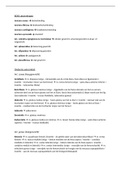
H0 = De gemiddelden onderling de groepen zijn gelijk
H1 = De gemiddelden onderling de groepen zijn niet gelijk/verschillen significant
Moderatie: wanneer een variabele de relatie tussen de hoofdPV en OV modereert (zoals o
Mediatie: wanneer een variabele de relatie tussen de andere twee variabelen medieert (z
** Let op signaalwoorden: Depends ziet toe op moderatie
Goes through / via ziet toe op mediatie.
, Dit zegt ook wel dat PV de OV niet beïnvloedt Higher levels of teacher commitment do not le
n significant Dit zegt ook wel dat de PV de OV wel beïnvloedt The more commited the teacher, the higher th
V en OV modereert (zoals onderstaand communication skills)
H0 = A teacher's communication skills will not influence the relationship between commitment of the teacher and st
H2 = Teachers that are more committed will increase the satisfaction level of students, but only when they have goo
Interactie, C (in SPSS *).
wee variabelen medieert (zoals onderstaand quality of course matieral. D.w.z. dat deze variabele het effect van de hoofdPV 'stuurt' op
H0 = The effect of teacher's commitment on student satisfaction is not mediated by quality of the course material.
H3= The positive effect of teacher's commitment on student satisfaction is mediated by quality of the course materi
,her commitment do not lead to higher satisfaction levels
the teacher, the higher the satisfaction level of students
ment of the teacher and student satisfaction.
only when they have good communication skills.
an de hoofdPV 'stuurt' op de OV.
y of the course material.
uality of the course material.
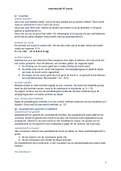
, FACTORIAL ANOVA
Interaction = moderation We look at the effect of a PV at fixed levels of a moderator variable
- The effect of one PV on the OV is moderated by another PV.
- The effect of one PV on the OV depends on the level of another PV.
- PV's interact in their effect on the OV.
With factorial ANOVA, we are examining how much of the variance in our OV can be explained by m
We use it when:
- OV = quantitative
- PV's = categorical
- Independent groups
- Variance is homogenous across groups
Steps: How:
1. Data suited for ANOVA? Nature of the variables, assumptions
2. Model as a whole makes sense? F-test model, R2
H1 = De gemiddelden onderling de groepen zijn niet gelijk/verschillen significant
Moderatie: wanneer een variabele de relatie tussen de hoofdPV en OV modereert (zoals o
Mediatie: wanneer een variabele de relatie tussen de andere twee variabelen medieert (z
** Let op signaalwoorden: Depends ziet toe op moderatie
Goes through / via ziet toe op mediatie.
, Dit zegt ook wel dat PV de OV niet beïnvloedt Higher levels of teacher commitment do not le
n significant Dit zegt ook wel dat de PV de OV wel beïnvloedt The more commited the teacher, the higher th
V en OV modereert (zoals onderstaand communication skills)
H0 = A teacher's communication skills will not influence the relationship between commitment of the teacher and st
H2 = Teachers that are more committed will increase the satisfaction level of students, but only when they have goo
Interactie, C (in SPSS *).
wee variabelen medieert (zoals onderstaand quality of course matieral. D.w.z. dat deze variabele het effect van de hoofdPV 'stuurt' op
H0 = The effect of teacher's commitment on student satisfaction is not mediated by quality of the course material.
H3= The positive effect of teacher's commitment on student satisfaction is mediated by quality of the course materi
,her commitment do not lead to higher satisfaction levels
the teacher, the higher the satisfaction level of students
ment of the teacher and student satisfaction.
only when they have good communication skills.
an de hoofdPV 'stuurt' op de OV.
y of the course material.
uality of the course material.
, FACTORIAL ANOVA
Interaction = moderation We look at the effect of a PV at fixed levels of a moderator variable
- The effect of one PV on the OV is moderated by another PV.
- The effect of one PV on the OV depends on the level of another PV.
- PV's interact in their effect on the OV.
With factorial ANOVA, we are examining how much of the variance in our OV can be explained by m
We use it when:
- OV = quantitative
- PV's = categorical
- Independent groups
- Variance is homogenous across groups
Steps: How:
1. Data suited for ANOVA? Nature of the variables, assumptions
2. Model as a whole makes sense? F-test model, R2