Unit 8: Physiology of Human Body Systems
Impact of lymphatic disorder and associated treatments
The lymphatic system is a network of tissues, vessels and organs that work together to
move a colourless and a watery fluid called lymph which moves back into your circulatory
system (bloodstream).
The lymphatic system includes a circulatory network of vessels and lymphoid tissue and
cells in every part of the body. It works together with the blood - producing (haematopoietic)
system in bone marrow, therefore plays a vital role in immune responses to protect the body
from various pathogens, also the lymphatic vessels network helps transporting nutrients and
waste products in the body. (lgdalliance.org)
/
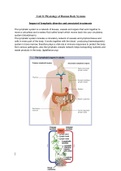
, The lymphoid organs are:
- Red bone marrow
- Thymus gland
- Spleen
- Lymph nodes
- Lymph vessels
- Tonsils
The Lymphatic system is composed of:
● Primary lymphoid organs: These organs include the bone marrow and the
thymus, they create special immune system cells that are called the
lymphocytes.
● Secondary lymphoid organs: In these organs is where the cells of the
immune system do their job of fighting germs and foreign substances, the
organs include; lymph nodes, the spleen, the tonsils and some tissues in the
mucous membrane in the body.
Lymph and lymph vessels
The vessel network is part of the circulatory system, which is closely connected to the
transport system in the human body. The human body produces about two litres of lymph
every day, the lymph transports nutrients and oxygen for the cells as well as immune cells
(such as lymphocytes), while circulating through the interstitial spaces of various tissues,
lymph also picks up many of the body waste products and carbon dioxide. Also the lymph
transports fat from the intestines to the blood. Lymph vessels work under very low pressure,
they have a series of valves in them to keep the fluid moving in one direction.
Lymph nodes
Lymph nodes are bean-shaped glands that
monitor and cleanse the lymph as it filters
through them. The main substance of the
node consists of reticular and lymphatic
tissue containing many lymphocytes and
macrophages, each node has a concave
surface called the hilum where an artery
enters and a vein and the efferent lymph
vessel leaves, the nodes filter out the
damaged cells and cancer cells.
These lymph nodes also produce and
store lymphocytes and other immune
system cells that attack and destroy bacteria and other harmful substances in the fluid. You
have about 600 lymph nodes through your body, familiar locations of lymph nodes are in
your neck, groin and armpit.
Impact of lymphatic disorder and associated treatments
The lymphatic system is a network of tissues, vessels and organs that work together to
move a colourless and a watery fluid called lymph which moves back into your circulatory
system (bloodstream).
The lymphatic system includes a circulatory network of vessels and lymphoid tissue and
cells in every part of the body. It works together with the blood - producing (haematopoietic)
system in bone marrow, therefore plays a vital role in immune responses to protect the body
from various pathogens, also the lymphatic vessels network helps transporting nutrients and
waste products in the body. (lgdalliance.org)
/
, The lymphoid organs are:
- Red bone marrow
- Thymus gland
- Spleen
- Lymph nodes
- Lymph vessels
- Tonsils
The Lymphatic system is composed of:
● Primary lymphoid organs: These organs include the bone marrow and the
thymus, they create special immune system cells that are called the
lymphocytes.
● Secondary lymphoid organs: In these organs is where the cells of the
immune system do their job of fighting germs and foreign substances, the
organs include; lymph nodes, the spleen, the tonsils and some tissues in the
mucous membrane in the body.
Lymph and lymph vessels
The vessel network is part of the circulatory system, which is closely connected to the
transport system in the human body. The human body produces about two litres of lymph
every day, the lymph transports nutrients and oxygen for the cells as well as immune cells
(such as lymphocytes), while circulating through the interstitial spaces of various tissues,
lymph also picks up many of the body waste products and carbon dioxide. Also the lymph
transports fat from the intestines to the blood. Lymph vessels work under very low pressure,
they have a series of valves in them to keep the fluid moving in one direction.
Lymph nodes
Lymph nodes are bean-shaped glands that
monitor and cleanse the lymph as it filters
through them. The main substance of the
node consists of reticular and lymphatic
tissue containing many lymphocytes and
macrophages, each node has a concave
surface called the hilum where an artery
enters and a vein and the efferent lymph
vessel leaves, the nodes filter out the
damaged cells and cancer cells.
These lymph nodes also produce and
store lymphocytes and other immune
system cells that attack and destroy bacteria and other harmful substances in the fluid. You
have about 600 lymph nodes through your body, familiar locations of lymph nodes are in
your neck, groin and armpit.