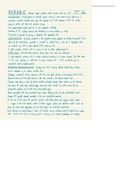
A É ROB I C
I
glycolysis 2- link
-
requires oxygen produces
:
,
carbon dioxide water and ,
ATP ,
3- Krebs 4- °ñ¥ñ!Ñim
GLYCOLYSIS -
Phosphorylation to activate glucose making it more reactive by the addition of 2
phosphates phosphate molecules
, come from the hydrolysis of 2 ATP molecules to ADP ,
this provides
and lowers the activation energy
energy for glucose
Each phosphorylated glucose splits into 2 brose phosphate molecules
Oxidation of TP :
hydrogen removed and transferred to a carrier molecule e.
g. NAD
TP converted to pyruvate by loosing a phosphate and regenerating ATP
LINK REACTION Pyruvate produced
-
in the cytoplasm during glycolysis are actively transported to the
matrix of the mitochondria pyruvate is ,
oxidised to acetate loses ,
a CO2 and 2 hydrogens ,
these
are accepted by NAD to form reduced NAD producing ATP
2- carbon acetate combines with co -
enzyme A Goal to produce acetyl coenzyme A
KREBS CYCLE -
Series of redox reactions taking place in the matrix of mitochondria
2- carbon acetyl CoA combines with 4- carbon molecule to produce a 6- carbon molecule ,
this then loses
2 CO2 and hydrogen to reform the 4-carbon molecule and I ✗ ATP produced due to
substrate level phosphorylation
transfer down electron
OXIDATIVE PHOSPHORYLATION Synthesis of ATP
involving electron
-
carrier molecules in an electron transfer chain
Hydrogen produced during gby costs and the Krebs cycle combine with coenzymes (NAD ,
FA D)
Reduced NAD and FAD donate electrons to the first molecule in
the electron transfer cham
Electrons pass along a chain of electron transfer molecules through redox reactions ,
as the electrons
move down the chain they release
energy causing the
active transport of protons across the inner
mitochondrial membrane and into the inter mitochondrial space -
Protons accumulate in the inter -
mitochondrial space before diffusing back into the mitochondrial matrix
through ATP synalhe channels embedded in the inner mitochondrial membrane
At the end of the chain the electrons combine with these protons and oxygen
to form water ,
the final electron acceptor ( without protons and electrons would back
•
is
oxygen oxygen up
•
.
,
along the cham 1 from glycolysis and the Krebs cycle ) this would stop
, respiration
Since electrons are passed along a chain with transfer carrier molecules each at slightly lower
energy
levels electrons down be released
: move an
energy gradient so
energy can more usefully
I
glycolysis 2- link
-
requires oxygen produces
:
,
carbon dioxide water and ,
ATP ,
3- Krebs 4- °ñ¥ñ!Ñim
GLYCOLYSIS -
Phosphorylation to activate glucose making it more reactive by the addition of 2
phosphates phosphate molecules
, come from the hydrolysis of 2 ATP molecules to ADP ,
this provides
and lowers the activation energy
energy for glucose
Each phosphorylated glucose splits into 2 brose phosphate molecules
Oxidation of TP :
hydrogen removed and transferred to a carrier molecule e.
g. NAD
TP converted to pyruvate by loosing a phosphate and regenerating ATP
LINK REACTION Pyruvate produced
-
in the cytoplasm during glycolysis are actively transported to the
matrix of the mitochondria pyruvate is ,
oxidised to acetate loses ,
a CO2 and 2 hydrogens ,
these
are accepted by NAD to form reduced NAD producing ATP
2- carbon acetate combines with co -
enzyme A Goal to produce acetyl coenzyme A
KREBS CYCLE -
Series of redox reactions taking place in the matrix of mitochondria
2- carbon acetyl CoA combines with 4- carbon molecule to produce a 6- carbon molecule ,
this then loses
2 CO2 and hydrogen to reform the 4-carbon molecule and I ✗ ATP produced due to
substrate level phosphorylation
transfer down electron
OXIDATIVE PHOSPHORYLATION Synthesis of ATP
involving electron
-
carrier molecules in an electron transfer chain
Hydrogen produced during gby costs and the Krebs cycle combine with coenzymes (NAD ,
FA D)
Reduced NAD and FAD donate electrons to the first molecule in
the electron transfer cham
Electrons pass along a chain of electron transfer molecules through redox reactions ,
as the electrons
move down the chain they release
energy causing the
active transport of protons across the inner
mitochondrial membrane and into the inter mitochondrial space -
Protons accumulate in the inter -
mitochondrial space before diffusing back into the mitochondrial matrix
through ATP synalhe channels embedded in the inner mitochondrial membrane
At the end of the chain the electrons combine with these protons and oxygen
to form water ,
the final electron acceptor ( without protons and electrons would back
•
is
oxygen oxygen up
•
.
,
along the cham 1 from glycolysis and the Krebs cycle ) this would stop
, respiration
Since electrons are passed along a chain with transfer carrier molecules each at slightly lower
energy
levels electrons down be released
: move an
energy gradient so
energy can more usefully