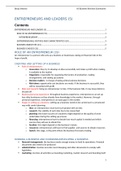
Borja Jimenez AS Business Revision Summaries
ENTREPRENEURS AND LEADERS (5)
Contents
ENTREPRENEURS AND LEADERS (5).......................................................................................................1
ROLE OF AN ENTREPRENEUR (19)......................................................................................................1
INTRAPRENEURSHIP.......................................................................................................................3
ENTREPRENEURIAL MOTIVES AND CHARACTERISTICS (20)...............................................................3
BUSINESS OBJECTIVES (21)................................................................................................................4
BUSINESS CHOICES (22).....................................................................................................................5
ROLE OF AN ENTREPRENEUR (19)
An entrepreneur is a person who sets up a business or businesses, taking on financial risks in the
hope of profit.
CREATING AND SETTING UP A BUSINESS
Role of entrepreneurs:
o Innovators: they try to develop an idea successfully and make a profit when making
it available to the market
o Organizers: responsible for organizing the factors of production, making
arrangements, and setting up systems
o Decision makers: in charge of taking all key business decisions
o Risk takers: opportunity cost decisions are made. If the business is successful, they
will be rewarded with profit
Risks and rewards: being an entrepreneur is risky. If the business fails, it may leave debts to
be paid off.
Business/personal experience: throughout business experience, entrepreneurs can set up
less-risky businesses as they already have knowledge in the market. However, through
personal experience, entrepreneurs can spot gaps in the market.
Stages in setting up a business: setting up a business needs to be carried out in a structured
way with careful planning.
o idea: an entrepreneur must start such project with an idea
o research: the viability of such idea has to be researched
o planning: the future success of a business might depend on the quality of work
undertaken during the setting-up process
o financing: entrepreneurs have to decide how much capital is needed and which
sources they will use to obtain this.
o location: this might depend on the business’s nature.
o resources: entrepreneurs will have to find supplier, and sources to obtain resources
o launch: this stage, is the point where the business first starts trading
RUNNING A BUSINESS AND EXPANDING/DEVELOPING A BUSINESS
financial management: the business needs enough money to fund its operations. Financial
documents also need to be produced
administration: involves accurate record keeping and other documents to comply with
legislation.
marketing: involves all activities surrounding marketing, market research and branding itself
1
, Borja Jimenez AS Business Revision Summaries
purchasing: businesses are required to constantly purchase resources. Entrepreneurs need
to get the best quality resources at the lowest possible price
managing people: entrepreneurs need to develop skills in managing people, motivating
staff, and recruiting appropriate candidates.
production: the entrepreneur will need to monitor product quality and consistency, consider
safety issues, and ensure that production levels match orders.
BARRIERS TO ENTREPRENEURSHIP
lack of finance: entrepreneurs might struggle to raise necessary finance. Investors and
financial institutions might be reluctant to lend finance to entrepreneurs as they present too
much of a risk
lack of entrepreneurial capacity: entrepreneurs must ensure they have the necessary skills
and characteristics to manage a business effectively
lack of ability to be an employer: entrepreneurs must ensure that the correct individuals are
employed, and that they are managed and treated accordingly in order to ensure optimum
labor productivity and efficiency.
legal barriers (red tape): bureaucratic red tape can discourage potential entrepreneurs.
Legislation and other regulations can be demanding. These can divert an entrepreneurs
focus
lack of ideas: some entrepreneurs may lack original ideas. A lot of markets are saturated or
so competitive that the potential for profit is limited
fear of failure: fear of failure is an important factor that stops entrepreneurs from setting up
an enterprise. Failure has very negative associations and is best avoided if possible
aversion to risk: many people are risk averse and are not inclined to undertake activities
where the outcome is uncertain. This is considered a psychological barrier
corrupt and unsupportive environment: different geographical areas and cultures may be
unsupportive towards entrepreneurs. This means entrepreneurs might have to develop
friendly ties with government officials and bureaucrats to ensure smooth business
operations.
ANTICIPATING RISK AND UNCERTAINTY IN THE BUSINESS ENVIORNMENT
anticipating risk: entrepreneurs can take measures to reduce the amount of risk they take.
By testing, and using quantitative techniques when making important decisions, will help to
measure the possible outcome of actions which makes final evaluation easier.
anticipating uncertainty: this is presented as a more severe problem for entrepreneurs as
they have no control over the nature or timing of events. Uncertainty could lead to
businesses postponing o cancelling investment projects. As a result, Entrepreneurs must be
able to make some preparations to deal with possible consequences. Methods such as
PESTLE, SWOT analysis, and risk assessment may help to prepare for unexpected events and
improve the quality of decision making.
2
ENTREPRENEURS AND LEADERS (5)
Contents
ENTREPRENEURS AND LEADERS (5).......................................................................................................1
ROLE OF AN ENTREPRENEUR (19)......................................................................................................1
INTRAPRENEURSHIP.......................................................................................................................3
ENTREPRENEURIAL MOTIVES AND CHARACTERISTICS (20)...............................................................3
BUSINESS OBJECTIVES (21)................................................................................................................4
BUSINESS CHOICES (22).....................................................................................................................5
ROLE OF AN ENTREPRENEUR (19)
An entrepreneur is a person who sets up a business or businesses, taking on financial risks in the
hope of profit.
CREATING AND SETTING UP A BUSINESS
Role of entrepreneurs:
o Innovators: they try to develop an idea successfully and make a profit when making
it available to the market
o Organizers: responsible for organizing the factors of production, making
arrangements, and setting up systems
o Decision makers: in charge of taking all key business decisions
o Risk takers: opportunity cost decisions are made. If the business is successful, they
will be rewarded with profit
Risks and rewards: being an entrepreneur is risky. If the business fails, it may leave debts to
be paid off.
Business/personal experience: throughout business experience, entrepreneurs can set up
less-risky businesses as they already have knowledge in the market. However, through
personal experience, entrepreneurs can spot gaps in the market.
Stages in setting up a business: setting up a business needs to be carried out in a structured
way with careful planning.
o idea: an entrepreneur must start such project with an idea
o research: the viability of such idea has to be researched
o planning: the future success of a business might depend on the quality of work
undertaken during the setting-up process
o financing: entrepreneurs have to decide how much capital is needed and which
sources they will use to obtain this.
o location: this might depend on the business’s nature.
o resources: entrepreneurs will have to find supplier, and sources to obtain resources
o launch: this stage, is the point where the business first starts trading
RUNNING A BUSINESS AND EXPANDING/DEVELOPING A BUSINESS
financial management: the business needs enough money to fund its operations. Financial
documents also need to be produced
administration: involves accurate record keeping and other documents to comply with
legislation.
marketing: involves all activities surrounding marketing, market research and branding itself
1
, Borja Jimenez AS Business Revision Summaries
purchasing: businesses are required to constantly purchase resources. Entrepreneurs need
to get the best quality resources at the lowest possible price
managing people: entrepreneurs need to develop skills in managing people, motivating
staff, and recruiting appropriate candidates.
production: the entrepreneur will need to monitor product quality and consistency, consider
safety issues, and ensure that production levels match orders.
BARRIERS TO ENTREPRENEURSHIP
lack of finance: entrepreneurs might struggle to raise necessary finance. Investors and
financial institutions might be reluctant to lend finance to entrepreneurs as they present too
much of a risk
lack of entrepreneurial capacity: entrepreneurs must ensure they have the necessary skills
and characteristics to manage a business effectively
lack of ability to be an employer: entrepreneurs must ensure that the correct individuals are
employed, and that they are managed and treated accordingly in order to ensure optimum
labor productivity and efficiency.
legal barriers (red tape): bureaucratic red tape can discourage potential entrepreneurs.
Legislation and other regulations can be demanding. These can divert an entrepreneurs
focus
lack of ideas: some entrepreneurs may lack original ideas. A lot of markets are saturated or
so competitive that the potential for profit is limited
fear of failure: fear of failure is an important factor that stops entrepreneurs from setting up
an enterprise. Failure has very negative associations and is best avoided if possible
aversion to risk: many people are risk averse and are not inclined to undertake activities
where the outcome is uncertain. This is considered a psychological barrier
corrupt and unsupportive environment: different geographical areas and cultures may be
unsupportive towards entrepreneurs. This means entrepreneurs might have to develop
friendly ties with government officials and bureaucrats to ensure smooth business
operations.
ANTICIPATING RISK AND UNCERTAINTY IN THE BUSINESS ENVIORNMENT
anticipating risk: entrepreneurs can take measures to reduce the amount of risk they take.
By testing, and using quantitative techniques when making important decisions, will help to
measure the possible outcome of actions which makes final evaluation easier.
anticipating uncertainty: this is presented as a more severe problem for entrepreneurs as
they have no control over the nature or timing of events. Uncertainty could lead to
businesses postponing o cancelling investment projects. As a result, Entrepreneurs must be
able to make some preparations to deal with possible consequences. Methods such as
PESTLE, SWOT analysis, and risk assessment may help to prepare for unexpected events and
improve the quality of decision making.
2