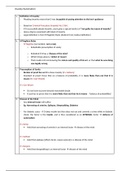
Anthony Giddens - Studies in Social and Political Theory
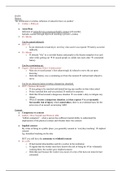
Chapter Two: Functionalism
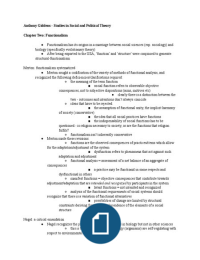
● Functionalism has its origins in a marriage between social sciences (esp. sociology) and
biology (specifically evolutionary theory)
● After being exported to the USA, ‘function’ and ‘structure’ were conjoined to generate
structural-functionalism
Merton: functionalism systematized
● Merton sought a codification of the variety of methods of functional analysis, and
recognized the following deficiencies/clarifications required:
○ the meaning of the term function
■ social function refers to observable objective
consequences, not to subjective dispositions (aims, motives etc)
● clearly there is a distinction between the
two - outcomes and intentions don’t always coincide
○ ideas that have to be rejected:
■ the assumption of functional unity, the implicit harmony
of society (conservative)
■ the idea that all social practices have functions
■ the indispensability of social functions has to be
questioned - is religion necessary to society, or are the functions that religion
fulfils?
○ functionalism isn’t inherently conservative
● Merton made these revisions:
○ functions are the observed consequences of practices/items which allow
for the adaptation/adjustment of the system
■ dysfunction refers to phenomena that act against such
adaptation and adjustment
○ functional analysis = assessment of a net balance of an aggregate of
consequences
■ a practice may be functional in some respects and
dysfunctional in others
○ manifest functions = objective consequences that contribute towards
adjustment/adaptation that are intended and recognized by participants in the system
■ latent functions = not intended and recognized
○ analysis of the functional requirements of social systems should
recognize that there is a variation of functional alternatives
■ possibilities of change are limited by structural
constraints deriving from the interdependence of the elements of a social
structure
Nagel: a critical emendation
● Nagel recognizes the presence of functional notions in biology but not in other sciences
○ this is because the entities of biology (organisms) are self-regulating with
respect to environmental changes
Chapter Two: Functionalism
● Functionalism has its origins in a marriage between social sciences (esp. sociology) and
biology (specifically evolutionary theory)
● After being exported to the USA, ‘function’ and ‘structure’ were conjoined to generate
structural-functionalism
Merton: functionalism systematized
● Merton sought a codification of the variety of methods of functional analysis, and
recognized the following deficiencies/clarifications required:
○ the meaning of the term function
■ social function refers to observable objective
consequences, not to subjective dispositions (aims, motives etc)
● clearly there is a distinction between the
two - outcomes and intentions don’t always coincide
○ ideas that have to be rejected:
■ the assumption of functional unity, the implicit harmony
of society (conservative)
■ the idea that all social practices have functions
■ the indispensability of social functions has to be
questioned - is religion necessary to society, or are the functions that religion
fulfils?
○ functionalism isn’t inherently conservative
● Merton made these revisions:
○ functions are the observed consequences of practices/items which allow
for the adaptation/adjustment of the system
■ dysfunction refers to phenomena that act against such
adaptation and adjustment
○ functional analysis = assessment of a net balance of an aggregate of
consequences
■ a practice may be functional in some respects and
dysfunctional in others
○ manifest functions = objective consequences that contribute towards
adjustment/adaptation that are intended and recognized by participants in the system
■ latent functions = not intended and recognized
○ analysis of the functional requirements of social systems should
recognize that there is a variation of functional alternatives
■ possibilities of change are limited by structural
constraints deriving from the interdependence of the elements of a social
structure
Nagel: a critical emendation
● Nagel recognizes the presence of functional notions in biology but not in other sciences
○ this is because the entities of biology (organisms) are self-regulating with
respect to environmental changes