Herbert Blumer - Society as Symbolic Interaction
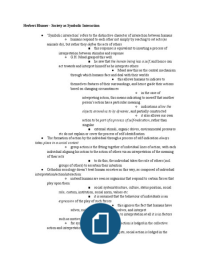
● ‘Symbolic interaction’ refers to the distinctive character of interaction between humans
○ humans respond to each other not simply by reacting to set acts (as
animals do), but rather they define the acts of others
■ this response is equivalent to inserting a process of
interpretation between stimulus and response
○ G.H. Mead grasped this well.
■ he saw that the human being has a self, and hence can
act towards and interpret himself as he interprets others
● Mead saw this as the central mechanism
through which humans face and deal with their worlds
● this allows humans to indicate to
themselves features of their surroundings, and hence guide their actions
based on changing circumstances
○ in the case of
interpreting action, this means indicating to oneself that another
person’s action has a particular meaning
○ indications allow the
objects around us to by dynamic, and partially constructed
○ it also allows our own
action to be part of a process of self-indication, rather than
singular
■ external stimuli, organic drives, environmental pressures
etc do not explain or cover the process of self-identification
● The formation of action by the individual through a process of self-indication always
takes place in a social context
○ group action is the fitting together of individual lines of action; with each
individual aligning his action to the action of others via an interpretation of the meaning
of their acts
■ to do this, the individual takes the role of others (incl.
groups of others) to ascertain their intention
● Orthodox sociology doesn’t treat human societies in this way, as composed of individual
interpretation/action/interaction:
○ instead humans are seen as organisms that respond to certain forces that
play upon them:
■ social system/structure, culture, status position, social
role, custom, institution, social norm, values etc
■ it is assumed that the behaviour of individuals is an
expression of the play of such forces
● this ignores the fact that humans have
selves, make indications to themselves, and interpret
■ if a place is given to interpretation at all it is in factors
such as motive that precede the act
○ for symbolic interactionists, social action is lodged in the collective
action and interpretations of a group of individuals
■ for other sociologists, social action is lodged in the
● ‘Symbolic interaction’ refers to the distinctive character of interaction between humans
○ humans respond to each other not simply by reacting to set acts (as
animals do), but rather they define the acts of others
■ this response is equivalent to inserting a process of
interpretation between stimulus and response
○ G.H. Mead grasped this well.
■ he saw that the human being has a self, and hence can
act towards and interpret himself as he interprets others
● Mead saw this as the central mechanism
through which humans face and deal with their worlds
● this allows humans to indicate to
themselves features of their surroundings, and hence guide their actions
based on changing circumstances
○ in the case of
interpreting action, this means indicating to oneself that another
person’s action has a particular meaning
○ indications allow the
objects around us to by dynamic, and partially constructed
○ it also allows our own
action to be part of a process of self-indication, rather than
singular
■ external stimuli, organic drives, environmental pressures
etc do not explain or cover the process of self-identification
● The formation of action by the individual through a process of self-indication always
takes place in a social context
○ group action is the fitting together of individual lines of action; with each
individual aligning his action to the action of others via an interpretation of the meaning
of their acts
■ to do this, the individual takes the role of others (incl.
groups of others) to ascertain their intention
● Orthodox sociology doesn’t treat human societies in this way, as composed of individual
interpretation/action/interaction:
○ instead humans are seen as organisms that respond to certain forces that
play upon them:
■ social system/structure, culture, status position, social
role, custom, institution, social norm, values etc
■ it is assumed that the behaviour of individuals is an
expression of the play of such forces
● this ignores the fact that humans have
selves, make indications to themselves, and interpret
■ if a place is given to interpretation at all it is in factors
such as motive that precede the act
○ for symbolic interactionists, social action is lodged in the collective
action and interpretations of a group of individuals
■ for other sociologists, social action is lodged in the