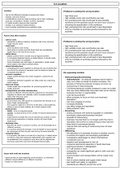
5.4 Location
Location: Problems in picking the wrong location
• can be the difference between success and failure
• high fixed cost
• impacts cost and revenue
• considerations must be made including cost of land, buildings, • high variable costs, less contribution per sale
local pay, competitors, footfall, workers, reputation • low unemployment rate would lead to less possible
• IT makes location become less important workforce so the business would not have much choice in
• location is an objective based decision choosing the specification of the workforce
• must consider quantitative and qualitative data • high unemployment rate would lead to less disposable
income of people to purchase goods produced by the
business
Factors that affect location:
• Labour costs
• production is labour intensive, locations with a low minimum Problems in picking the wrong location
wage reduces costs
• Land costs • high fixed cost
• prime locations cost money • high variable costs, less contribution per sale
• land prices in London and the South East are considerably • low unemployment rate would lead to less possible
higher than in the rest of the country workforce so the business would not have much choice in
• skilled labour choosing the specification of the workforce
• skilled workers tend to cluster around regional centres
• if a business depends heavily on skilled labour, it should locate • high unemployment rate would lead to less disposable
to an area where it is available income of people to purchase goods produced by the
• local universities may also begin to specialise in certain areas business
which adds to the regions attractiveness
• shared infrastructure
• competing firms work together to develop the use of assets that
are vital to the industry’s operation such as shared oil pipes for
companies that drill oil Re-organising location
• access to suppliers
• supply chains develop near where suppliers’ customers are • Outsourcing/subcontracting
located
• subcontractor - an external company that is hired to
• competition between suppliers can keep costs low, improving
profit margins carry out a task on behalf of another company. The
• improved image process of hiring the external company is known as
• certain areas have a reputation for producing specific high outsourcing or subcontracting
quality products • it involves paying an outside company to carry out a task
• transportation and other infrastructure that may have traditionally have been seen as an internal
• access to efficient networks allows customers to visit stores and business function or responsibility
suppliers to deliver raw materials, which increases potential • cost-saving potential
sales while reducing costs • allow company to focus on their core business/
• government assistance specialism
• governments may offer grants to companies that relocate to an
area of high unemployment • can lose a degree of control
• the supports might be in the form of free land, a favourable tax • increased flexibility
status or even a direct subsidy, all of which reduce costs • can affect image and reputation
• trade barriers • data protection risks
• tariffs - a tax on imported goods • Insourcing
• quotas - a physical limit on the number of imports allowed into a • ending contracts with external suppliers to undertake
country previously outsourced business functions
• trade barriers increase the cost of exporting to another country • opposite of outsourcing
and moving production to another country will avoid these • business may feel that it is no longer worth the risk to
restrictions reputation and control of outsourcing so they insource
• exchange rates
• keep hold of commercial secrets
• the price for which a country’s currency can be exchanges for a
different currency • may be that cost saving of outsourcing has not been
• if a currency becomes stronger, it can be harder to export goods beneficial
as customers will have to pay more to buy the same quantity • Offshoring
• company history • the relocation of a business function to another country
• if a company has been in an area for a long time, it makes sense • countries and regions are developing specialised
for them to stay there because relationships with suppliers will comparative advantages to attract international
be established, the company’s work force will be experiences companies such as:
and local customers may have developed brand loyalty • research and development in the UK
• consumer electronics assembly in South East Asia
• clothing production in Bangladesh
• ICT call centres in India
• companies can make significant gains in both cost and
Issues with multi-site locations productivity
• communication and transportation will be made more
• diseconomies of scale regarding communication, co-ordination difficult
• different cultural difference in different countries • risk of culture clashes and supply chain issues
• impact on other stores • less health and safety or regulation
• standards are different around the world
Location: Problems in picking the wrong location
• can be the difference between success and failure
• high fixed cost
• impacts cost and revenue
• considerations must be made including cost of land, buildings, • high variable costs, less contribution per sale
local pay, competitors, footfall, workers, reputation • low unemployment rate would lead to less possible
• IT makes location become less important workforce so the business would not have much choice in
• location is an objective based decision choosing the specification of the workforce
• must consider quantitative and qualitative data • high unemployment rate would lead to less disposable
income of people to purchase goods produced by the
business
Factors that affect location:
• Labour costs
• production is labour intensive, locations with a low minimum Problems in picking the wrong location
wage reduces costs
• Land costs • high fixed cost
• prime locations cost money • high variable costs, less contribution per sale
• land prices in London and the South East are considerably • low unemployment rate would lead to less possible
higher than in the rest of the country workforce so the business would not have much choice in
• skilled labour choosing the specification of the workforce
• skilled workers tend to cluster around regional centres
• if a business depends heavily on skilled labour, it should locate • high unemployment rate would lead to less disposable
to an area where it is available income of people to purchase goods produced by the
• local universities may also begin to specialise in certain areas business
which adds to the regions attractiveness
• shared infrastructure
• competing firms work together to develop the use of assets that
are vital to the industry’s operation such as shared oil pipes for
companies that drill oil Re-organising location
• access to suppliers
• supply chains develop near where suppliers’ customers are • Outsourcing/subcontracting
located
• subcontractor - an external company that is hired to
• competition between suppliers can keep costs low, improving
profit margins carry out a task on behalf of another company. The
• improved image process of hiring the external company is known as
• certain areas have a reputation for producing specific high outsourcing or subcontracting
quality products • it involves paying an outside company to carry out a task
• transportation and other infrastructure that may have traditionally have been seen as an internal
• access to efficient networks allows customers to visit stores and business function or responsibility
suppliers to deliver raw materials, which increases potential • cost-saving potential
sales while reducing costs • allow company to focus on their core business/
• government assistance specialism
• governments may offer grants to companies that relocate to an
area of high unemployment • can lose a degree of control
• the supports might be in the form of free land, a favourable tax • increased flexibility
status or even a direct subsidy, all of which reduce costs • can affect image and reputation
• trade barriers • data protection risks
• tariffs - a tax on imported goods • Insourcing
• quotas - a physical limit on the number of imports allowed into a • ending contracts with external suppliers to undertake
country previously outsourced business functions
• trade barriers increase the cost of exporting to another country • opposite of outsourcing
and moving production to another country will avoid these • business may feel that it is no longer worth the risk to
restrictions reputation and control of outsourcing so they insource
• exchange rates
• keep hold of commercial secrets
• the price for which a country’s currency can be exchanges for a
different currency • may be that cost saving of outsourcing has not been
• if a currency becomes stronger, it can be harder to export goods beneficial
as customers will have to pay more to buy the same quantity • Offshoring
• company history • the relocation of a business function to another country
• if a company has been in an area for a long time, it makes sense • countries and regions are developing specialised
for them to stay there because relationships with suppliers will comparative advantages to attract international
be established, the company’s work force will be experiences companies such as:
and local customers may have developed brand loyalty • research and development in the UK
• consumer electronics assembly in South East Asia
• clothing production in Bangladesh
• ICT call centres in India
• companies can make significant gains in both cost and
Issues with multi-site locations productivity
• communication and transportation will be made more
• diseconomies of scale regarding communication, co-ordination difficult
• different cultural difference in different countries • risk of culture clashes and supply chain issues
• impact on other stores • less health and safety or regulation
• standards are different around the world