FL08 – Title Based Finance & Repo Financing 20/11/15
Prof. Michael Shillig
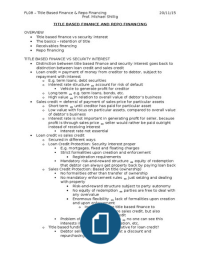
TITLE BASED FINANCE AND REPO FINANCING
OVERVIEW
Title based finance vs security interest
The basics – retention of title
Receivables financing
Repo financing
TITLE BASED FINANCE VS SECURITY INTEREST
Distinction between title based finance and security interest goes back to
distinction between loan credit and sales credit
Loan credit = payment of money from creditor to debtor, subject to
repayment with interest
o E.g. term loans, debt securities
o Interest rate structure account for risk of default
Vehicle to generate profit for creditor
o Long term e.g. term loans, bonds, etc.
o High value in relation to overall value of debtor’s business
Sales credit = deferral of payment of sales price for particular assets
o Short term until creditor has paid for particular asset
o Low value with focus on particular assets, compared to overall value
of debtor’s business
o Interest rate is not important in generating profit for seller, because
profit is through sales price seller would rather be paid outright
instead of receiving interest
Interest rate not essential
Loan credit vs sales credit
o Secured in different ways
o Loan Credit Protection: Security interest proper
E.g. mortgages, fixed and floating charges
Strict formalities upon creation and enforcement
Registration requirements
Mandatory risk-and-reward structure equity of redemption
that debtor can always get property back by paying loan back
o Sales Credit Protection: Based on title (ownership)
No formalities other than transfer of ownership
No mandatory enforcement rules just seizing and dealing
with property
Risk-and-reward structure subject to party autonomy
No equity of redemption parties are free to deal with
any overvalue
Enormous flexibility lack of formalities upon creation
and upon enforcement
o Incentive to use title based finance to
traditionally secure sales credit, but also
sometimes loan credit
Problem of ostensible ownership no one can see this
interests in title, since no registration, etc.
o Title based funding as a cheaper alternative for loan credit?
Debtor selling asset to creditor at a discount and
repurchasing it
Prof. Michael Shillig
TITLE BASED FINANCE AND REPO FINANCING
OVERVIEW
Title based finance vs security interest
The basics – retention of title
Receivables financing
Repo financing
TITLE BASED FINANCE VS SECURITY INTEREST
Distinction between title based finance and security interest goes back to
distinction between loan credit and sales credit
Loan credit = payment of money from creditor to debtor, subject to
repayment with interest
o E.g. term loans, debt securities
o Interest rate structure account for risk of default
Vehicle to generate profit for creditor
o Long term e.g. term loans, bonds, etc.
o High value in relation to overall value of debtor’s business
Sales credit = deferral of payment of sales price for particular assets
o Short term until creditor has paid for particular asset
o Low value with focus on particular assets, compared to overall value
of debtor’s business
o Interest rate is not important in generating profit for seller, because
profit is through sales price seller would rather be paid outright
instead of receiving interest
Interest rate not essential
Loan credit vs sales credit
o Secured in different ways
o Loan Credit Protection: Security interest proper
E.g. mortgages, fixed and floating charges
Strict formalities upon creation and enforcement
Registration requirements
Mandatory risk-and-reward structure equity of redemption
that debtor can always get property back by paying loan back
o Sales Credit Protection: Based on title (ownership)
No formalities other than transfer of ownership
No mandatory enforcement rules just seizing and dealing
with property
Risk-and-reward structure subject to party autonomy
No equity of redemption parties are free to deal with
any overvalue
Enormous flexibility lack of formalities upon creation
and upon enforcement
o Incentive to use title based finance to
traditionally secure sales credit, but also
sometimes loan credit
Problem of ostensible ownership no one can see this
interests in title, since no registration, etc.
o Title based funding as a cheaper alternative for loan credit?
Debtor selling asset to creditor at a discount and
repurchasing it