The Question:
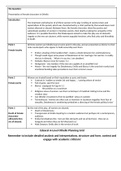
Presentation of female characters in Othello
Introduction
The treatment and behavior of all three women in the play is telling of societal views and
expectations of the period, which was characterized by a strict patriarchy that would leave most
women silenced or abused. Between them, the female characters show the passive and
subordinate position of women in Venetian society, their deaths evoking the sympathy of the
audience. It is possible therefore that Shakespeare aimed to make this play one of domestic
tragedy as the men are abusers, while women arguably heroines, who find unity and friendship
in death.
Point 1 All three women are blindly loyal at some point in the play, and are presented as inferior to their
male counterparts who appear to hold ownership over them
Female loyalty
Emilia’s stealing of the handkerchief- creates a divide between her and Desdemona
Though could argue some power of Desdemona in her marriage- fair warrior- in reality
she too is silenced. - ‘What e’er you be, I am obedient’.
Similarly, Bianca’s love for Cassio- 5.1
Honigmann- ‘one wonders if the men are capable of an unselfish love’
Mason- ‘the real tragedy for Desdemona, Emilia and Bianca is the way their marital and
emotional bonding takes precedence over their common cause.’
Point 2 Women are treated based on their reputation as pure and chaste
Contrast in ‘maiden so tender fair and happy’… ‘cunning whore of venice’
Female purity Full of game, sport for jove
Bianca- scapegoat for Iago in 5.1
o Her position as a courtesan
Religious views of women- see them as betrayer of mankind- linking to Eve and the
creation story
Can Othello’s treatment of her be justified- views on cuckold
Tennenhouse: ‘women are often cast as monsters in Jacobean tragedies from fear of
sexuality. Desdemona’s smothering symbolises a silencing of the female political voice’
Point 3 By the end of the play, all women are abused.
Death of Desdemona
Death of female Transgression of Emilia inspiring to a modern audience but perhaps not a contemporary
characters- audience.
ultimately they Emilia foreshadows this: ‘men are like stomachs and we all but food… they eat us
are all abused. hungerly and when they are full they belch us.’
Matt Simpson: Emilia dies in the service of truth
Edexcel A-Level Othello Planning Grid
Remember to include detailed analysis and interpretations, structure and form, context and
engage with academic criticism!
Presentation of female characters in Othello
Introduction
The treatment and behavior of all three women in the play is telling of societal views and
expectations of the period, which was characterized by a strict patriarchy that would leave most
women silenced or abused. Between them, the female characters show the passive and
subordinate position of women in Venetian society, their deaths evoking the sympathy of the
audience. It is possible therefore that Shakespeare aimed to make this play one of domestic
tragedy as the men are abusers, while women arguably heroines, who find unity and friendship
in death.
Point 1 All three women are blindly loyal at some point in the play, and are presented as inferior to their
male counterparts who appear to hold ownership over them
Female loyalty
Emilia’s stealing of the handkerchief- creates a divide between her and Desdemona
Though could argue some power of Desdemona in her marriage- fair warrior- in reality
she too is silenced. - ‘What e’er you be, I am obedient’.
Similarly, Bianca’s love for Cassio- 5.1
Honigmann- ‘one wonders if the men are capable of an unselfish love’
Mason- ‘the real tragedy for Desdemona, Emilia and Bianca is the way their marital and
emotional bonding takes precedence over their common cause.’
Point 2 Women are treated based on their reputation as pure and chaste
Contrast in ‘maiden so tender fair and happy’… ‘cunning whore of venice’
Female purity Full of game, sport for jove
Bianca- scapegoat for Iago in 5.1
o Her position as a courtesan
Religious views of women- see them as betrayer of mankind- linking to Eve and the
creation story
Can Othello’s treatment of her be justified- views on cuckold
Tennenhouse: ‘women are often cast as monsters in Jacobean tragedies from fear of
sexuality. Desdemona’s smothering symbolises a silencing of the female political voice’
Point 3 By the end of the play, all women are abused.
Death of Desdemona
Death of female Transgression of Emilia inspiring to a modern audience but perhaps not a contemporary
characters- audience.
ultimately they Emilia foreshadows this: ‘men are like stomachs and we all but food… they eat us
are all abused. hungerly and when they are full they belch us.’
Matt Simpson: Emilia dies in the service of truth
Edexcel A-Level Othello Planning Grid
Remember to include detailed analysis and interpretations, structure and form, context and
engage with academic criticism!