Unit 5, Task 4 Resub
P8- State a range of methods of monitoring to ensure adequate cleaning
Environment plays an important role in cross-infection, for example, door handles, toilet
flush handles, taps. Accumulation of dirt and dust increase infection risks. Within health and
social care settings there are a range of methods that can be used in order to monitor that
there is adequate cleaning. By having a range of methods, it means that cleaning can be
effective and health and social care organisations can ensure that they are monitoring it
effectively. A range of methods include having a colour coding system such as the one used
within the NHS which through a risk assessment, determines the level of cleaning required
in different areas of the setting depending on its use and the risk of infection spreading in
these areas.
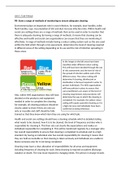
In the image on the left areas have been
classified under different colour coding.
This will have been decided through the use
of risk assessments and the level of risk of
the spread of infection within each of the
different areas. The colour coding will
determine if cleaning, disinfectant or
sterilisation is the level required in order to
protect individuals. The NHS organisations
will have policies in place to ensure that
care practitioners are aware of the level of
Also, within NHS organisations they will have cleaning requirement and procedures will
determine the way in which the cleaning is
decided on the products and equipment
completed. For example, the yellow colour
needed in order to complete the cleaning,
coding will require specialist cleaning as it is
for example, all cleaning products should be a high risk area and individuals have been
clearly coded to show if they are one use confirmed as being infectious.
only or reusable and staff should be fully
trained so that they know which item they are using for which job.
Health and social care settings should have a cleaning schedule which is detailed stating
what needs to be cleaned, how it is to be cleaned, the level of frequency and also who is
responsible for cleaning it. This then sets out clearly the expectations and makes an
individual responsible for completing it. This will be monitored regularly by a manager who
has overall responsibility to ensure that cleaning is completed to schedule and to a high
standard. By having an individual who has overall responsibility for cleaning it means that
they are held accountable so that cleaning is taken seriously and individuals are unable to
blame someone else for it not being completed.
Cleaning rotas have a clear allocation of responsibilities for all areas and equipment
including frequency of cleaning for each. Deep cleaning is required on patient discharge,
isolation or death. The rota must respond to changing needs. The person in charge records
, what needs cleaning, disinfection and sterilisation and how it should be achieved. Regular
disinfection is required for high touch objects such as door handles.
Written cleaning schedules based on COSHH includes removal of dust by damp dusting all
surfaces. Decontamination policy and cleaning schedule stating how and when to clean the
environment, fixtures, fittings, and specialist equipment, such as hoists.
P9- Describe how a health and social care worker should manage themselves to prevent
the spread of infection
It is important that a health and social care worker manage their own self in order to
prevent the spread of infection, this includes maintaining a good standard of personal
hygiene and informing management if they are ill and unfit for work.
Methods by which individuals can maintain personal hygiene include washing regularly, this
should be performed after every shift that the care practitioner has worked as they will have
come in contact with potentially many different types of infectious agents throughout their
day. These pathogens can remain on their skin and could potentially infect another person
through the chain of infection.
Care workers should wash their uniforms at a high temperature after every shift as their
uniform will have come in contact with infectious individuals and surfaces throughout the
day. Some infectious agents can remain active on surfaces for up to two hours and are then
easily transferred onto another surface or individual. By washing uniforms correctly, it
removed dangerous pathogens and reduces the risk of infections being spread this way.
Health and social care workers have a responsibility to manage themselves at work, to
prevent the spread of infection. They have a responsibility to ensure that their vaccinations
are up to date, such as flu jab. They must inform their manager of certain infections, and
must stay off of work whilst they are infectious. Personal hygiene must include washing the
body often, by having a shower or a bath every day. Teeth must also be brushed every day,
at least once. Hair must be washed with shampoo at least once a week. Hands need to be
washed with soap after going to the toilet. Before preparing and eating food, hands must be
washed with soap. Changing into clean clothes is also a personal hygiene habit that must be
maintained. All staff working in health and social care must inform their management if they
have diarrhoea or vomiting, if during the work day.
P10- Explain the importance of following policies and procedures to ensure effective
infection control
Policies and procedures are the documents issued by health and social care organisations,
stating the ways in which they want things to be completed and also implementing the legal
P8- State a range of methods of monitoring to ensure adequate cleaning
Environment plays an important role in cross-infection, for example, door handles, toilet
flush handles, taps. Accumulation of dirt and dust increase infection risks. Within health and
social care settings there are a range of methods that can be used in order to monitor that
there is adequate cleaning. By having a range of methods, it means that cleaning can be
effective and health and social care organisations can ensure that they are monitoring it
effectively. A range of methods include having a colour coding system such as the one used
within the NHS which through a risk assessment, determines the level of cleaning required
in different areas of the setting depending on its use and the risk of infection spreading in
these areas.
In the image on the left areas have been
classified under different colour coding.
This will have been decided through the use
of risk assessments and the level of risk of
the spread of infection within each of the
different areas. The colour coding will
determine if cleaning, disinfectant or
sterilisation is the level required in order to
protect individuals. The NHS organisations
will have policies in place to ensure that
care practitioners are aware of the level of
Also, within NHS organisations they will have cleaning requirement and procedures will
determine the way in which the cleaning is
decided on the products and equipment
completed. For example, the yellow colour
needed in order to complete the cleaning,
coding will require specialist cleaning as it is
for example, all cleaning products should be a high risk area and individuals have been
clearly coded to show if they are one use confirmed as being infectious.
only or reusable and staff should be fully
trained so that they know which item they are using for which job.
Health and social care settings should have a cleaning schedule which is detailed stating
what needs to be cleaned, how it is to be cleaned, the level of frequency and also who is
responsible for cleaning it. This then sets out clearly the expectations and makes an
individual responsible for completing it. This will be monitored regularly by a manager who
has overall responsibility to ensure that cleaning is completed to schedule and to a high
standard. By having an individual who has overall responsibility for cleaning it means that
they are held accountable so that cleaning is taken seriously and individuals are unable to
blame someone else for it not being completed.
Cleaning rotas have a clear allocation of responsibilities for all areas and equipment
including frequency of cleaning for each. Deep cleaning is required on patient discharge,
isolation or death. The rota must respond to changing needs. The person in charge records
, what needs cleaning, disinfection and sterilisation and how it should be achieved. Regular
disinfection is required for high touch objects such as door handles.
Written cleaning schedules based on COSHH includes removal of dust by damp dusting all
surfaces. Decontamination policy and cleaning schedule stating how and when to clean the
environment, fixtures, fittings, and specialist equipment, such as hoists.
P9- Describe how a health and social care worker should manage themselves to prevent
the spread of infection
It is important that a health and social care worker manage their own self in order to
prevent the spread of infection, this includes maintaining a good standard of personal
hygiene and informing management if they are ill and unfit for work.
Methods by which individuals can maintain personal hygiene include washing regularly, this
should be performed after every shift that the care practitioner has worked as they will have
come in contact with potentially many different types of infectious agents throughout their
day. These pathogens can remain on their skin and could potentially infect another person
through the chain of infection.
Care workers should wash their uniforms at a high temperature after every shift as their
uniform will have come in contact with infectious individuals and surfaces throughout the
day. Some infectious agents can remain active on surfaces for up to two hours and are then
easily transferred onto another surface or individual. By washing uniforms correctly, it
removed dangerous pathogens and reduces the risk of infections being spread this way.
Health and social care workers have a responsibility to manage themselves at work, to
prevent the spread of infection. They have a responsibility to ensure that their vaccinations
are up to date, such as flu jab. They must inform their manager of certain infections, and
must stay off of work whilst they are infectious. Personal hygiene must include washing the
body often, by having a shower or a bath every day. Teeth must also be brushed every day,
at least once. Hair must be washed with shampoo at least once a week. Hands need to be
washed with soap after going to the toilet. Before preparing and eating food, hands must be
washed with soap. Changing into clean clothes is also a personal hygiene habit that must be
maintained. All staff working in health and social care must inform their management if they
have diarrhoea or vomiting, if during the work day.
P10- Explain the importance of following policies and procedures to ensure effective
infection control
Policies and procedures are the documents issued by health and social care organisations,
stating the ways in which they want things to be completed and also implementing the legal