Fiscal Policy:
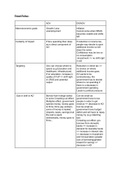
ADV DISADV
Macroeconomic goals Growth/ Less Inflation
unemployment Cannot solve when SRAS
becomes volatile and shifts
left
Certainty of Impact If Gov spending then does If reduction in income tax,
as is direct component of people may decide to save
AD additional income so AD
stays the same
Confidence may be low so
no consumption
+investment => no shift right
in AD
Targeting Gov can choose where to Reduction in direct tax =>
spend (e.g Education and no choice on where
healthcare, infrastructure) additional income goes
If on education, increase in If it wants to be
quality of FoP => shift right contractionary, the
in LRAS and potential government has to decide
output where to cut spending if
there is a decrease in
government spending.
Leads to political pressure
Size in shift in AD Borrow from foreign banks Can be small as
to solve Crowding out effect government have to tax
Multiplier effect: government people in order to get
spends money, money goes revenue => decrease in AD
to firms, firms pay workers, Can be small as
some of money is leaked government have budget
(imports, taxes, savings) but deficit and will have to repay
the rest is spent money by (e.g collecting
domestically, money goes to tax)
firms... Crowding out effect: gov
borrows from domestic
banks => increase in
demand for loanable funds
=> increase in interest rate
=> decrease in Investment
and Consumption (greater
cost of borrowing/greater
reward for saving) =>
decrease in AD
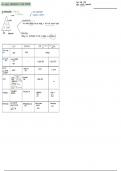
, Problems with CPI
● Hard to define average household (e.g young people & elderly people buy different
things, so do rich and poor, different ethnicities, geographical location)
● Consumption patterns change and hence goods move in and out of the basket (like
smart speakers out and hifi speakers in). This means that you can not compare it to
the base year. If calculated with the same basket each year, not representative of the
average household.
● Weightings in basket change over time (leading to misrepresentation of average
household)
● Changes in product quality means you cannot compare to base year
Alternatives to CPI
“Underlying” inflation - inflation but excluding changes in price of volatile products (e.g oil
and food)
Central bank sets policy based on core inflation so that CPI is not volatile
Producer Price Index - tracks changes in the costs of Factors of Production for firms
Gov used PPI inflation to predict future CPI inflation because if firms have high costs, may
pass these on to consumers as high prices in the future
Consequences of high inflation
People who benefit from high inflation People who are negatively affected by high
inflation
people whose incomes rise faster than the people who earn fixed incomes/ incomes
rate of inflation rising slower than the rate of inflation
savers (if interest rate is above the rate of savers (if interest rate is below the rate of
inflation) inflation)
borrowers (it interest rate is below the rate borrowers (it interest rate is above the rate
of inflation) Debt loses real value of inflation) Debt gains real value
holders of cash (can buy less with their
cash)
ADV DISADV
Macroeconomic goals Growth/ Less Inflation
unemployment Cannot solve when SRAS
becomes volatile and shifts
left
Certainty of Impact If Gov spending then does If reduction in income tax,
as is direct component of people may decide to save
AD additional income so AD
stays the same
Confidence may be low so
no consumption
+investment => no shift right
in AD
Targeting Gov can choose where to Reduction in direct tax =>
spend (e.g Education and no choice on where
healthcare, infrastructure) additional income goes
If on education, increase in If it wants to be
quality of FoP => shift right contractionary, the
in LRAS and potential government has to decide
output where to cut spending if
there is a decrease in
government spending.
Leads to political pressure
Size in shift in AD Borrow from foreign banks Can be small as
to solve Crowding out effect government have to tax
Multiplier effect: government people in order to get
spends money, money goes revenue => decrease in AD
to firms, firms pay workers, Can be small as
some of money is leaked government have budget
(imports, taxes, savings) but deficit and will have to repay
the rest is spent money by (e.g collecting
domestically, money goes to tax)
firms... Crowding out effect: gov
borrows from domestic
banks => increase in
demand for loanable funds
=> increase in interest rate
=> decrease in Investment
and Consumption (greater
cost of borrowing/greater
reward for saving) =>
decrease in AD
, Problems with CPI
● Hard to define average household (e.g young people & elderly people buy different
things, so do rich and poor, different ethnicities, geographical location)
● Consumption patterns change and hence goods move in and out of the basket (like
smart speakers out and hifi speakers in). This means that you can not compare it to
the base year. If calculated with the same basket each year, not representative of the
average household.
● Weightings in basket change over time (leading to misrepresentation of average
household)
● Changes in product quality means you cannot compare to base year
Alternatives to CPI
“Underlying” inflation - inflation but excluding changes in price of volatile products (e.g oil
and food)
Central bank sets policy based on core inflation so that CPI is not volatile
Producer Price Index - tracks changes in the costs of Factors of Production for firms
Gov used PPI inflation to predict future CPI inflation because if firms have high costs, may
pass these on to consumers as high prices in the future
Consequences of high inflation
People who benefit from high inflation People who are negatively affected by high
inflation
people whose incomes rise faster than the people who earn fixed incomes/ incomes
rate of inflation rising slower than the rate of inflation
savers (if interest rate is above the rate of savers (if interest rate is below the rate of
inflation) inflation)
borrowers (it interest rate is below the rate borrowers (it interest rate is above the rate
of inflation) Debt loses real value of inflation) Debt gains real value
holders of cash (can buy less with their
cash)