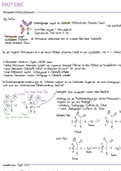
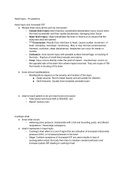
Aminosäuren / Aminocarbonsäuren)
allg .
Aufbau :
"
Carboxygruppe reagiert als Elektrophil (Protonen donator; Borstel Säure) -
Hi → die zwei funkti
,
IN -
EH a- C- Atom , asymetr .
C- Atom ,außer bei
'
H & Glycin das als
,
Rest nur ein H hat
Aminogruppe reagiert Rest /dieser Seitenkette
als Nukleophi / (Protonen -
die Aminosäuren unterscheiden sich nur in diesem
akzptor Brolnsted Base)
;
-
bei den biogenen Aminosäuren die in den ,
mensch ! Proteinen vorkommen, handelt es sich ausschließlich um ✗ -
L -
Aminos
-
a- Aminosäuren können ink Gruppen unterteilt werden
→
unpdore Aminosäuren Seitenkette besteht aus Wasser und Kohlenstoff (Prolin hat 1N Atom; Methionin
: - -
ein Schwefdatiom → nic
→
polare Aminosäuren Seitenkette enthält ein HeteroatomlQS.se/Nll0HisHSeH.NHa)
:
→ saure Aminosäuren zusätd
Carboxygruppe in Seitenkette enthalten
: .
→
basische Aminosäuren zusätd : .
Aminogruppe in Seitenkette enthalten
'
bei AminosäurenMolekülen handelt es sich um Zwitterionen
aufgrund der zwei funktionellen Gruppen ,
da die saure
Carbonylgruppe a
wirkt , was eine intramolekulare ProtonenWanderung hervorruft
Ionengitter kann ausgebildet
säurekonj Säure Base Paar werden → hohe Stabilität
-
-
.
gy.gg
„ ,
⑦
„
Base
•
abhängig von den Reaktionsbedingungen können Aminosäuren d
Hi | → H
( reagieren ,
d.h. sie sind Amphdyte
alkalische Bedingungen Zwitterionals Säure
,
IN C- H →
NE
:
H
-
H -
-
Bedingungen Zwitterion als Base
i i →
saure
H
:
R
Hip A"
Base Säure
alkalische Bed
Ö Ä '
(
Säure Base Paar
.
:
konj .
- -
H Hi ,
HÄEC -
H + OH
-
F- IN C- H -
+ H
'
H & Base H
&
Säure
Bed
%
saure :
Ö -
OH
"
H N -
¥+0
-
|
C -
H +
HI # H -
Ä -
C
1
-
H + Hao
H
Hfg
"
Säure
R Kation
Base
isoelektrischer Punkt IIEP)
, -
der pH-Wert der wässr .
Lösung ist ausschlaggebend für die ,
in den Aminosäuremolekülen erfolgende , Protonierung
→
pH < EP ( Kation) , d.h. pH-Wert sinkt : .
Carbonylgruppe liegt vor, d. h .
Carboxylatgruppe protoniert
-
Aminogruppe protoniert
-
weitere protoniertare Gruppen ( z.B weitere .
Amino oder
-
Hydroxygruppe) lägen
→
pH > IEP ( Anion , d.h. pH-Wert steigt Carboxygruppen vollständig deprotoniert nur noch Carboxylatgruppen
:
-
,
vorhand
Aminogruppe liegt in urspr Form vor
-
.
weitere deprotoniertare Gruppen lägen auch deprotoniert vor
-
die Löslichkeit von Aminosäuren ist am
geringsten da kaum eine Hydrathülle um das Molekül gebildet werden
EP am ,
die Löslichkeit ist abhängig vom pH-Wert des Lösungsmittels Säure Base Reaktion dann entweder anionische
-
→ - -
,
hülle gebildet werden kann
Reagenzien und Substrate
Reagenzien :
-
Stoffe die durch ,
einen Angriff auf den Reaktionspartner diesen verändern und dadurch eine Chem Reaktion a .
↳
Nukleophile Reagenzien
:
,
die über mindt ein .
freies Elektronenpaar verfügen womit ,
sie an einem C- Atom angreifen
Kern liebend ( partiell pos C- Atom im Substrat als Kern verstanden)
"
→
„ .
nukleophile Reagenzien Brick RO
OH, 1-, ( Anionen)
-
:
,
Hao ROH RNHA ( Moleküle)
, ,
Äminogruppe
'
dasselbe Reagenz kann sowohl als Base als auch als Nukkophil reagieren d. h,
es kann e
nukleophile Substitution (Reaktion als Nukleophil stattfinden abhängig von den Reaktionsbedingung
,
↳ ElektroPhil :
Reagenzien die meist pos .
geladen sind oder eine Elektronen lücke haben und damit vor allem Substra
angreifen
elektrophile Reagenzien : Ht Noi ,
( Kationen)
Bfs , SO } (Moleküle)
Br .
,
CI .
( Radikale)
alle Lewis Säuren sind elektrophile Elektronenpaarakzeptieren
-
Cabony/ gruppen ( z.B Carbonylgruppe COOH .
Substrate Reaktionspartner der Reagenzien die
:
,
bei dem Angriff chemisch verändert werden
Proteine
Proteine sind Polymere ,
die aus Aminosäuren aufgebaut sind ,
sie sind Poli peptide
•
durch die Verknüpfung von Aminosäuren erhält man kettenförmige Peptide
der Stickstoff der Aminogruppe einer Aminosäure greift hierbei am Kohlenstoffatom einer anderen Aminosäure an
-
dem anderen H Atom der -
Aminogruppe ,
das abgespalten wird zu Wasser reagiert Kondensationsreaktion
,
→
allg .
Aufbau :
"
Carboxygruppe reagiert als Elektrophil (Protonen donator; Borstel Säure) -
Hi → die zwei funkti
,
IN -
EH a- C- Atom , asymetr .
C- Atom ,außer bei
'
H & Glycin das als
,
Rest nur ein H hat
Aminogruppe reagiert Rest /dieser Seitenkette
als Nukleophi / (Protonen -
die Aminosäuren unterscheiden sich nur in diesem
akzptor Brolnsted Base)
;
-
bei den biogenen Aminosäuren die in den ,
mensch ! Proteinen vorkommen, handelt es sich ausschließlich um ✗ -
L -
Aminos
-
a- Aminosäuren können ink Gruppen unterteilt werden
→
unpdore Aminosäuren Seitenkette besteht aus Wasser und Kohlenstoff (Prolin hat 1N Atom; Methionin
: - -
ein Schwefdatiom → nic
→
polare Aminosäuren Seitenkette enthält ein HeteroatomlQS.se/Nll0HisHSeH.NHa)
:
→ saure Aminosäuren zusätd
Carboxygruppe in Seitenkette enthalten
: .
→
basische Aminosäuren zusätd : .
Aminogruppe in Seitenkette enthalten
'
bei AminosäurenMolekülen handelt es sich um Zwitterionen
aufgrund der zwei funktionellen Gruppen ,
da die saure
Carbonylgruppe a
wirkt , was eine intramolekulare ProtonenWanderung hervorruft
Ionengitter kann ausgebildet
säurekonj Säure Base Paar werden → hohe Stabilität
-
-
.
gy.gg
„ ,
⑦
„
Base
•
abhängig von den Reaktionsbedingungen können Aminosäuren d
Hi | → H
( reagieren ,
d.h. sie sind Amphdyte
alkalische Bedingungen Zwitterionals Säure
,
IN C- H →
NE
:
H
-
H -
-
Bedingungen Zwitterion als Base
i i →
saure
H
:
R
Hip A"
Base Säure
alkalische Bed
Ö Ä '
(
Säure Base Paar
.
:
konj .
- -
H Hi ,
HÄEC -
H + OH
-
F- IN C- H -
+ H
'
H & Base H
&
Säure
Bed
%
saure :
Ö -
OH
"
H N -
¥+0
-
|
C -
H +
HI # H -
Ä -
C
1
-
H + Hao
H
Hfg
"
Säure
R Kation
Base
isoelektrischer Punkt IIEP)
, -
der pH-Wert der wässr .
Lösung ist ausschlaggebend für die ,
in den Aminosäuremolekülen erfolgende , Protonierung
→
pH < EP ( Kation) , d.h. pH-Wert sinkt : .
Carbonylgruppe liegt vor, d. h .
Carboxylatgruppe protoniert
-
Aminogruppe protoniert
-
weitere protoniertare Gruppen ( z.B weitere .
Amino oder
-
Hydroxygruppe) lägen
→
pH > IEP ( Anion , d.h. pH-Wert steigt Carboxygruppen vollständig deprotoniert nur noch Carboxylatgruppen
:
-
,
vorhand
Aminogruppe liegt in urspr Form vor
-
.
weitere deprotoniertare Gruppen lägen auch deprotoniert vor
-
die Löslichkeit von Aminosäuren ist am
geringsten da kaum eine Hydrathülle um das Molekül gebildet werden
EP am ,
die Löslichkeit ist abhängig vom pH-Wert des Lösungsmittels Säure Base Reaktion dann entweder anionische
-
→ - -
,
hülle gebildet werden kann
Reagenzien und Substrate
Reagenzien :
-
Stoffe die durch ,
einen Angriff auf den Reaktionspartner diesen verändern und dadurch eine Chem Reaktion a .
↳
Nukleophile Reagenzien
:
,
die über mindt ein .
freies Elektronenpaar verfügen womit ,
sie an einem C- Atom angreifen
Kern liebend ( partiell pos C- Atom im Substrat als Kern verstanden)
"
→
„ .
nukleophile Reagenzien Brick RO
OH, 1-, ( Anionen)
-
:
,
Hao ROH RNHA ( Moleküle)
, ,
Äminogruppe
'
dasselbe Reagenz kann sowohl als Base als auch als Nukkophil reagieren d. h,
es kann e
nukleophile Substitution (Reaktion als Nukleophil stattfinden abhängig von den Reaktionsbedingung
,
↳ ElektroPhil :
Reagenzien die meist pos .
geladen sind oder eine Elektronen lücke haben und damit vor allem Substra
angreifen
elektrophile Reagenzien : Ht Noi ,
( Kationen)
Bfs , SO } (Moleküle)
Br .
,
CI .
( Radikale)
alle Lewis Säuren sind elektrophile Elektronenpaarakzeptieren
-
Cabony/ gruppen ( z.B Carbonylgruppe COOH .
Substrate Reaktionspartner der Reagenzien die
:
,
bei dem Angriff chemisch verändert werden
Proteine
Proteine sind Polymere ,
die aus Aminosäuren aufgebaut sind ,
sie sind Poli peptide
•
durch die Verknüpfung von Aminosäuren erhält man kettenförmige Peptide
der Stickstoff der Aminogruppe einer Aminosäure greift hierbei am Kohlenstoffatom einer anderen Aminosäure an
-
dem anderen H Atom der -
Aminogruppe ,
das abgespalten wird zu Wasser reagiert Kondensationsreaktion
,
→