Pilot Studies
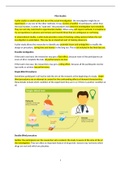
A pilot study is a small-scale trial run of the actual investigation- the investigation might be an
experiment or any one of the other methods. It may involve a handful of participants, rather than
the total number, in order to “road-test” the procedure and check the investigation runs smoothly.
They are not only restricted to experimental studies. When using self-report methods, it is helpful to
try out questions in advance and remove and reword those that are ambiguous or confusing.
In observational studies, a pilot study provides a way of checking coding systems before the real
investigation is undertaken. This may be an important part of training observers.
A pilot study allows the researcher to identify any potential issues and ambiguities to modify the
design or procedure, saving time and money in the long run. This is not included in the final data set.
Possible Ambiguities
If the task is too hard, the researcher may get a floor effect, because none of the participants can
score at all or complete the task- all performances are low.
If the task is too easy, the researchers may get a ceiling effect, because all the participants receive
top marks or achieve top performance.
Single-Blind Procedures
Sometimes participant’s will not be told the aim of the research at the beginning of a study. single-
blind procedures are an attempt to control for the confounding effects of demand characteristics,
these details include which condition of the experiment they are in or if there is another condition at
all.
Double-Blind procedure
Neither the participants nor the researcher who conducts the study Is aware of the aims of the of
the investigation. They are often an important feature of drug trials- doctors may not know which
drugs are real and which are placebos.
1
A pilot study is a small-scale trial run of the actual investigation- the investigation might be an
experiment or any one of the other methods. It may involve a handful of participants, rather than
the total number, in order to “road-test” the procedure and check the investigation runs smoothly.
They are not only restricted to experimental studies. When using self-report methods, it is helpful to
try out questions in advance and remove and reword those that are ambiguous or confusing.
In observational studies, a pilot study provides a way of checking coding systems before the real
investigation is undertaken. This may be an important part of training observers.
A pilot study allows the researcher to identify any potential issues and ambiguities to modify the
design or procedure, saving time and money in the long run. This is not included in the final data set.
Possible Ambiguities
If the task is too hard, the researcher may get a floor effect, because none of the participants can
score at all or complete the task- all performances are low.
If the task is too easy, the researchers may get a ceiling effect, because all the participants receive
top marks or achieve top performance.
Single-Blind Procedures
Sometimes participant’s will not be told the aim of the research at the beginning of a study. single-
blind procedures are an attempt to control for the confounding effects of demand characteristics,
these details include which condition of the experiment they are in or if there is another condition at
all.
Double-Blind procedure
Neither the participants nor the researcher who conducts the study Is aware of the aims of the of
the investigation. They are often an important feature of drug trials- doctors may not know which
drugs are real and which are placebos.
1