A Level Biology
Year 1
Module 4: Biodiversity, evolution and disease
B4.1: Communicable diseases, disease prevention and the immune system
Disease: a particular abnormal condition that -tvely affects the structure or function of all / part
of an organism. Not due to any immediate external injury
Disease transmission: transfer of pathogens from an infected host to an uninfected host
Communicable disease: can be transmitted from one organism to another - infectious (but not
all are contagious)
- Cause 23% of all deaths a year, 68% caused by non-communicable diseases (eg. heart
disease, genetic diseases, deficiency diseases, diseases caused by a poor diet most types
of cancer, diseases of the nervous, endocrine + digestive systems)
Plant diseases
- Threaten ppl - plants fail → starvation, struggling economy, loss of jobs
- Threaten entire species - entire ecosystems
Pathogens: infective organisms that cause communicable diseases
The different types of pathogen that can cause communicable diseases in plants and animals
Bacteria
- Prokaryotes
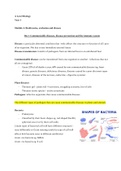
- Classified by their basic shapes eg. rod shaped (bacilli),
spherical (cocci) or by their cell walls:
2 main types of bacterial cell wall have different structures -
react differently to Gram staining (useful as type of cell wall
affects how bacteria react to different antibiotics)
Gram +tve bacteria eg. MRSA
Gram -tve bacteria eg. E coli
, - Small proportion of bacteria are pathogens
- Most pathogenic bacteria prod toxins - by-product of normal functioning of bacteria →
poison or damage host cells in some way (break down cell membranes, damage or
inactivate enzymes, interfere w/ host cell genetic material so cells can’t divide) → cause
disease
Examples of communicable diseases caused by pathogenic bacteria
Animal or plant Name of disease Names of Method of Extra info
disease pathogen transmission
Animal Tuberculosis (TB) Mycobacterium Direct Damages and destroys lung tissue and
tuberculosis + M. suppresses the immune system so the
bovis. body is less able to fight off other
diseases
Affected by HIV/AIDS → more likely to
develop TB
Animal Bacterial Streptococcus Direct Infection of the meninges of the brain,
meningitis pneumoniae which spread into the rest of the body
(pneumococcus) + causing septicemia (blood poisoning)
Neissiaria and rapid death. Symptom of septicemia
meningitidis is a blotchy red/purple rash which
doesn’t disappear when a glass is
pressed up against it
Mainly affects v young children +
teenagers aged 15-19
Plant Ring rot Clavibacter Direct contact, Host plant = potatoes, tomatoes +
michiganensis contaminated aubergines
(gram +tve) equipment or Damages leaves, tubers and fruit: infect
infected water vascular tissue → block it so less water
reaches the leaves → wilting
Vascular tissue in tubers is arranged as a
ring → disease first appears as a ring
Infects a field so that it cannot be used
to grow potatoes again for at least 2years
, Viruses
- Non-living infectious agents. All naturally occurring viruses = pathogenic (unlike
bacteria)
- 0.02-0.3μm in diameter - much smaller than average bacterium
- Basic structure = genetic material (DNA or RNA) surrounded by protein coat which
protects viral genome. Can’t respire, make ATP or transcribe + translate the genes coded
by the genetic material
Considered to be the ultimate parasites (need to use ppl / animals as their host organism)
- Invade living cells - take over cell metabolism - viral genetic material gets into host cell
→ inserted into host DNA → virus uses host cell to reproduce rapidly → new viruses burst
out of the cell, destroying it - lysis of host cell → spread → infect other cells
- All viruses are obligate pathogens: dependent on exploiting living host cell to complete
life-cycle / reproduce
- Evolve by developing adaptations to host
- Cause disease in every other type of organism - some are even bacteriophages (viruses
which infect bacteria!)
– HIV/AIDS (human), influenza (animals), Tobacco Mosaic Virus (plants)
Animal or Name of Names of pathogen Method of transmission Extra info
plant disease disease
, Animal HIV/AIDS HIV (human Direct Is a retrovirus - its RNA is used
immunodeficiency virus) Passed in bodily fluids - most as the template to make DNA
commonly through HIV causes AIDS (acquired
unprotected sex, shared immunodeficiency syndrome)
needles, contaminated blood Targets T helper cells in the
products + from mothers → immune systems of the body,
babies during preganancy, gradually destroying the
birth or breast feeding immune system so affected
people are open to other
infections - opportunistic
diseases - like TB, pneumonia
Traditional practices eg. FGM
incr infection rate
Animal Influenza Orthomyxoviridae spp. Direct Kills ciliated epithelial cells in
3 main strains of flu: A, the gas exchange system,
B+C leaving airways open to
A - most virulent, secondary infection
classified further by Can be fatal - many deaths due
proteins on their to severe secondary bacterial
surfaces infections eg. pneumonia on to
of original viral infection
Plant Tobacco Tobacco Mosaic Virus Direct - touching crops, from Host plant = tobacco plants +
Mosaic Virus damaged tissue many other species eg.
(TMV) Indirect - aphids, tomatoes, pepper, cucumbers
contaminated hands, Damages leaves, flowers and
machinery, clothing fruit; stunting growth and
reducing yields. Can lead to an
almost total crop loss
No cure but resistant crop
strains are available
Protoctista
- Now widely known as ‘protista’
- Eukaryotic organisms
Year 1
Module 4: Biodiversity, evolution and disease
B4.1: Communicable diseases, disease prevention and the immune system
Disease: a particular abnormal condition that -tvely affects the structure or function of all / part
of an organism. Not due to any immediate external injury
Disease transmission: transfer of pathogens from an infected host to an uninfected host
Communicable disease: can be transmitted from one organism to another - infectious (but not
all are contagious)
- Cause 23% of all deaths a year, 68% caused by non-communicable diseases (eg. heart
disease, genetic diseases, deficiency diseases, diseases caused by a poor diet most types
of cancer, diseases of the nervous, endocrine + digestive systems)
Plant diseases
- Threaten ppl - plants fail → starvation, struggling economy, loss of jobs
- Threaten entire species - entire ecosystems
Pathogens: infective organisms that cause communicable diseases
The different types of pathogen that can cause communicable diseases in plants and animals
Bacteria
- Prokaryotes
- Classified by their basic shapes eg. rod shaped (bacilli),
spherical (cocci) or by their cell walls:
2 main types of bacterial cell wall have different structures -
react differently to Gram staining (useful as type of cell wall
affects how bacteria react to different antibiotics)
Gram +tve bacteria eg. MRSA
Gram -tve bacteria eg. E coli
, - Small proportion of bacteria are pathogens
- Most pathogenic bacteria prod toxins - by-product of normal functioning of bacteria →
poison or damage host cells in some way (break down cell membranes, damage or
inactivate enzymes, interfere w/ host cell genetic material so cells can’t divide) → cause
disease
Examples of communicable diseases caused by pathogenic bacteria
Animal or plant Name of disease Names of Method of Extra info
disease pathogen transmission
Animal Tuberculosis (TB) Mycobacterium Direct Damages and destroys lung tissue and
tuberculosis + M. suppresses the immune system so the
bovis. body is less able to fight off other
diseases
Affected by HIV/AIDS → more likely to
develop TB
Animal Bacterial Streptococcus Direct Infection of the meninges of the brain,
meningitis pneumoniae which spread into the rest of the body
(pneumococcus) + causing septicemia (blood poisoning)
Neissiaria and rapid death. Symptom of septicemia
meningitidis is a blotchy red/purple rash which
doesn’t disappear when a glass is
pressed up against it
Mainly affects v young children +
teenagers aged 15-19
Plant Ring rot Clavibacter Direct contact, Host plant = potatoes, tomatoes +
michiganensis contaminated aubergines
(gram +tve) equipment or Damages leaves, tubers and fruit: infect
infected water vascular tissue → block it so less water
reaches the leaves → wilting
Vascular tissue in tubers is arranged as a
ring → disease first appears as a ring
Infects a field so that it cannot be used
to grow potatoes again for at least 2years
, Viruses
- Non-living infectious agents. All naturally occurring viruses = pathogenic (unlike
bacteria)
- 0.02-0.3μm in diameter - much smaller than average bacterium
- Basic structure = genetic material (DNA or RNA) surrounded by protein coat which
protects viral genome. Can’t respire, make ATP or transcribe + translate the genes coded
by the genetic material
Considered to be the ultimate parasites (need to use ppl / animals as their host organism)
- Invade living cells - take over cell metabolism - viral genetic material gets into host cell
→ inserted into host DNA → virus uses host cell to reproduce rapidly → new viruses burst
out of the cell, destroying it - lysis of host cell → spread → infect other cells
- All viruses are obligate pathogens: dependent on exploiting living host cell to complete
life-cycle / reproduce
- Evolve by developing adaptations to host
- Cause disease in every other type of organism - some are even bacteriophages (viruses
which infect bacteria!)
– HIV/AIDS (human), influenza (animals), Tobacco Mosaic Virus (plants)
Animal or Name of Names of pathogen Method of transmission Extra info
plant disease disease
, Animal HIV/AIDS HIV (human Direct Is a retrovirus - its RNA is used
immunodeficiency virus) Passed in bodily fluids - most as the template to make DNA
commonly through HIV causes AIDS (acquired
unprotected sex, shared immunodeficiency syndrome)
needles, contaminated blood Targets T helper cells in the
products + from mothers → immune systems of the body,
babies during preganancy, gradually destroying the
birth or breast feeding immune system so affected
people are open to other
infections - opportunistic
diseases - like TB, pneumonia
Traditional practices eg. FGM
incr infection rate
Animal Influenza Orthomyxoviridae spp. Direct Kills ciliated epithelial cells in
3 main strains of flu: A, the gas exchange system,
B+C leaving airways open to
A - most virulent, secondary infection
classified further by Can be fatal - many deaths due
proteins on their to severe secondary bacterial
surfaces infections eg. pneumonia on to
of original viral infection
Plant Tobacco Tobacco Mosaic Virus Direct - touching crops, from Host plant = tobacco plants +
Mosaic Virus damaged tissue many other species eg.
(TMV) Indirect - aphids, tomatoes, pepper, cucumbers
contaminated hands, Damages leaves, flowers and
machinery, clothing fruit; stunting growth and
reducing yields. Can lead to an
almost total crop loss
No cure but resistant crop
strains are available
Protoctista
- Now widely known as ‘protista’
- Eukaryotic organisms