Michael Dummett - Truth and other enigmas
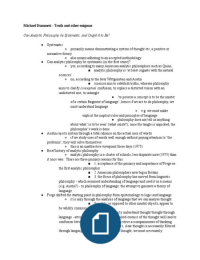
Can Analytic Philosophy be Systematic, and Ought it to Be?
● Systematic:
○ primarily means demonstrating a system of thought etc; a positive or
normative theory
○ also means adhering to an accepted methodology
● Can analytic philosophy be systematic (in the first sense)?
○ yes, according to many American analytic philosophers such as Quine,
■ analytic philosophy is ‘at least cognate with the natural
sciences’
○ no, according to the later Wittgenstein and Austin
■ sciences aim to establish truths, whereas philosophy
aims to clarify conceptual confusion; to replace a distorted vision with an
undistorted one; to untangle
● ‘to possess a concept is to be the master
of a certain fragment of language’, hence if we are to do philosophy, we
must understand language
○ e.g. we must make
explicit the implicit rules and principles of language
● philosophy does not tell us anything
about what ‘is to be seen’ (what exists?); once the tangle is unpicked, the
philosopher’s work is done
● Austin rejects system through a total reliance on the actual uses of words
○ if we study uses of words well enough without paying attention to ‘the
problems’, they will solve themselves
○ this is an unattractive viewpoint these days (1975)
● Brief history of analytic philosophy
○ analytic philosophy is a cluster of schools, less disparate now (1975) than
it once was. There are three primary reasons for this:
■ 1. acceptance of the primacy and importance of Frege as
the first analytic philosopher
■ 2. American philosophers now big in Britain
■ 3. the focus of philosophy has moved from linguistic
philosophy - which assumed understanding of language and used it as a means
(e.g. Austin?) - to philosophy of language: the attempt to generate a theory of
language
● Frege shifted the starting point in philosophy from epistemology to logic and language
○ it is only through the analysis of language that we can analyse thought
■ thoughts, as opposed to other mental objects, appear to
be wholly communicable
■ we can only clearly understand thought thought through
language - attempting to penetrate to the naked essence of the thought will lead to
confusion between the thought and the subjective accompaniments of thinking
■ in other words, pure, clear thought is necessarily filtered
through language. If we are to understand thought, we must necessarily
Can Analytic Philosophy be Systematic, and Ought it to Be?
● Systematic:
○ primarily means demonstrating a system of thought etc; a positive or
normative theory
○ also means adhering to an accepted methodology
● Can analytic philosophy be systematic (in the first sense)?
○ yes, according to many American analytic philosophers such as Quine,
■ analytic philosophy is ‘at least cognate with the natural
sciences’
○ no, according to the later Wittgenstein and Austin
■ sciences aim to establish truths, whereas philosophy
aims to clarify conceptual confusion; to replace a distorted vision with an
undistorted one; to untangle
● ‘to possess a concept is to be the master
of a certain fragment of language’, hence if we are to do philosophy, we
must understand language
○ e.g. we must make
explicit the implicit rules and principles of language
● philosophy does not tell us anything
about what ‘is to be seen’ (what exists?); once the tangle is unpicked, the
philosopher’s work is done
● Austin rejects system through a total reliance on the actual uses of words
○ if we study uses of words well enough without paying attention to ‘the
problems’, they will solve themselves
○ this is an unattractive viewpoint these days (1975)
● Brief history of analytic philosophy
○ analytic philosophy is a cluster of schools, less disparate now (1975) than
it once was. There are three primary reasons for this:
■ 1. acceptance of the primacy and importance of Frege as
the first analytic philosopher
■ 2. American philosophers now big in Britain
■ 3. the focus of philosophy has moved from linguistic
philosophy - which assumed understanding of language and used it as a means
(e.g. Austin?) - to philosophy of language: the attempt to generate a theory of
language
● Frege shifted the starting point in philosophy from epistemology to logic and language
○ it is only through the analysis of language that we can analyse thought
■ thoughts, as opposed to other mental objects, appear to
be wholly communicable
■ we can only clearly understand thought thought through
language - attempting to penetrate to the naked essence of the thought will lead to
confusion between the thought and the subjective accompaniments of thinking
■ in other words, pure, clear thought is necessarily filtered
through language. If we are to understand thought, we must necessarily