Chapter 1
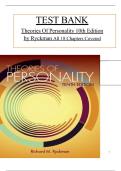
Personality: What It Is and Why You
Should Care
Learning Objectives
1. Discuss how personality develops and the ways of looking at it.
2. Describe how the social media influences our personality.
3. Explain the role of culture in shaping personality.
4. Describe the concepts of reliability and validity in the study of personality.
5. Explain and give examples of various types of assessment methods used in studying
personality.
6. Describe how ethnic and gender issues affect personality assessment.
7. Explain the role of research in the study of personality.
8. Describe the theories of personality and inquire about human nature by asking
questions for further discussion throughout the pages of this text.
Lecture Outline
I. Take a Look at the Word
Here are three standard dictionary definitions of the word taken at random:
The state of being a person.
The characteristics and qualities that form a person’s distinctive character.
The sum total of all the physical, mental, emotional, and social characteristic of a
person.
,Everybody has a personality that will help determine the boundaries of their success and
life fulfillment. An individual’s personality can limit or expand their options and choices in
life, prevent them from sharing certain experiences, or enable them to take full advantage of
them. The number and variety of social situations one is involved in are also determined by
one’s personality—for example, one’s relative sociability or shyness.
Psychologists have devoted considerable effort to developing tests to assess or measure
personality. A widely used personality test, the Adjective Check List, offers 300 adjectives
that describe personality. One psychologist suggested that individuals can get a very good
idea of its meaning if they examine their intentions whenever they use the word I. The word
I is what defines one as an individual, separate from everybody else.
Another way of trying to understand personality is to look at its source. The word goes
back to about the year 1500 and derives from the Latin word persona, which refers to a
mask used by actors in a play. Based on its derivation, one might conclude that
personality refers to one’s external and visible characteristics those aspects of an
individual that other people can see. One may in the use of the word personality refer to
enduring characteristics. It is assumed that personality is relatively stable and predictable.
It may be suggested that personality is an enduring and unique cluster of characteristics
that may change in response to different situations. Each personality theorist offers a
unique version, a personal vision of the nature of personality and that viewpoint has
become his or her definition.
II. Personality and the Social Media
There are at least three ways in which social media and personality may interact to affect
one another, leading to three questions to which psychologists are increasingly seeking
answers.
Does an individual present his or her real self on social media?
Does the use of social media influence or change one’s personality?
Do people with different personalities use social media in different ways?
Some research suggests that most people are honest about their online faces. Studies
conducted in the United States and in Germany found that social networking sites do convey
,accurate images or impressions of the personality profiles people offer. The researchers
concluded that depictions of personalities presented online are at least as accurate as those
conveyed in face-to-face interactions. Psychologists have found that the use of online social
networking sites like Facebook can both shape and reflect individuals’ personalities. One
study found that high levels of social media use can reduce psychological well-being (how
happy one feels) and decrease the quality of relationships with friends and romantic
partners (Blais, Craig, Pepler, & Connolly, 2008; Huang, 2010a; Kross et al., 2013).
In addition to affecting one’s personalities, social networking sites can also reflect them.
Studies in both Eastern and Western cultures found that those who were more extraverted
and narcissistic were much more likely to use Facebook than those who did not score high
on those personality characteristics. The more narcissistic teenagers were also more likely
to update their Facebook status more frequently (Kuo & Tang, 2014; Michikyan,
Subrahmanyam, & Dennis, 2014; Ong et al., 2011; Panek, Nardis, & Konrath, 2014; Winter et
al., 2014).
III. The Role of Race and Gender in Shaping Personality
The personality theorists offer diverse views of the nature of the human personality.
Despite their disagreements and divergences, however, they all share certain defining
characteristics in common. All are White, of European or American heritage, and almost
all are men. In most fields, educational and professional opportunities for women and
people of ethnic minority groups were severely limited. Yet, the personality theorists
confidently offered theories that were supposed to be valid for all people, regardless of
gender, race, or ethnic origin.
IV. The Role of Culture in Shaping Personality
A specialty area called cross-cultural psychology has fostered a great deal of research
supporting the conclusion that personality is formed by both genetic and environmental
influences.
Research shows substantial cultural differences between East and West in the notion of fate
attribution or destiny. However, there is also evidence that as Eastern cultures such as
China modernize and become more westernized, that cultural belief is reduced. Individual
competitiveness and assertiveness are often seen as undesirable and contrary to Asian
cultural standards. Western cultures are typically depicted as the opposite. Genetic
differences between people in collectivistic versus individualistic cultures have been linked
, to lower levels of anxiety and depression in collectivistic cultures and higher levels in
individualistic cultures (Chiao & Blizinsky, 2010).
The impact on behavior and personality of cultural differences in child-rearing practices is
also substantial. In the individualistic culture of the United States, parents tend to be non-
coercive, democratic, and permissive in their child-rearing techniques. In collectivist
cultures, such as Asian and Arab societies, parental practices tend to be more authoritarian,
restrictive, and controlling.
Self-enhancement is defined as the tendency to promote oneself aggressively and make one
conspicuous. The opposite of that, self-effacement, is considered to be more in agreement
with the cultural values of Asian societies. Research in various countries in Europe found
that self-enhancers were rated by others as being emotionally stable, socially attractive, and
socially influential (Dufner, Denissen, Sediilides, Van Zalk Meeus, & Van Aken, 2013).
Less research has been conducted on personality in African and South American nations
than in English-speaking countries, or in many of the countries of Europe and Asia. Also,
much of the research that has been conducted among those populations has not been made
widely available in English-language sources. Another problem limiting the applicability of
cross-cultural personality research is that the majority of studies in personality use
American college students as subjects.
V. Assessing Your Personality
The assessment of personality is a major area of application of psychology to a number of
real-world concerns. For example, clinical psychologists try to understand the symptoms
of their patients or clients by assessing their personalities, by differentiating between
normal and abnormal behaviors and feelings. Only by evaluating personality in this way
can clinicians diagnose disorders and determine the best course of therapy. School
psychologists evaluate the personalities of the students referred to them for treatment in
an attempt to uncover the causes of adjustment or learning problems. Counseling
psychologists measure personality to find the best job for a particular applicant, matching
the requirements of the position with the person’s interests and needs. Research
psychologists assess the personalities of their subjects in an attempt to account for their
behavior in an experiment or to correlate their personality traits with other measurements.
Personality: What It Is and Why You
Should Care
Learning Objectives
1. Discuss how personality develops and the ways of looking at it.
2. Describe how the social media influences our personality.
3. Explain the role of culture in shaping personality.
4. Describe the concepts of reliability and validity in the study of personality.
5. Explain and give examples of various types of assessment methods used in studying
personality.
6. Describe how ethnic and gender issues affect personality assessment.
7. Explain the role of research in the study of personality.
8. Describe the theories of personality and inquire about human nature by asking
questions for further discussion throughout the pages of this text.
Lecture Outline
I. Take a Look at the Word
Here are three standard dictionary definitions of the word taken at random:
The state of being a person.
The characteristics and qualities that form a person’s distinctive character.
The sum total of all the physical, mental, emotional, and social characteristic of a
person.
,Everybody has a personality that will help determine the boundaries of their success and
life fulfillment. An individual’s personality can limit or expand their options and choices in
life, prevent them from sharing certain experiences, or enable them to take full advantage of
them. The number and variety of social situations one is involved in are also determined by
one’s personality—for example, one’s relative sociability or shyness.
Psychologists have devoted considerable effort to developing tests to assess or measure
personality. A widely used personality test, the Adjective Check List, offers 300 adjectives
that describe personality. One psychologist suggested that individuals can get a very good
idea of its meaning if they examine their intentions whenever they use the word I. The word
I is what defines one as an individual, separate from everybody else.
Another way of trying to understand personality is to look at its source. The word goes
back to about the year 1500 and derives from the Latin word persona, which refers to a
mask used by actors in a play. Based on its derivation, one might conclude that
personality refers to one’s external and visible characteristics those aspects of an
individual that other people can see. One may in the use of the word personality refer to
enduring characteristics. It is assumed that personality is relatively stable and predictable.
It may be suggested that personality is an enduring and unique cluster of characteristics
that may change in response to different situations. Each personality theorist offers a
unique version, a personal vision of the nature of personality and that viewpoint has
become his or her definition.
II. Personality and the Social Media
There are at least three ways in which social media and personality may interact to affect
one another, leading to three questions to which psychologists are increasingly seeking
answers.
Does an individual present his or her real self on social media?
Does the use of social media influence or change one’s personality?
Do people with different personalities use social media in different ways?
Some research suggests that most people are honest about their online faces. Studies
conducted in the United States and in Germany found that social networking sites do convey
,accurate images or impressions of the personality profiles people offer. The researchers
concluded that depictions of personalities presented online are at least as accurate as those
conveyed in face-to-face interactions. Psychologists have found that the use of online social
networking sites like Facebook can both shape and reflect individuals’ personalities. One
study found that high levels of social media use can reduce psychological well-being (how
happy one feels) and decrease the quality of relationships with friends and romantic
partners (Blais, Craig, Pepler, & Connolly, 2008; Huang, 2010a; Kross et al., 2013).
In addition to affecting one’s personalities, social networking sites can also reflect them.
Studies in both Eastern and Western cultures found that those who were more extraverted
and narcissistic were much more likely to use Facebook than those who did not score high
on those personality characteristics. The more narcissistic teenagers were also more likely
to update their Facebook status more frequently (Kuo & Tang, 2014; Michikyan,
Subrahmanyam, & Dennis, 2014; Ong et al., 2011; Panek, Nardis, & Konrath, 2014; Winter et
al., 2014).
III. The Role of Race and Gender in Shaping Personality
The personality theorists offer diverse views of the nature of the human personality.
Despite their disagreements and divergences, however, they all share certain defining
characteristics in common. All are White, of European or American heritage, and almost
all are men. In most fields, educational and professional opportunities for women and
people of ethnic minority groups were severely limited. Yet, the personality theorists
confidently offered theories that were supposed to be valid for all people, regardless of
gender, race, or ethnic origin.
IV. The Role of Culture in Shaping Personality
A specialty area called cross-cultural psychology has fostered a great deal of research
supporting the conclusion that personality is formed by both genetic and environmental
influences.
Research shows substantial cultural differences between East and West in the notion of fate
attribution or destiny. However, there is also evidence that as Eastern cultures such as
China modernize and become more westernized, that cultural belief is reduced. Individual
competitiveness and assertiveness are often seen as undesirable and contrary to Asian
cultural standards. Western cultures are typically depicted as the opposite. Genetic
differences between people in collectivistic versus individualistic cultures have been linked
, to lower levels of anxiety and depression in collectivistic cultures and higher levels in
individualistic cultures (Chiao & Blizinsky, 2010).
The impact on behavior and personality of cultural differences in child-rearing practices is
also substantial. In the individualistic culture of the United States, parents tend to be non-
coercive, democratic, and permissive in their child-rearing techniques. In collectivist
cultures, such as Asian and Arab societies, parental practices tend to be more authoritarian,
restrictive, and controlling.
Self-enhancement is defined as the tendency to promote oneself aggressively and make one
conspicuous. The opposite of that, self-effacement, is considered to be more in agreement
with the cultural values of Asian societies. Research in various countries in Europe found
that self-enhancers were rated by others as being emotionally stable, socially attractive, and
socially influential (Dufner, Denissen, Sediilides, Van Zalk Meeus, & Van Aken, 2013).
Less research has been conducted on personality in African and South American nations
than in English-speaking countries, or in many of the countries of Europe and Asia. Also,
much of the research that has been conducted among those populations has not been made
widely available in English-language sources. Another problem limiting the applicability of
cross-cultural personality research is that the majority of studies in personality use
American college students as subjects.
V. Assessing Your Personality
The assessment of personality is a major area of application of psychology to a number of
real-world concerns. For example, clinical psychologists try to understand the symptoms
of their patients or clients by assessing their personalities, by differentiating between
normal and abnormal behaviors and feelings. Only by evaluating personality in this way
can clinicians diagnose disorders and determine the best course of therapy. School
psychologists evaluate the personalities of the students referred to them for treatment in
an attempt to uncover the causes of adjustment or learning problems. Counseling
psychologists measure personality to find the best job for a particular applicant, matching
the requirements of the position with the person’s interests and needs. Research
psychologists assess the personalities of their subjects in an attempt to account for their
behavior in an experiment or to correlate their personality traits with other measurements.