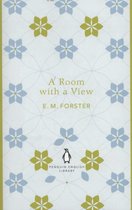
Critical Analysis - A Room with a View
● Change: Malcolm Bradbury "Novelist of the Edwardian enlightenment, freeing itself
from the constraints of gentility and Victorianism"
● Change: E.M.Forster "We must be willing to let go of the life we have planned so as
to have the life that is waiting for us"
● Change: Virginia Woolf "On or about 1910 human character changed"
● Change: Unknown "The novel touches upon many issues surrounding society and
politics in early 20th century Edwardian culture."
● Change: E.M.Forster In the Abinger Harvest edition of his essays, Forster points out
in 'Notes on the English character' "For it is not that the Englishman can't feel - it is
that he is afraid to feel."
● Change: Malcolm Bradbury "Clearly in these books Forster and his reformist
characters are still in a world of mores and social conventions are shaped by the
weight of Victorian values. They all want a room with a view."
● Change: Malcolm Bradbury "For, as it now appears to us, the Edwardian Age
represented not a comfortable age but the dawn of an experimental period."
● Change: Smith "Forsterian characters are in a moral muddle; they don't feel
freely; they can't seem to develop."
● Revolution: Malcolm Bradbury "Forster belonged to a generation that saw the
great revolution: the coming of modernity; the rise of the new arts."
● Revolution: Malcolm Bradbury "Forster was part of the Bloomsbury Group,
which became the British avant-garde and the scene of a social and cultural
revolution that still continues..."
● Revolution: Forster "But oh what a viewpoint is the English hotel or Pension! Our
life is where we sleep and eat, and the glimpses of Italy that I get are only accidents."
● Revolution: Bradbury "...the world of 'Sawston' that he would, in his fiction first
satirise, and then come half to respect its traditions, its roots and its endurance."
● Religion: Smith and Mitchell "Religious education was common...that instructed
people on moral and religious conduct"
● Religion: Mews Religion had "lost relevance to national, social and political life"
● Cecil and George: Bradbury "Cecil belongs in the class of men who forget views or
don't see the point in them, while young George Emerson is of the other party."
● Cecil: Conway Cecil Vyse preserves idea of "rational male and the emotional, intuitive
female"
● George: Heath "The sadness that George displays in the beginning of the
novel emanates from his continuous search for meaning"
● George: Carl Freedman George is "a figure of the future and of vitality - and an
implicit enemy to the old order"
● Mrs Honeychurch: Finkelstein Mrs Honeychurch is "just as concerned over a
'woman's place' as Cecil is"
● The Emerson's: Heath "The Emerson's give Lucy a 'sense of larger and
unsuspected issues' and make her 'conscious of some new idea'"
● Rev Eager: Jeffrey Heath Reverend Eager "tried to 'wrap up' unruly and vibrant
real life under the cloaks and hoods of cultured and fitting behaviour"
● Transition (Lucy): Philip Wagner Lucy is "shackled by Victorian conventionality"
● Transition (Lucy): Milutinovic "Lucy is taught to look up to the ideal of the medieval
lady"
● Change: Malcolm Bradbury "Novelist of the Edwardian enlightenment, freeing itself
from the constraints of gentility and Victorianism"
● Change: E.M.Forster "We must be willing to let go of the life we have planned so as
to have the life that is waiting for us"
● Change: Virginia Woolf "On or about 1910 human character changed"
● Change: Unknown "The novel touches upon many issues surrounding society and
politics in early 20th century Edwardian culture."
● Change: E.M.Forster In the Abinger Harvest edition of his essays, Forster points out
in 'Notes on the English character' "For it is not that the Englishman can't feel - it is
that he is afraid to feel."
● Change: Malcolm Bradbury "Clearly in these books Forster and his reformist
characters are still in a world of mores and social conventions are shaped by the
weight of Victorian values. They all want a room with a view."
● Change: Malcolm Bradbury "For, as it now appears to us, the Edwardian Age
represented not a comfortable age but the dawn of an experimental period."
● Change: Smith "Forsterian characters are in a moral muddle; they don't feel
freely; they can't seem to develop."
● Revolution: Malcolm Bradbury "Forster belonged to a generation that saw the
great revolution: the coming of modernity; the rise of the new arts."
● Revolution: Malcolm Bradbury "Forster was part of the Bloomsbury Group,
which became the British avant-garde and the scene of a social and cultural
revolution that still continues..."
● Revolution: Forster "But oh what a viewpoint is the English hotel or Pension! Our
life is where we sleep and eat, and the glimpses of Italy that I get are only accidents."
● Revolution: Bradbury "...the world of 'Sawston' that he would, in his fiction first
satirise, and then come half to respect its traditions, its roots and its endurance."
● Religion: Smith and Mitchell "Religious education was common...that instructed
people on moral and religious conduct"
● Religion: Mews Religion had "lost relevance to national, social and political life"
● Cecil and George: Bradbury "Cecil belongs in the class of men who forget views or
don't see the point in them, while young George Emerson is of the other party."
● Cecil: Conway Cecil Vyse preserves idea of "rational male and the emotional, intuitive
female"
● George: Heath "The sadness that George displays in the beginning of the
novel emanates from his continuous search for meaning"
● George: Carl Freedman George is "a figure of the future and of vitality - and an
implicit enemy to the old order"
● Mrs Honeychurch: Finkelstein Mrs Honeychurch is "just as concerned over a
'woman's place' as Cecil is"
● The Emerson's: Heath "The Emerson's give Lucy a 'sense of larger and
unsuspected issues' and make her 'conscious of some new idea'"
● Rev Eager: Jeffrey Heath Reverend Eager "tried to 'wrap up' unruly and vibrant
real life under the cloaks and hoods of cultured and fitting behaviour"
● Transition (Lucy): Philip Wagner Lucy is "shackled by Victorian conventionality"
● Transition (Lucy): Milutinovic "Lucy is taught to look up to the ideal of the medieval
lady"