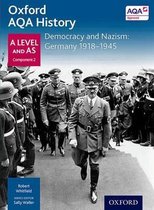
German democracy and Nazism
Part 1- The Weimar Republic 1918 – 1933
The establishment and early years of the Weimar Republic 1918-1924:
§ The impact of war and the political crises of October to November 1918; the context for the
establishment of the Weimar Constitution; terms, strengths and weaknesses
§ The Peace Settlement: expectations and reality; terms and problems; attitudes within Germany and
abroad
§ Economic and social issues: post-war legacy and the state of the German economy and society;
reparations, inflation and hyperinflation; the invasion of the Ruhr and its economic impact; social
welfare and the social impact of hyperinflation
§ Political instability and extremism; risings on the left and right, including the Kapp Putsch; the political
impact of the invasion of the Ruhr; the Munich Putsch; problems of coalition government and the state
of the Republic by 1924
The ‘Golden Age’ of the Weimar Republic 1924- 28:
§ Economic developments: Stresemann; the Dawes Plan; industry, agriculture and the extent of
recovery; the reparations issue and the Young Plan
§ Social developments: social welfare reforms; the development of Weimar culture; art, architecture,
music, theatre, literature and film; living standards and lifestyles
§ Political developments and the workings of democracy: President Hindenburg; parties ; elections and
attitudes to the Republic from the elites and other social groups; the position of the extremists,
including the Nazis and Communists; the extent of political stability
§ Germany’s international position; Stresemann's foreign policy aims and achievements including:
Locarno; the League of Nations; the Treaty of Berlin; the end of allied occupation and the pursuit of
disarmament.
The Collapse of democracy 1928-33:
§ The economic, social and political impact of the Depression: elections; governments and policies
§ The appeal of Nazism and Communism; the tactics and fortunes of the extremist parties, including the
role of propaganda
§ Hindenburg, Papen, Schleicher and the 'backstairs intrigue' leading to Hitler’s appointment as
chancellor
§ Political developments: the Reichstag Fire; parties and elections; the Enabling Act and the end of
democracy; the state of Germany by March 1933
, The establishment and early years of the Weimar Republic 1918-1924:
Key points:
§ In October 1918 parliamentary government replaced autocracy in Germany
§ The political system established in October lasts only a few weeks before a popular revolution
took place. In November 1918, Germany’s socialists monopolised political power but were
divided on the issue of what kind of political system to create.
§ The majority of Socialists were forced to enlist the support of right- wing parliamentaries in
order to suppress the extreme left.
§ The 1919 constitution was democratic but flawed
Weimar Republic:
Unification (1864-1871)
§ The German Reich (also known as the second Reich) was established in 1871
§ Most German people (e.g. nationalists) wanted the states to form a strong, united, independent German
national state.
§ Each state is free to legislate on a variety of matters but the federal Government was responsible for foreign
policy, civil and criminal law, banking, press and taxation.
§ In 1871, the largest German state, new Reich dominated by Prussia.
The effects of the first world war on Germany? Living conditions:
Economy/finance § Real earnings fell 20-30%
§ Conditions increasingly became
§ Between 1913 and 1918 the mark lost 75 percent of its value difficult- leads to revolutions
§ Industry made vast profits, which were increasingly resented § Living conditions got worse, earning fell
by ordinary Germans 20-30%: food and fuel shortages
§ agricultural production fell § Rationing- soap, shoes, clothes,
§ December 1916 Auxiliary labour law gave government harsh washing powder, medicines all due to
powers over labour the naval blockade
§ War financed by printing money and borrowing; led to § Adults getting less than 1,000 calories a
inflation day
§ Expectations of booty from victory § Major food and fuel shortages
§ Only 16 per cent of cost of war met from taxation § Meat consumption fell to 12 per cent of
§ Inflation, loans- only 16% of expense paid by loans pre war level
§ Industrial decline up to 40% § 1917 winter called turnip winter- the
only food to eat
§ Disease- Spanish flu 600,000 killed,
starvation
Other impacts on Germany:
§ Hypothermia: 1916- 121,00
§ Kiel mutiny, sailors mutinied 1918:293,000
§ Uprisings and mutinies
§ Strikes and power cuts
§ Kaiser loses support of the army and forced to abdicate on the
10th of November
§ Political problems New gov- Weimar republic
, Date Event
29 Sept Ludendorff called for armistice negotiations
30 Sept Kaiser promised political reforms
1 Oct Prince Max of Baden formed a new government
3 Oct Prince Max’s letter to President Wilson asking for an armistice
24 Oct Wilson replied to Prince Max’s request
26 Oct Ludendorff resigned and fled to Sweden
28 Oct Naval mutiny at Wilhelmshaven
3 Nov Naval mutiny at Kiel
6 Nov Councils are set up all over Germany
8 Nov Revolt in Bavaria
9 Nov Declaration of a German Republic in Berlin and abdication of the
Kaiser
11 Nov Armistice signed with Allies
The October Reforms:
The political changes of October 1918 were of immense significance. Germany ceased to be an autocracy and became
a parliamentary democracy on the British Model. The Kaiser had been turned into a constitutional monarch, storm of
any real power.
Significantly the change had been bought solely by the interests of the High Command and not through pressures
exerted by the German people , hence why these events are referred to as the ‘revolution from above’.
In October, following the recommendations of Ludendorff, the Kaiser began a series of reforms that effectively ended
his autocratic rule:
§ He appointed Prince Max Of Baden as his new chancellor
§ The chancellor was to be responsible to the Reichstag and he established a new government based on the
majority parties in the Reichstag, including the German Social Democratic party (SPD).
§ The armed forces were put under the control of the civil government.
Revolution from above- the people in government make the decisions. The people on top make a change in a way that
will stop them from being overthrown. Erich Ludendorff thinks of this idea.
§ Ludendorff believes they should make some changes themselves. He tells the Kaiser to make some small
changes to pacify the people.
§ The Kaiser appoints a chancellor who is actually his cousin so they show that they are making change, in doing
this they are trying to prevent people from overthrowing them.
Revolution from below- people underneath make the change.
,Significance of the Revolution from above?
§ The Kaiser is handing over power this is significant as it’s the first time. He is sharing his power and is still
able to keep the power and control the people. Power = democracy.
§ Shifted power from the Reichstag to Chancellor. The Reichstag actually holds power. The Kaiser becomes a
constitutional monarch.
§ Germany ceased to be an autocracy and become a parliamentary democracy. Prince Max took over as
chancellor
From monarchy to Democratic republic:
§ In October 1918 as new government based on the Reichstag was formed. This was a ‘revolution from below’,
as this great change was initiated by the ruling class itself.
§ Prince Max passed some reforms- not sufficient.
§ Economic discontent and War weariness caused growing popular unrest. The German people had been
promised and expected a great victory. When it was clear that the war was lost, Germany erupted in a wave
of unrest, often described as the ‘German Revolution’ of 1918-19, ‘the revolution from below’.
Serious troubles began in late October at the naval bases of Kiel and Wilhelmshaven when sailors refused to obey an
order to sail out to salvage German honour in a final battle.
They stopped the fleet sailing by putting out the fires in the ships’ boilers, raised the red flag and took over Kiel. News
of the Mutiny encouraged the creation of a series of sailors’, soldiers’ and workers’ councils throughout Germany.
These challenged the authority of state governments. Desperate to prevent a full scale revolution, Prince Max
announced the Kaisers abdication and handed over the chancellorship to the moderate were competing for leadership
of the revolution.
To outmanoeuvre the radicals, Philip Scheidemann, a moderate SPD leader, declared a republic to cheering crowds in
Berlin. Karl Liebknecht, the leader of the communist Spartacist movement, declared a soviet republic from another
balcony.
Ebert was furious that a republic has been declared illegally but had to accept that the monarchy had collapsed. Two
days later, on 11 November, the government had an armistice.
The events of Kiel Mutiny 1918:
§ Make a raid on the English Channel. The morale was perilously low due to the strictness of naval discipline
and arrogance of officers.
§ As a result the crews of two ships mutinied
§ When the naval commanders ordered the arrest of these crews, other sailors demonstrated in Kiel on 3
November and eight were shot dead. This was the cue for a general mutiny.
§ The following day, workers, soldiers and sailors mutinied and began setting up their own councils. By 8
November, workers', soldiers' and sailors' councils had been set up at all the main cities and ports.
§ It appeared that the 'revolution from below' that the military commanders feared had begun
§ The sailors’ mutiny sparked rebellions all over Germany and in a matter of days led to the collapse of the
German government which forced the ruling monarch, Kaiser Wilhelm II, to abdicate on 9 November
, § By the end of September 1918, it had been clear to General Ludendorff and the German High Command that
Germany was on the brink of defeat.
§ Although the Allied armies had not yet entered German territory, German forces were in retreat along the
Western front.
§ Elsewhere in Europe, Germany’s allies were trying to negotiate peace terms.
§ Ludendorff concluded that Germany’s only hope of avoiding a humiliating surrender was to ask the allies for an
armistice
§ US President Wilson’s fourteen points offered a possible basis for a negotiated peace settlement, but Ludendorff
understood that Germany’s autocratic political system was an obstacle to this. He therefore, advocated a partial
demonstration of the political system in Germany as a way of getting better peace terms from the allies.
Ludendorff persuaded the Kaiser to transform the Second Reich into a virtual parliamentary democracy by handing
over power to a civilian government that had the support of the Reichstag. He also urged an immediate armistice.
Ludendorff had two motives. Firstly, he hoped this new civilian government would be able to get better peace terms
from the Allies.
Secondly, he hoped the new civilian government would be blamed for Germany’s defeat because it would have to end
the War. This in turn would mask the responsibility of the generals for Germany’s defeat, preserve their reputations and
so help them maintain their positions in the post- war world.
Revolution from below (the peace note)
§ On October 3rdPrince max wrote to Wilson asking for an armistice- Wilson demanded that Germany must
evacuate all occupied territory, call an end to submarine warfare and fully democratise it’s political system- in
effect he was demanding a German surrender and the Kaisers abdication- too much for Ludendorff to accept.
§ He tried but failed to gather support for a last ditch military effort to resist, resigned and fled to Sweden. Wilson
makes him abdicate
Impact on German people:
§ News that Germany was on the brink of defeat and that Max’s government was asking for a armistice shattered
the morale of German people
§ The peace note was an admission that Germany had lost war- this was the first occasion that the German people
had learned the truth about their country’s hopeless military situation
§ It undermined their respect for the Kaiser and his military and political dealers
§ Civilians who had undergone hardships ( food shortages etc.) were no longer prepared to show restraint
§ Many soldiers lost respect for their officers
§ Kaiser was increasingly seen as an obstacle to peace but he refused to abdicate
The abdication of the Kaiser:
Germany was in an extremely poor state. There was rioting and starvation; it was the ‘turnip winter’. The naval
blockade of Germany by the British Navy had led to poor supplies. The German navy at Kiel were asked to attack this
force- rebelled against the Kaiser. This spread to workers in the cities- SPD refused to continue to support the Kaiser
and Groener stated that the armed forces would no longer support him. The Kaiser therefore abdicated leaving
Germany with a power vacuum. His chancellor Prince Max of Baden also resigned handing the position onto Ebert.
On 9th November 1918, Kaiser Wilhelm II of Germany was brought the news that his abdication has been announced in
Berlin. By later that evening, he had been forced to accept what had happened. His companions advised him that his only
hope of safety was to travel to Holland, which had remained neutral in the War. Wilhelm was uncertain of what to do.
,How and why did the Bauer government try to stop the stab in the back theory?
§ It was actually the army that signed the surrender – but people started saying it was the new Government, the
Weimar Republic, that was to blame.
§ People couldn’t understand why they had lost the war when Germany had not been invaded
§ They assumed the politicians had “stabbed the army in the back” by surrendering when they could have won.
The army were delighted to pretend this was true
Significance of the stab in the back myth?
German army (the core element of the previously mentioned martial tradition) had been betrayed by the officials of
Weimar in signing the armistice. Hitler and the Nazis erroneously claimed that victory was still possible. This is
significant for two main reasons.
First it crucially portrayed Weimar as corrupt and weak providing a sharp contrast with the Nazi images of strength
and a return to Germany’s proud military traditions of the past that the Nazis promised and that in the face of the
humiliating Treaty of Versailles much of the country wanted.
Secondly it tapped into a crucial element of support that the Nazis required if they wished to take control of
government - the right wing groups created after the defeat in the war and the creation of Weimar.
Struggle for power
§ Ebert was not a revolutionary – He believed in evolutionary change through winning a majority in
parliamentary elections and then introducing reforms.
§ But he had come to power through a revolutionary act- he was conscious of the fact that his government
lacked legitimacy. He was therefore determined to establish a new constitution as quickly as possible.
§ His priority after signing the armistice was to organise elections for a constituent assembly
§ Prior to the creation of a new constitution Ebert urged Germans to keep essential services running to avoid
street demonstrations and to maintain law and order.
§ After the armistice and the demobilisation of the army thousands of angry disillusioned workers and ex
soldiers.
Pressure from the left
Ebert’s efforts to contain the revolution- further threatened by pressure for more radical change from the left. He
couldn’t ignore the fact that the workers and soldiers councils, in which the USPD and the Spartacists has established
a foothold, had made the running in the early stages of the revolution.
On 22nd November an agreement was reached between the new government and the Berlin workers’ and soldiers’
councils- the Gov accepted that it only exercised power in the name of these councils.
They believed that the autocratic system of government would not finally be abolished unless the aristocratic estates
were broken up, the army, civil service and judiciary were democratised and the key industries were nationalised
under the workers’ control.
,Pressure from the army and the Ebert – Groener pact:
The survival of Ebert’s government depended on the support of the army.
Most army officers came from aristocratic backgrounds had been loyal to the Kaiser and were vigorously opposed to
democracy. They had no wish to see Germany become a republic. Germany faced the danger of a Bolshevik revolution
-lead to civil war and possible occupation by allied forces.
First concern - prevent the revolution from going any further.
On November 10th, General Groener telephoned Ebert to assure him that the army leadership would support the
government. In return, Groener demanded that Ebert should resist the demands of the soldiers’ councils to
democratise the army and defend Germany against communist revolution. Ebert assured Groener that the government
was determined to resist further revolution and to uphold the existing command structure in the army. = Ebert
Groener pact.
For Ebert the pact was a necessary and unavoidable device to ensure an orderly transaction to the New Republic. For his
critics on the left however it was an abject betrayal of the revolution. Whilst Ebert and his cabinet made preparations
for elections to a constituent Assembly to be held in January 1919, the struggle for power continued:
§ On 6th December, a Spartacist demonstration in Berlin was fired on by soldiers, killing sixteen
§ On 23-24 December a sailor’s revolt against the government in Berlin was put down by the
army. In protest, the three USPD ministers in the government resigned
§ On 6th January; the Spartacists launched an armed revolt against the government in what
became known as the January revolution, or the Spartacist uprising. After a week of heavy
fighting in Berlin, the revolt was crushed
, The Weimar Constitution:
The political spectrum:
Spartacist League (KPD) USPD SPD
Founded: 1916 SPD. Founded- 1917 Founded- 1875, Marxist party
KPD 1919
Leaders- Rosa Luxemburg, Karl Liebknecht Leaders- Hugo Hasse Leaders-
Friedrich Ebert & Philip
Scheidemann
Aims: republican gov controlled by workers Aims: republic with national Aims: moderate socialist republic,
and soldiers councils’, welfare benefits, Reichstag, workers and soldiers personal freedom, welfare
nationalisation, disbanding of army. Opposed councils’, welfare improvements, improvements and gradual
to first world war nationalisation of industry, reform nationalisation of industry.
to the army. Opposed to first world Continuity and order. Supported
war Germanys entry into First World
war
Support- workers would join in rallies streets Support- 1918 as war weariness Support-
grew
Membership- c . 5,000 Membership- Membership- C. 1 million
C. 300,000
German Democratic Party Centre Party German National People’s Germans people Party
(DDP) Party (DNVP) (DVP)
Founded- Founded- 1870 Founded- Founded-
Leaders- Leaders- Leaders- Leaders-
Aims: left leaning liberal Aims: protect catholic Aims: nationalist party Aims: right leaning liberal
party, old progressive party. interests mainly protestant based on the old party, old national liberal
Supported a democratic German Reich conservative party party
constitution
Rejected the democratic Opposed new republic but
constitution willing to participate in its
government
Support- intellectuals and Support- Bavaria , Support- landowners, small Support-
middle class Rhineland business owners
Membership- Membership- Membership- Membership-
,1919 elections What was the Weimar constitution?
§ Women were allowed to vote for the first time § Bill of rights based on social justice guaranteed
§ SPD secured the largest share of the 38% the every German citizen freedom of speech and
largest number of seats (163) in the assembly religion and equality under the law
§ However they failed to reach a majority so had § All men and women over the age of 20 were
to compromise with other parties to govern given the vote
and establish a new constitution § There was an elected president and am elected
Reichstag
§ The Reichstag made laws and appointed the
§ Ebert was elected the first president government, which had to do what the
§ Scheidemann was appointed chancellor Reichstag wanted
§ Ebert and SPD are now in power but there is
struggle for power
The president- Friedrich Ebert The chancellor
§ Elected directly by the people of 20 § Appointed by the president
§ He would take no part in day to day § He was usually the leader of the party with
§ Powerful as he chose the chancellor and could the lost seats
dismiss the chancellor § He chooses ministers to help him run the
§ He could dissolve the Reichstag and call new country
elections § He could pass laws but needed the support of
§ He was commander in chief of the armed the majority in the Reichstag
forced and could use them to suppress revolts
§ According to article 48 he could rule by an
emergency decree
§ Used 136 times by Ebert
Forming a new government
• After the abdication of the Kaiser- unrest all around Germany.
• Armed groups with extreme political views clashed with the army and even claimed control.
• Ebert slowly began to take control and a temporary government was formed – ‘Council of People’s
Representatives’.
• This temporary government organised elections for a National Assembly on 19th January 1919. The winners
met on 6thFebruary 1919 to create a new constitution.
• Due to unrest in Berlin, the Assembly met in Weimar. The new constitution was signed into law by the
Assembly on 11th August 1919 – thus the Weimar Republic was born.
, The two biggest problems were:
Proportional representation – meant there was no party strong enough to get a majority and
therefore very difficult to get laws passed in the Reichstag. This was a major weakness of the republic
Article 48- the president could rule without consulting the Reichstag in an emergency. The problem
with this was that it did not say what an emergency was and this paved the way towards
dictatorship.
Feature purpose Enhances democracy Threatens democracy
Article 48 To give president special Reichstag could still vote President could use Article 48
“national president may emergency powers to use armed against the president’s to become more autocratic
hold it to the performance force against any land that emergency powers- there is a
thereof by force of arms” didn’t follow laws safeguard Can suspend basic rights.
President could simply dissolve
To encourage the maintenance Reichstag and call for new
of law and order elections
Proportional representation To ensure the people have a real Universal male and female No party ever had a majority –
say in who runs the country. suffrage nothing gets done
Make the system fully The government are made up President has a lot of power
representative. from people who are actually
voted in Instability. Frequent changed
of gov.
Chancellor needs support of Coalition gov inevitable
Reichstag. Prone to collapse
Elections Weak leadership
Constitution of traditional Need for stability. Stability. Recruited from the
institutions Provide vital services aristocracy. Support the old
regime. Tend to be happier
with the autocratic system.
Looked with disdain upon
democratic politics.
§ Instability: Due to coalitions; parties could very rarely agree, and even if they could agree and
formed a coalition, they would often fall out quickly.
§ Change: With coalitions constantly changing, it was hard to come up with a consistent government
policy on anything
§ Inaction: Constantly changing coalitions and lack of consistent policies meant that the government
rarely got much done!
§ Public Opinion: People were suspicious of all the change and inaction. They did not trust the new
government.
Part 1- The Weimar Republic 1918 – 1933
The establishment and early years of the Weimar Republic 1918-1924:
§ The impact of war and the political crises of October to November 1918; the context for the
establishment of the Weimar Constitution; terms, strengths and weaknesses
§ The Peace Settlement: expectations and reality; terms and problems; attitudes within Germany and
abroad
§ Economic and social issues: post-war legacy and the state of the German economy and society;
reparations, inflation and hyperinflation; the invasion of the Ruhr and its economic impact; social
welfare and the social impact of hyperinflation
§ Political instability and extremism; risings on the left and right, including the Kapp Putsch; the political
impact of the invasion of the Ruhr; the Munich Putsch; problems of coalition government and the state
of the Republic by 1924
The ‘Golden Age’ of the Weimar Republic 1924- 28:
§ Economic developments: Stresemann; the Dawes Plan; industry, agriculture and the extent of
recovery; the reparations issue and the Young Plan
§ Social developments: social welfare reforms; the development of Weimar culture; art, architecture,
music, theatre, literature and film; living standards and lifestyles
§ Political developments and the workings of democracy: President Hindenburg; parties ; elections and
attitudes to the Republic from the elites and other social groups; the position of the extremists,
including the Nazis and Communists; the extent of political stability
§ Germany’s international position; Stresemann's foreign policy aims and achievements including:
Locarno; the League of Nations; the Treaty of Berlin; the end of allied occupation and the pursuit of
disarmament.
The Collapse of democracy 1928-33:
§ The economic, social and political impact of the Depression: elections; governments and policies
§ The appeal of Nazism and Communism; the tactics and fortunes of the extremist parties, including the
role of propaganda
§ Hindenburg, Papen, Schleicher and the 'backstairs intrigue' leading to Hitler’s appointment as
chancellor
§ Political developments: the Reichstag Fire; parties and elections; the Enabling Act and the end of
democracy; the state of Germany by March 1933
, The establishment and early years of the Weimar Republic 1918-1924:
Key points:
§ In October 1918 parliamentary government replaced autocracy in Germany
§ The political system established in October lasts only a few weeks before a popular revolution
took place. In November 1918, Germany’s socialists monopolised political power but were
divided on the issue of what kind of political system to create.
§ The majority of Socialists were forced to enlist the support of right- wing parliamentaries in
order to suppress the extreme left.
§ The 1919 constitution was democratic but flawed
Weimar Republic:
Unification (1864-1871)
§ The German Reich (also known as the second Reich) was established in 1871
§ Most German people (e.g. nationalists) wanted the states to form a strong, united, independent German
national state.
§ Each state is free to legislate on a variety of matters but the federal Government was responsible for foreign
policy, civil and criminal law, banking, press and taxation.
§ In 1871, the largest German state, new Reich dominated by Prussia.
The effects of the first world war on Germany? Living conditions:
Economy/finance § Real earnings fell 20-30%
§ Conditions increasingly became
§ Between 1913 and 1918 the mark lost 75 percent of its value difficult- leads to revolutions
§ Industry made vast profits, which were increasingly resented § Living conditions got worse, earning fell
by ordinary Germans 20-30%: food and fuel shortages
§ agricultural production fell § Rationing- soap, shoes, clothes,
§ December 1916 Auxiliary labour law gave government harsh washing powder, medicines all due to
powers over labour the naval blockade
§ War financed by printing money and borrowing; led to § Adults getting less than 1,000 calories a
inflation day
§ Expectations of booty from victory § Major food and fuel shortages
§ Only 16 per cent of cost of war met from taxation § Meat consumption fell to 12 per cent of
§ Inflation, loans- only 16% of expense paid by loans pre war level
§ Industrial decline up to 40% § 1917 winter called turnip winter- the
only food to eat
§ Disease- Spanish flu 600,000 killed,
starvation
Other impacts on Germany:
§ Hypothermia: 1916- 121,00
§ Kiel mutiny, sailors mutinied 1918:293,000
§ Uprisings and mutinies
§ Strikes and power cuts
§ Kaiser loses support of the army and forced to abdicate on the
10th of November
§ Political problems New gov- Weimar republic
, Date Event
29 Sept Ludendorff called for armistice negotiations
30 Sept Kaiser promised political reforms
1 Oct Prince Max of Baden formed a new government
3 Oct Prince Max’s letter to President Wilson asking for an armistice
24 Oct Wilson replied to Prince Max’s request
26 Oct Ludendorff resigned and fled to Sweden
28 Oct Naval mutiny at Wilhelmshaven
3 Nov Naval mutiny at Kiel
6 Nov Councils are set up all over Germany
8 Nov Revolt in Bavaria
9 Nov Declaration of a German Republic in Berlin and abdication of the
Kaiser
11 Nov Armistice signed with Allies
The October Reforms:
The political changes of October 1918 were of immense significance. Germany ceased to be an autocracy and became
a parliamentary democracy on the British Model. The Kaiser had been turned into a constitutional monarch, storm of
any real power.
Significantly the change had been bought solely by the interests of the High Command and not through pressures
exerted by the German people , hence why these events are referred to as the ‘revolution from above’.
In October, following the recommendations of Ludendorff, the Kaiser began a series of reforms that effectively ended
his autocratic rule:
§ He appointed Prince Max Of Baden as his new chancellor
§ The chancellor was to be responsible to the Reichstag and he established a new government based on the
majority parties in the Reichstag, including the German Social Democratic party (SPD).
§ The armed forces were put under the control of the civil government.
Revolution from above- the people in government make the decisions. The people on top make a change in a way that
will stop them from being overthrown. Erich Ludendorff thinks of this idea.
§ Ludendorff believes they should make some changes themselves. He tells the Kaiser to make some small
changes to pacify the people.
§ The Kaiser appoints a chancellor who is actually his cousin so they show that they are making change, in doing
this they are trying to prevent people from overthrowing them.
Revolution from below- people underneath make the change.
,Significance of the Revolution from above?
§ The Kaiser is handing over power this is significant as it’s the first time. He is sharing his power and is still
able to keep the power and control the people. Power = democracy.
§ Shifted power from the Reichstag to Chancellor. The Reichstag actually holds power. The Kaiser becomes a
constitutional monarch.
§ Germany ceased to be an autocracy and become a parliamentary democracy. Prince Max took over as
chancellor
From monarchy to Democratic republic:
§ In October 1918 as new government based on the Reichstag was formed. This was a ‘revolution from below’,
as this great change was initiated by the ruling class itself.
§ Prince Max passed some reforms- not sufficient.
§ Economic discontent and War weariness caused growing popular unrest. The German people had been
promised and expected a great victory. When it was clear that the war was lost, Germany erupted in a wave
of unrest, often described as the ‘German Revolution’ of 1918-19, ‘the revolution from below’.
Serious troubles began in late October at the naval bases of Kiel and Wilhelmshaven when sailors refused to obey an
order to sail out to salvage German honour in a final battle.
They stopped the fleet sailing by putting out the fires in the ships’ boilers, raised the red flag and took over Kiel. News
of the Mutiny encouraged the creation of a series of sailors’, soldiers’ and workers’ councils throughout Germany.
These challenged the authority of state governments. Desperate to prevent a full scale revolution, Prince Max
announced the Kaisers abdication and handed over the chancellorship to the moderate were competing for leadership
of the revolution.
To outmanoeuvre the radicals, Philip Scheidemann, a moderate SPD leader, declared a republic to cheering crowds in
Berlin. Karl Liebknecht, the leader of the communist Spartacist movement, declared a soviet republic from another
balcony.
Ebert was furious that a republic has been declared illegally but had to accept that the monarchy had collapsed. Two
days later, on 11 November, the government had an armistice.
The events of Kiel Mutiny 1918:
§ Make a raid on the English Channel. The morale was perilously low due to the strictness of naval discipline
and arrogance of officers.
§ As a result the crews of two ships mutinied
§ When the naval commanders ordered the arrest of these crews, other sailors demonstrated in Kiel on 3
November and eight were shot dead. This was the cue for a general mutiny.
§ The following day, workers, soldiers and sailors mutinied and began setting up their own councils. By 8
November, workers', soldiers' and sailors' councils had been set up at all the main cities and ports.
§ It appeared that the 'revolution from below' that the military commanders feared had begun
§ The sailors’ mutiny sparked rebellions all over Germany and in a matter of days led to the collapse of the
German government which forced the ruling monarch, Kaiser Wilhelm II, to abdicate on 9 November
, § By the end of September 1918, it had been clear to General Ludendorff and the German High Command that
Germany was on the brink of defeat.
§ Although the Allied armies had not yet entered German territory, German forces were in retreat along the
Western front.
§ Elsewhere in Europe, Germany’s allies were trying to negotiate peace terms.
§ Ludendorff concluded that Germany’s only hope of avoiding a humiliating surrender was to ask the allies for an
armistice
§ US President Wilson’s fourteen points offered a possible basis for a negotiated peace settlement, but Ludendorff
understood that Germany’s autocratic political system was an obstacle to this. He therefore, advocated a partial
demonstration of the political system in Germany as a way of getting better peace terms from the allies.
Ludendorff persuaded the Kaiser to transform the Second Reich into a virtual parliamentary democracy by handing
over power to a civilian government that had the support of the Reichstag. He also urged an immediate armistice.
Ludendorff had two motives. Firstly, he hoped this new civilian government would be able to get better peace terms
from the Allies.
Secondly, he hoped the new civilian government would be blamed for Germany’s defeat because it would have to end
the War. This in turn would mask the responsibility of the generals for Germany’s defeat, preserve their reputations and
so help them maintain their positions in the post- war world.
Revolution from below (the peace note)
§ On October 3rdPrince max wrote to Wilson asking for an armistice- Wilson demanded that Germany must
evacuate all occupied territory, call an end to submarine warfare and fully democratise it’s political system- in
effect he was demanding a German surrender and the Kaisers abdication- too much for Ludendorff to accept.
§ He tried but failed to gather support for a last ditch military effort to resist, resigned and fled to Sweden. Wilson
makes him abdicate
Impact on German people:
§ News that Germany was on the brink of defeat and that Max’s government was asking for a armistice shattered
the morale of German people
§ The peace note was an admission that Germany had lost war- this was the first occasion that the German people
had learned the truth about their country’s hopeless military situation
§ It undermined their respect for the Kaiser and his military and political dealers
§ Civilians who had undergone hardships ( food shortages etc.) were no longer prepared to show restraint
§ Many soldiers lost respect for their officers
§ Kaiser was increasingly seen as an obstacle to peace but he refused to abdicate
The abdication of the Kaiser:
Germany was in an extremely poor state. There was rioting and starvation; it was the ‘turnip winter’. The naval
blockade of Germany by the British Navy had led to poor supplies. The German navy at Kiel were asked to attack this
force- rebelled against the Kaiser. This spread to workers in the cities- SPD refused to continue to support the Kaiser
and Groener stated that the armed forces would no longer support him. The Kaiser therefore abdicated leaving
Germany with a power vacuum. His chancellor Prince Max of Baden also resigned handing the position onto Ebert.
On 9th November 1918, Kaiser Wilhelm II of Germany was brought the news that his abdication has been announced in
Berlin. By later that evening, he had been forced to accept what had happened. His companions advised him that his only
hope of safety was to travel to Holland, which had remained neutral in the War. Wilhelm was uncertain of what to do.
,How and why did the Bauer government try to stop the stab in the back theory?
§ It was actually the army that signed the surrender – but people started saying it was the new Government, the
Weimar Republic, that was to blame.
§ People couldn’t understand why they had lost the war when Germany had not been invaded
§ They assumed the politicians had “stabbed the army in the back” by surrendering when they could have won.
The army were delighted to pretend this was true
Significance of the stab in the back myth?
German army (the core element of the previously mentioned martial tradition) had been betrayed by the officials of
Weimar in signing the armistice. Hitler and the Nazis erroneously claimed that victory was still possible. This is
significant for two main reasons.
First it crucially portrayed Weimar as corrupt and weak providing a sharp contrast with the Nazi images of strength
and a return to Germany’s proud military traditions of the past that the Nazis promised and that in the face of the
humiliating Treaty of Versailles much of the country wanted.
Secondly it tapped into a crucial element of support that the Nazis required if they wished to take control of
government - the right wing groups created after the defeat in the war and the creation of Weimar.
Struggle for power
§ Ebert was not a revolutionary – He believed in evolutionary change through winning a majority in
parliamentary elections and then introducing reforms.
§ But he had come to power through a revolutionary act- he was conscious of the fact that his government
lacked legitimacy. He was therefore determined to establish a new constitution as quickly as possible.
§ His priority after signing the armistice was to organise elections for a constituent assembly
§ Prior to the creation of a new constitution Ebert urged Germans to keep essential services running to avoid
street demonstrations and to maintain law and order.
§ After the armistice and the demobilisation of the army thousands of angry disillusioned workers and ex
soldiers.
Pressure from the left
Ebert’s efforts to contain the revolution- further threatened by pressure for more radical change from the left. He
couldn’t ignore the fact that the workers and soldiers councils, in which the USPD and the Spartacists has established
a foothold, had made the running in the early stages of the revolution.
On 22nd November an agreement was reached between the new government and the Berlin workers’ and soldiers’
councils- the Gov accepted that it only exercised power in the name of these councils.
They believed that the autocratic system of government would not finally be abolished unless the aristocratic estates
were broken up, the army, civil service and judiciary were democratised and the key industries were nationalised
under the workers’ control.
,Pressure from the army and the Ebert – Groener pact:
The survival of Ebert’s government depended on the support of the army.
Most army officers came from aristocratic backgrounds had been loyal to the Kaiser and were vigorously opposed to
democracy. They had no wish to see Germany become a republic. Germany faced the danger of a Bolshevik revolution
-lead to civil war and possible occupation by allied forces.
First concern - prevent the revolution from going any further.
On November 10th, General Groener telephoned Ebert to assure him that the army leadership would support the
government. In return, Groener demanded that Ebert should resist the demands of the soldiers’ councils to
democratise the army and defend Germany against communist revolution. Ebert assured Groener that the government
was determined to resist further revolution and to uphold the existing command structure in the army. = Ebert
Groener pact.
For Ebert the pact was a necessary and unavoidable device to ensure an orderly transaction to the New Republic. For his
critics on the left however it was an abject betrayal of the revolution. Whilst Ebert and his cabinet made preparations
for elections to a constituent Assembly to be held in January 1919, the struggle for power continued:
§ On 6th December, a Spartacist demonstration in Berlin was fired on by soldiers, killing sixteen
§ On 23-24 December a sailor’s revolt against the government in Berlin was put down by the
army. In protest, the three USPD ministers in the government resigned
§ On 6th January; the Spartacists launched an armed revolt against the government in what
became known as the January revolution, or the Spartacist uprising. After a week of heavy
fighting in Berlin, the revolt was crushed
, The Weimar Constitution:
The political spectrum:
Spartacist League (KPD) USPD SPD
Founded: 1916 SPD. Founded- 1917 Founded- 1875, Marxist party
KPD 1919
Leaders- Rosa Luxemburg, Karl Liebknecht Leaders- Hugo Hasse Leaders-
Friedrich Ebert & Philip
Scheidemann
Aims: republican gov controlled by workers Aims: republic with national Aims: moderate socialist republic,
and soldiers councils’, welfare benefits, Reichstag, workers and soldiers personal freedom, welfare
nationalisation, disbanding of army. Opposed councils’, welfare improvements, improvements and gradual
to first world war nationalisation of industry, reform nationalisation of industry.
to the army. Opposed to first world Continuity and order. Supported
war Germanys entry into First World
war
Support- workers would join in rallies streets Support- 1918 as war weariness Support-
grew
Membership- c . 5,000 Membership- Membership- C. 1 million
C. 300,000
German Democratic Party Centre Party German National People’s Germans people Party
(DDP) Party (DNVP) (DVP)
Founded- Founded- 1870 Founded- Founded-
Leaders- Leaders- Leaders- Leaders-
Aims: left leaning liberal Aims: protect catholic Aims: nationalist party Aims: right leaning liberal
party, old progressive party. interests mainly protestant based on the old party, old national liberal
Supported a democratic German Reich conservative party party
constitution
Rejected the democratic Opposed new republic but
constitution willing to participate in its
government
Support- intellectuals and Support- Bavaria , Support- landowners, small Support-
middle class Rhineland business owners
Membership- Membership- Membership- Membership-
,1919 elections What was the Weimar constitution?
§ Women were allowed to vote for the first time § Bill of rights based on social justice guaranteed
§ SPD secured the largest share of the 38% the every German citizen freedom of speech and
largest number of seats (163) in the assembly religion and equality under the law
§ However they failed to reach a majority so had § All men and women over the age of 20 were
to compromise with other parties to govern given the vote
and establish a new constitution § There was an elected president and am elected
Reichstag
§ The Reichstag made laws and appointed the
§ Ebert was elected the first president government, which had to do what the
§ Scheidemann was appointed chancellor Reichstag wanted
§ Ebert and SPD are now in power but there is
struggle for power
The president- Friedrich Ebert The chancellor
§ Elected directly by the people of 20 § Appointed by the president
§ He would take no part in day to day § He was usually the leader of the party with
§ Powerful as he chose the chancellor and could the lost seats
dismiss the chancellor § He chooses ministers to help him run the
§ He could dissolve the Reichstag and call new country
elections § He could pass laws but needed the support of
§ He was commander in chief of the armed the majority in the Reichstag
forced and could use them to suppress revolts
§ According to article 48 he could rule by an
emergency decree
§ Used 136 times by Ebert
Forming a new government
• After the abdication of the Kaiser- unrest all around Germany.
• Armed groups with extreme political views clashed with the army and even claimed control.
• Ebert slowly began to take control and a temporary government was formed – ‘Council of People’s
Representatives’.
• This temporary government organised elections for a National Assembly on 19th January 1919. The winners
met on 6thFebruary 1919 to create a new constitution.
• Due to unrest in Berlin, the Assembly met in Weimar. The new constitution was signed into law by the
Assembly on 11th August 1919 – thus the Weimar Republic was born.
, The two biggest problems were:
Proportional representation – meant there was no party strong enough to get a majority and
therefore very difficult to get laws passed in the Reichstag. This was a major weakness of the republic
Article 48- the president could rule without consulting the Reichstag in an emergency. The problem
with this was that it did not say what an emergency was and this paved the way towards
dictatorship.
Feature purpose Enhances democracy Threatens democracy
Article 48 To give president special Reichstag could still vote President could use Article 48
“national president may emergency powers to use armed against the president’s to become more autocratic
hold it to the performance force against any land that emergency powers- there is a
thereof by force of arms” didn’t follow laws safeguard Can suspend basic rights.
President could simply dissolve
To encourage the maintenance Reichstag and call for new
of law and order elections
Proportional representation To ensure the people have a real Universal male and female No party ever had a majority –
say in who runs the country. suffrage nothing gets done
Make the system fully The government are made up President has a lot of power
representative. from people who are actually
voted in Instability. Frequent changed
of gov.
Chancellor needs support of Coalition gov inevitable
Reichstag. Prone to collapse
Elections Weak leadership
Constitution of traditional Need for stability. Stability. Recruited from the
institutions Provide vital services aristocracy. Support the old
regime. Tend to be happier
with the autocratic system.
Looked with disdain upon
democratic politics.
§ Instability: Due to coalitions; parties could very rarely agree, and even if they could agree and
formed a coalition, they would often fall out quickly.
§ Change: With coalitions constantly changing, it was hard to come up with a consistent government
policy on anything
§ Inaction: Constantly changing coalitions and lack of consistent policies meant that the government
rarely got much done!
§ Public Opinion: People were suspicious of all the change and inaction. They did not trust the new
government.