Tort
Concepts:
1. Negligence
2. Remedies and defences
3. Occupiers’ liability
4. Product liability
5. Nuisance and the rule in Rylands v Fletcher
NOTE: Defamation not in these notes
key terms:
- Intentional torts = actionable per se, just show intention to do the act
- Consequential economic loss: econ loss (ex. PWL) + physical injury → recoverable
- Consequential psych harm: break leg + PTSD → recoverable
- Pure psych harm: recover only if medically recognized
- ER can delegate tasks to EE/IndCont but DOC/liability stays with ER
1
, Remedies
Objective: place P in same position they would be in had tort not occurred → P has duty to mitigate
Pecuniary Losses: financial losses suffered
- PWL: specials - up to date of trial; based on net wages (deduct taxes/insurance/sick pay paid out)
- FWL/LOEC: general - paid in lump sum assessed at trial
- Cannot return to work: pre-injury income X lost years – contingencies
- Limited return to work: ∆(original salary – reduced salary) X lost years – contigencies
- Shortened life expectancy: income P would’ve earned in lost years – living expenses
- Expenses: specials - costs of care, medical tx, equipment, adaptations → recover Rcosts of care incl private
care rather than NHS
- Property:
- Destroyed: cost of replacement
- Damaged: diminution in value (cost of repair)
Non-Pecuniary Losses: general - published guidelines for pain/suffering, loss of amenity for past and future
Death:
A. If claim started but P then dies, claim continues for estate’s benefit
- Can recover specials and general up to date of death
B. If P dies, dependents may claim bereavement if show:
1. Dependents were financially dependent (kids, parents, spouse)
2. P would have had some claim had he survived
- Amount is fixed by statute
2
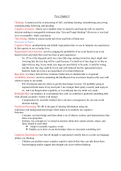
Concepts:
1. Negligence
2. Remedies and defences
3. Occupiers’ liability
4. Product liability
5. Nuisance and the rule in Rylands v Fletcher
NOTE: Defamation not in these notes
key terms:
- Intentional torts = actionable per se, just show intention to do the act
- Consequential economic loss: econ loss (ex. PWL) + physical injury → recoverable
- Consequential psych harm: break leg + PTSD → recoverable
- Pure psych harm: recover only if medically recognized
- ER can delegate tasks to EE/IndCont but DOC/liability stays with ER
1
, Remedies
Objective: place P in same position they would be in had tort not occurred → P has duty to mitigate
Pecuniary Losses: financial losses suffered
- PWL: specials - up to date of trial; based on net wages (deduct taxes/insurance/sick pay paid out)
- FWL/LOEC: general - paid in lump sum assessed at trial
- Cannot return to work: pre-injury income X lost years – contingencies
- Limited return to work: ∆(original salary – reduced salary) X lost years – contigencies
- Shortened life expectancy: income P would’ve earned in lost years – living expenses
- Expenses: specials - costs of care, medical tx, equipment, adaptations → recover Rcosts of care incl private
care rather than NHS
- Property:
- Destroyed: cost of replacement
- Damaged: diminution in value (cost of repair)
Non-Pecuniary Losses: general - published guidelines for pain/suffering, loss of amenity for past and future
Death:
A. If claim started but P then dies, claim continues for estate’s benefit
- Can recover specials and general up to date of death
B. If P dies, dependents may claim bereavement if show:
1. Dependents were financially dependent (kids, parents, spouse)
2. P would have had some claim had he survived
- Amount is fixed by statute
2