Brain localisation
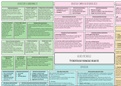
WAYS OF STUDYING THE BRAIN BRAIN LOCALISATION The theory that different areas of the
brain are responsible for different
BRAIN LATERALISAT
behaviours, processes or activities.
Temporal resolution Spatial resolution Key areas of the brain Brain lateralisation
The ability of a technique to show the exact time neuronal The capacity of a certain technique to show Motor area (frontal lobe) + Brain scan research The idea that both hemispheres of t
activity occurred. exactly which area of the brain is active. Multiple studies have shown support for functionally different and that certain
• Responsible for voluntary movements
A technique with bad temporal resolution might have a A technique with good spatial resolution will localisation of brain function, particularly and processes are controlled by one
delay of a few seconds between brain activity and it be able to precisely pinpoint areas of brain for language and memory. (such as language, which is mostly c
Somatosensory area (parietal lobe)
showing up on the scan. activity. One such study is Petersen et al (1998), left hemisphere).
• Receives incoming sensory information and
who used brain scans to demonstrate
processes it to produce sensations such as touch,
Functional Magnetic Resonance Imaging (fMRI): how Wernicke's area was active during a Sperry (1968)
temp, etc
Detects changes in blood oxygenation in different brain regions, indicating which parts listening task, and Broca's area was Aim
are most active. active during a reading task. To assess the abilities of separated b
Visual area (Occipital lobe)
Areas of the brain with more neural activity require more oxygen, this is called the hemispheres
haemodynamic response. • Receives and processes visual information.
- Biological reductionism
fMRI produces a 3D image of the brain, showing which areas are most active. Information from left visual-field is processed in the
Localisation theory attempts to reduce
right hemisphere, and vice-versa Procedure
• Spatial resolution: very good very complex human behaviours to only
Sperry used participants who had th
• Temporal resolution: poor specific areas of the brain.
Auditory area (Temporal lobe) callosum removed, splitting their bra
Reductionism is not inherently a
• Analyses and processes acoustic information. Again, hemispheres. They sat in front of a b
limitation, as it allows researchers to
left hemisphere processes information from right ear, horizontal row of lights and were as
Electroencephalogram (EEG): establish a cause and effect relationship,
and vice-versa the middle point. The lights then flas
Measure electrical activity in the brain using electrodes attached to the scalp. It shows but it also means we may not be able to
their right and left visual field.
the brainwave patterns generated by millions of neurons, providing an overall account get the full, holistic view of the brain and
of brain activity. Broca’s area (frontal lobe - only left hemisphere) the interplay between different areas.
Findings
EEG is often used as a diagnostic tool, as arrhythmic patterns can indicate a • Responsible for the production of speech
When their right eye was covered an
neurological issue (e.g. epilepsy, tumours, etc) • Damage to the area causes a condition called 'Broca's flashed to the left side of their visua
• Spatial resolution: very poor aphasia' where speech becomes slow and laborious claimed not to have seen any light a
• Temporal resolution: very good
Wernicke’s area (temporal lobe) Conclusion
• Responsible for language comprehension Sperry concluded that the participan
Event-Related Potential (ERP): light, but as the visual information fr
• Damage to the area cases 'Wernicke's aphasia', where
Electrical changes in the brain that correspond to the brain's response to a is processed in the right hemisphere
people can talk fluently but don't understand
specific event; measured with EEG. Statistical averaging techniques are used unable to speak about seeing the lig
language, so their speech and words are mostly
to filter out extraneous brain activity from the original EEG. The result is an hemisphere doesn't have a language
meaningless
event-related potential, a type of brainwave triggered by a particular stimulus.
• Spatial resolution: poor
• Temporal resolution: very good Brain
A LEVEL PSYCHOLOGY • Axonal s
new nerve
Post-Mortem:
neuronal
A technique involving the physical analysis of a persons brain after death. People
BIOPSYCHOLOGY KNOWLEDGE ORGANISER
whose brains are subject to post-mortem have usually suffered a rare disorder. • Reformati
Their brain can be compared to a neurotypical person to identify any differences. • Recruitm
• Spatial resolution: very good areas: ho
on the op
• Temporal resolution: extremely poor
take over
BIOLOGICAL RHYTHMS damaged
NEURONS & SYNAPTIC TRANSMISSION Ultradian (< 24hrs)
+ Evidence supports the idea of distinct stages in sleep
Example
Psychologists have identified 5 distinct
Dement & Kleitman (1957) monitored the sleep patterns of adult pp's in a lab. stages of sleep, which all together, last
Structure and types of neurons
Brainwave activity was recorded via EEG. They found that REM activity during around 90 minutes
Dendrites carry nerve impulses from other neurons sleep was correlated to dreaming. However, this study had a small sample (only - Stage 1 & 2: light sleep where the CNS: consist
towards the cell body. 9 pp's). person can be easily woken. Brainwave origin of all c
The axon then transmits it to other neurons via the patterns become slower and more PNS: Transm
terminal buttons. The axon is covered in a fatty layer - Individual differences rhythmic and from the
called the myelin sheath, which is segmented by gaps Tucker et al (2007) found significant differences in the duration of each stage of - Stage 3 & 4: Deep sleep - it's difficult (Autonomic N
called nodes of Ranvier. the sleep cycle. This means there be innate differences in the sleep cycle of to wake someone Nervous Sys
• Sensory neurons: Carry messages from the body individuals. As this study was conducted in a lab, there was very little influence - Stage 5 (REM): body is paralysed, yet
WAYS OF STUDYING THE BRAIN BRAIN LOCALISATION The theory that different areas of the
brain are responsible for different
BRAIN LATERALISAT
behaviours, processes or activities.
Temporal resolution Spatial resolution Key areas of the brain Brain lateralisation
The ability of a technique to show the exact time neuronal The capacity of a certain technique to show Motor area (frontal lobe) + Brain scan research The idea that both hemispheres of t
activity occurred. exactly which area of the brain is active. Multiple studies have shown support for functionally different and that certain
• Responsible for voluntary movements
A technique with bad temporal resolution might have a A technique with good spatial resolution will localisation of brain function, particularly and processes are controlled by one
delay of a few seconds between brain activity and it be able to precisely pinpoint areas of brain for language and memory. (such as language, which is mostly c
Somatosensory area (parietal lobe)
showing up on the scan. activity. One such study is Petersen et al (1998), left hemisphere).
• Receives incoming sensory information and
who used brain scans to demonstrate
processes it to produce sensations such as touch,
Functional Magnetic Resonance Imaging (fMRI): how Wernicke's area was active during a Sperry (1968)
temp, etc
Detects changes in blood oxygenation in different brain regions, indicating which parts listening task, and Broca's area was Aim
are most active. active during a reading task. To assess the abilities of separated b
Visual area (Occipital lobe)
Areas of the brain with more neural activity require more oxygen, this is called the hemispheres
haemodynamic response. • Receives and processes visual information.
- Biological reductionism
fMRI produces a 3D image of the brain, showing which areas are most active. Information from left visual-field is processed in the
Localisation theory attempts to reduce
right hemisphere, and vice-versa Procedure
• Spatial resolution: very good very complex human behaviours to only
Sperry used participants who had th
• Temporal resolution: poor specific areas of the brain.
Auditory area (Temporal lobe) callosum removed, splitting their bra
Reductionism is not inherently a
• Analyses and processes acoustic information. Again, hemispheres. They sat in front of a b
limitation, as it allows researchers to
left hemisphere processes information from right ear, horizontal row of lights and were as
Electroencephalogram (EEG): establish a cause and effect relationship,
and vice-versa the middle point. The lights then flas
Measure electrical activity in the brain using electrodes attached to the scalp. It shows but it also means we may not be able to
their right and left visual field.
the brainwave patterns generated by millions of neurons, providing an overall account get the full, holistic view of the brain and
of brain activity. Broca’s area (frontal lobe - only left hemisphere) the interplay between different areas.
Findings
EEG is often used as a diagnostic tool, as arrhythmic patterns can indicate a • Responsible for the production of speech
When their right eye was covered an
neurological issue (e.g. epilepsy, tumours, etc) • Damage to the area causes a condition called 'Broca's flashed to the left side of their visua
• Spatial resolution: very poor aphasia' where speech becomes slow and laborious claimed not to have seen any light a
• Temporal resolution: very good
Wernicke’s area (temporal lobe) Conclusion
• Responsible for language comprehension Sperry concluded that the participan
Event-Related Potential (ERP): light, but as the visual information fr
• Damage to the area cases 'Wernicke's aphasia', where
Electrical changes in the brain that correspond to the brain's response to a is processed in the right hemisphere
people can talk fluently but don't understand
specific event; measured with EEG. Statistical averaging techniques are used unable to speak about seeing the lig
language, so their speech and words are mostly
to filter out extraneous brain activity from the original EEG. The result is an hemisphere doesn't have a language
meaningless
event-related potential, a type of brainwave triggered by a particular stimulus.
• Spatial resolution: poor
• Temporal resolution: very good Brain
A LEVEL PSYCHOLOGY • Axonal s
new nerve
Post-Mortem:
neuronal
A technique involving the physical analysis of a persons brain after death. People
BIOPSYCHOLOGY KNOWLEDGE ORGANISER
whose brains are subject to post-mortem have usually suffered a rare disorder. • Reformati
Their brain can be compared to a neurotypical person to identify any differences. • Recruitm
• Spatial resolution: very good areas: ho
on the op
• Temporal resolution: extremely poor
take over
BIOLOGICAL RHYTHMS damaged
NEURONS & SYNAPTIC TRANSMISSION Ultradian (< 24hrs)
+ Evidence supports the idea of distinct stages in sleep
Example
Psychologists have identified 5 distinct
Dement & Kleitman (1957) monitored the sleep patterns of adult pp's in a lab. stages of sleep, which all together, last
Structure and types of neurons
Brainwave activity was recorded via EEG. They found that REM activity during around 90 minutes
Dendrites carry nerve impulses from other neurons sleep was correlated to dreaming. However, this study had a small sample (only - Stage 1 & 2: light sleep where the CNS: consist
towards the cell body. 9 pp's). person can be easily woken. Brainwave origin of all c
The axon then transmits it to other neurons via the patterns become slower and more PNS: Transm
terminal buttons. The axon is covered in a fatty layer - Individual differences rhythmic and from the
called the myelin sheath, which is segmented by gaps Tucker et al (2007) found significant differences in the duration of each stage of - Stage 3 & 4: Deep sleep - it's difficult (Autonomic N
called nodes of Ranvier. the sleep cycle. This means there be innate differences in the sleep cycle of to wake someone Nervous Sys
• Sensory neurons: Carry messages from the body individuals. As this study was conducted in a lab, there was very little influence - Stage 5 (REM): body is paralysed, yet