DARYAN.VDW
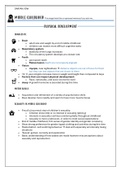
MIDDLE CHILDHOOD This stage feels like a repressed memory if you ask me…
PHYSICAL DEVELOPMENT
CHANGES IN:
• Brain
• adult size and weight by end of middle childhood
• children can master more difficult cognitive tasks
• Respiratory system
• elasticity of the lungs increases
• The circulatory system develops at a slower rate
• Teeth
• permanent teeth
• Malocclusion (teeth are not properly aligned)
• Vision
• myopia, near sightedness à distance objects are out of focus for them
but they can see objects that are closer to them
• 10-11 year old girls increase more in weight and height than compared to boys
• Factors that can impact physical development:
• Race, nationality, and socio-economic level
• sleep à growth hormone is secreted during this time
MOTOR SKILLS
• Acquisition and refinement of a variety of psychomotor skills
• Boys develop more rapidly and seem to have more muscle tissue
SEXUALITY IN MIDDLE CHILDHOOD
• Freud’s (incorrect) view of children’s sexuality
• Children show little or no interest in sexuality (latency)
• interests in sexuality continue uninterruptedly throughout childhood
• sexuality is more undercover, in order to meet social expectations
• End of middle childhood, firm sense of gender identity and gender constancy
• Show strong preference for gender-typed clothing and activities during this time
• Masturbation: self-soothing behaviour à deal with especially emotionally taxing
situations
• ‛Sexual’ games: curiosity and exploration
• Basic understanding of how babies are made however misconceptions about
sexuality and reproduction
, DARYAN.VDW
COGNITIVE DEVELOPMENT
c PIAGET:CONCRETE OPERATIONAL THOUGHT c
• Mental operations à strategies and rules that make thinking more systematic
and powerful.
• Reversibility à The understanding that both physical actions and mental
operations may be reversed
• Horizontal décalage à Cannot easily transfer knowledge about one type of
conservation to another type –even if underlying principle remains the same
• Egocentrism à means that they are very centred in their thinking and they also
confuse appearance and reality, however this diminishes during this phase
• Decentring à Avoid centering on one aspect only
• The ability to understand hierarchies of classes
• Concrete operational thinking is much more powerful than preoperational
thinking
• Children think more concretely which means that they aren’t able to think
abstractly and hypothetically
• Applicability of Piaget’s theory
• held well because of cross-cultural
• didn’t pay enough attention to the role of culture-based experience,
disregards influential cultural characteristics
c INFORMATION-PROCESSING SKILLS c
• The phonological loop (which stores sounds and verbal material) à learning to
read and understand language
• Visual-spatial sketchpad (which stores visual material), improve the creation
and use of mental images
• Memory strategies: rehearsal, organisation and elaboration
• Processing speed (Speed at which you carry out cognitive processes), faster
and more effective
• Automatic processing
• Automaticity (Cognitive activities that require virtually no effort)
• Knowledge base, increases in growth
• Control processes
• Processes that pull memory, processing speed and knowledge base
together – collectively called executive functions.
• control impulsive behaviours
• Metacognition (Allows a person to evaluate a cognitive task and determine how
to accomplish it)
Metamemory (informal understanding of memory)
• Children’s theory of mind becomes more elaborate and refined
• Higher-order cognitive tasks
• processed and stored by basic cognitive processes as well as combined
• The strengths of the theory lie in is ability to express the complexity of thought
• The weaknesses lie with certain developmental issue and a neglect of the
context of behaviours
MIDDLE CHILDHOOD This stage feels like a repressed memory if you ask me…
PHYSICAL DEVELOPMENT
CHANGES IN:
• Brain
• adult size and weight by end of middle childhood
• children can master more difficult cognitive tasks
• Respiratory system
• elasticity of the lungs increases
• The circulatory system develops at a slower rate
• Teeth
• permanent teeth
• Malocclusion (teeth are not properly aligned)
• Vision
• myopia, near sightedness à distance objects are out of focus for them
but they can see objects that are closer to them
• 10-11 year old girls increase more in weight and height than compared to boys
• Factors that can impact physical development:
• Race, nationality, and socio-economic level
• sleep à growth hormone is secreted during this time
MOTOR SKILLS
• Acquisition and refinement of a variety of psychomotor skills
• Boys develop more rapidly and seem to have more muscle tissue
SEXUALITY IN MIDDLE CHILDHOOD
• Freud’s (incorrect) view of children’s sexuality
• Children show little or no interest in sexuality (latency)
• interests in sexuality continue uninterruptedly throughout childhood
• sexuality is more undercover, in order to meet social expectations
• End of middle childhood, firm sense of gender identity and gender constancy
• Show strong preference for gender-typed clothing and activities during this time
• Masturbation: self-soothing behaviour à deal with especially emotionally taxing
situations
• ‛Sexual’ games: curiosity and exploration
• Basic understanding of how babies are made however misconceptions about
sexuality and reproduction
, DARYAN.VDW
COGNITIVE DEVELOPMENT
c PIAGET:CONCRETE OPERATIONAL THOUGHT c
• Mental operations à strategies and rules that make thinking more systematic
and powerful.
• Reversibility à The understanding that both physical actions and mental
operations may be reversed
• Horizontal décalage à Cannot easily transfer knowledge about one type of
conservation to another type –even if underlying principle remains the same
• Egocentrism à means that they are very centred in their thinking and they also
confuse appearance and reality, however this diminishes during this phase
• Decentring à Avoid centering on one aspect only
• The ability to understand hierarchies of classes
• Concrete operational thinking is much more powerful than preoperational
thinking
• Children think more concretely which means that they aren’t able to think
abstractly and hypothetically
• Applicability of Piaget’s theory
• held well because of cross-cultural
• didn’t pay enough attention to the role of culture-based experience,
disregards influential cultural characteristics
c INFORMATION-PROCESSING SKILLS c
• The phonological loop (which stores sounds and verbal material) à learning to
read and understand language
• Visual-spatial sketchpad (which stores visual material), improve the creation
and use of mental images
• Memory strategies: rehearsal, organisation and elaboration
• Processing speed (Speed at which you carry out cognitive processes), faster
and more effective
• Automatic processing
• Automaticity (Cognitive activities that require virtually no effort)
• Knowledge base, increases in growth
• Control processes
• Processes that pull memory, processing speed and knowledge base
together – collectively called executive functions.
• control impulsive behaviours
• Metacognition (Allows a person to evaluate a cognitive task and determine how
to accomplish it)
Metamemory (informal understanding of memory)
• Children’s theory of mind becomes more elaborate and refined
• Higher-order cognitive tasks
• processed and stored by basic cognitive processes as well as combined
• The strengths of the theory lie in is ability to express the complexity of thought
• The weaknesses lie with certain developmental issue and a neglect of the
context of behaviours