MSN 570 Midterm Exam Study Guide
Lloyann Bishiop Section Cancer
1. Neoplasms
A. Know characteristics of benign and malignant tumors
- Origins, risk factors, screenings, clinical manifestations, treatment, prognosis -
Common sites of metastasis (know origin that will likely spread to as well)
chart 1-22 has additional information that is good
-Mutagens and carcinogens role (TP53 gene, BRCA2 gene)
-Epigenetic role in the DNA transcription/translation part of development. -DNA methylation
(define process/role)
-Histones, MicroRNA, angiogenesis
B. Cancer screening guidelines (age, gender, risks) **** know these
C. Tumor cell markers (know marker and associated malignant/non-malignant conditions)
D. Stage of growth through the cellular layers.
E. Prognosis is important because every patient will ask so think of this in terms of
teaching points for patient education.
Pulmonary Function: Chapter 5 234-238
1. Lung cancer
A. Causes, main source, other contributing cancers. Screening methods for age, risk groups.
B. Define small cell and non-small cell (clinical manifestations, Dx/Tx, know how to stage 5-7 &
5-8).
2. Pleural Effusion
A. Define process of transudative effusions, exudative effusions, empyema, hemothorax,
chylothorax B. Be familiar with clinical manifestations, treatment
,3. Pneumothorax A. I believe this is not family but more of the recognition of the spontaneous
pneumo and risk factors
Chapter 8 382-387
1. Penile cancer -Origins, risk factors, screenings, clinical manifestations, treatment, prognosis
2. Prostate cancer - Origins, risk factors, screenings, clinical manifestations, treatment, prognosis
, 3. Testicular cancer- Origins, risk factors, screenings, clinical manifestations, treatment, prognosis
4. Breast cancer- Origins, risk
5. Cervical cancer- Origins, risk
Chapter 9 441-444
1. Oral cancer- Origins, risk
2. Esophageal cancer - Origins, risk
3. Gastric cancer- Origins, risk
4. Liver cancer
- Origins, risk factors, screenings, clinical manifestations, treatment, prognosis factors,
screenings, clinical manifestations, treatment, prognosis
Andrew Granello Section
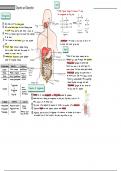
Anatomy & Physiology Cardiology
Lloyann Bishiop Section Cancer
1. Neoplasms
A. Know characteristics of benign and malignant tumors
- Origins, risk factors, screenings, clinical manifestations, treatment, prognosis -
Common sites of metastasis (know origin that will likely spread to as well)
chart 1-22 has additional information that is good
-Mutagens and carcinogens role (TP53 gene, BRCA2 gene)
-Epigenetic role in the DNA transcription/translation part of development. -DNA methylation
(define process/role)
-Histones, MicroRNA, angiogenesis
B. Cancer screening guidelines (age, gender, risks) **** know these
C. Tumor cell markers (know marker and associated malignant/non-malignant conditions)
D. Stage of growth through the cellular layers.
E. Prognosis is important because every patient will ask so think of this in terms of
teaching points for patient education.
Pulmonary Function: Chapter 5 234-238
1. Lung cancer
A. Causes, main source, other contributing cancers. Screening methods for age, risk groups.
B. Define small cell and non-small cell (clinical manifestations, Dx/Tx, know how to stage 5-7 &
5-8).
2. Pleural Effusion
A. Define process of transudative effusions, exudative effusions, empyema, hemothorax,
chylothorax B. Be familiar with clinical manifestations, treatment
,3. Pneumothorax A. I believe this is not family but more of the recognition of the spontaneous
pneumo and risk factors
Chapter 8 382-387
1. Penile cancer -Origins, risk factors, screenings, clinical manifestations, treatment, prognosis
2. Prostate cancer - Origins, risk factors, screenings, clinical manifestations, treatment, prognosis
, 3. Testicular cancer- Origins, risk factors, screenings, clinical manifestations, treatment, prognosis
4. Breast cancer- Origins, risk
5. Cervical cancer- Origins, risk
Chapter 9 441-444
1. Oral cancer- Origins, risk
2. Esophageal cancer - Origins, risk
3. Gastric cancer- Origins, risk
4. Liver cancer
- Origins, risk factors, screenings, clinical manifestations, treatment, prognosis factors,
screenings, clinical manifestations, treatment, prognosis
Andrew Granello Section
Anatomy & Physiology Cardiology