3.5 genetic modification & biotechnology
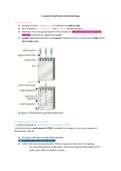
Gel electrophoresis:
● Samples of either DNA or protein are inserted into wells in a gel
● Gel is placed in a conducting fluid and a current is passed through it
● Molecules move through gel based on their charge (ex. DNA molecules move to positive
electrode since they are negatively charged)
● Smaller fragments/molecules move further through the pores in the gel, while larger pieces
don’t travel as far.
The Polymerase Chain Reaction (PCR)
→ Synthetic method of amplifying specific sequences of DNA
Useful when only a small amount of DNA is available for testing ex: crime scene samples of
blood,semen, hair,etc
● Processes artificially recreates DNA replication
● Taq DNA polymerase is used for PCR
● Comes from heat-resistant bacteria. Thermus aquaticus, that lives in hot springs..
○ Can resist denaturation at high temp, required to separate DNA strands in PCR
○ Copies up to 1000 nucleotides / minute
, The PCR Process:
→ PRC occurs in a thermal cycles and involves 3 steps:
1.Denaturation:
→ DNA sample is heated to 95℃ to break H-bonds and separate it into two strands
2. Annealing:
→ DNA sample is cooled to 54℃, allowing primers attach to opposite ends of the target
sequence
3. Elongation:
→ A heat-tolerant DNA polymerase (Taq) copies the strands
One cycle of PRC yield two identical copies of the DNA sequence
DNA Profiling
→ compares section of DNA between individuals in order to determine paternity or relationships, as
evidence in criminal cases or to identify species
Through gel electrophoresis, fragments of DNA are moved through an electric field and separated
based on their size.
1. DNA samples are taken and amplified with PCR
2. Restriction enzymes cut DNA into fragments at specific base sequences in each sample
3. A fluorescent marker binds to a tripled in the DNA fragments, so that results can be seen
4. Samples are added to a gel electrophoresis chamber. Electric current is passed through,
pushing fragments along.
5. Heavier fragments stay closer to the orginer and smaller fragments go further
6. A banding pattern shows up for each DNA samples and can be compared
Gel electrophoresis:
● Samples of either DNA or protein are inserted into wells in a gel
● Gel is placed in a conducting fluid and a current is passed through it
● Molecules move through gel based on their charge (ex. DNA molecules move to positive
electrode since they are negatively charged)
● Smaller fragments/molecules move further through the pores in the gel, while larger pieces
don’t travel as far.
The Polymerase Chain Reaction (PCR)
→ Synthetic method of amplifying specific sequences of DNA
Useful when only a small amount of DNA is available for testing ex: crime scene samples of
blood,semen, hair,etc
● Processes artificially recreates DNA replication
● Taq DNA polymerase is used for PCR
● Comes from heat-resistant bacteria. Thermus aquaticus, that lives in hot springs..
○ Can resist denaturation at high temp, required to separate DNA strands in PCR
○ Copies up to 1000 nucleotides / minute
, The PCR Process:
→ PRC occurs in a thermal cycles and involves 3 steps:
1.Denaturation:
→ DNA sample is heated to 95℃ to break H-bonds and separate it into two strands
2. Annealing:
→ DNA sample is cooled to 54℃, allowing primers attach to opposite ends of the target
sequence
3. Elongation:
→ A heat-tolerant DNA polymerase (Taq) copies the strands
One cycle of PRC yield two identical copies of the DNA sequence
DNA Profiling
→ compares section of DNA between individuals in order to determine paternity or relationships, as
evidence in criminal cases or to identify species
Through gel electrophoresis, fragments of DNA are moved through an electric field and separated
based on their size.
1. DNA samples are taken and amplified with PCR
2. Restriction enzymes cut DNA into fragments at specific base sequences in each sample
3. A fluorescent marker binds to a tripled in the DNA fragments, so that results can be seen
4. Samples are added to a gel electrophoresis chamber. Electric current is passed through,
pushing fragments along.
5. Heavier fragments stay closer to the orginer and smaller fragments go further
6. A banding pattern shows up for each DNA samples and can be compared