Studen
ts
Compare how the loss of love is presented within two texts you have studied (25 marks)
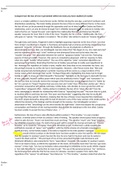
Love is a complex additive in many literary works. Written during the Jazz Age, a period of confusion and
directionless wandering, The Great Gatsby presents the loss of love in many different forms. In the novel,
the loss of love can be presented through the separation and loss of time between Gatsby and Daisy’s
relationship, and it can also be shown through Tom’s infidelity towards Daisy. In contrast to Gatsby who
claims that he can “repeat the past” and reignite the relationship that him and Daisy had, Rosetti’s
speaker reassures her lover that it is fine if her lover “forget[s] her for a while.” Additionally, like Tom,
who goes on “sprees,” the speaker in Lovelace’s “the scrutiny’ also wishes to seek out “meaner beauties.”
Through Daisy and Gatsby, Fitzgerald is able to highlight opposing responses to the loss of love. It is clear
from Jordan’s recollection in chapter 4, that Daisy and Gatsby had an intense and loving relationship that
appeared “romantic” to Jordan. Through the flashback, the use of polyptoton is effective in
demonstrating her loss. Nick, our intradiegetic narrator states that “She began to cry- she cried and cried”
and the repetition of the verb “cried” reinforces how distressed Daisy was by the letter that she
“wouldn’t let go of.” Her separation between her and her “gorgeous Gatsby” has torn her. Portraying
aspects of internal conflict. However, this seems to completely juxtaposed with her response to Nick,
when she states “Gatsby? What Gatsby?” The use of the adjective “what” somewhat objectifies our
eponymous hero Gatsby. Illustrating that the loss of Gatsby was perhaps in reality was insignificant to
her. However, the repetition of Gatsby’s name, implies that Daisy does in fact remember her lover, but
she perhaps chooses to act like she has in fact forgotten. However, critic Person claims that “Nick and
Gatsby progressively devitalise Daisy’s symbolic meaning until she exists as a vulgar emblem of the
money values which dominate their world.” Perhaps Fitzgerald is highlighting how Daisy had to forget
Gatsby in order to move on. Which Rossetti’s “Remember” highlights as the best way to deal with the loss
of love. Arguably, Rosetti’s selfless poem which uses the antithetical verbs “forget” and “remember” in
the last two lines to ironically reverse the message of the Petrarchan sonnet suggests that it is “better by
far” for a person to “forget” the love that was once lost and “smile” than ‘remember and be sad.” This is
somewhat comparative with Gatsby and Daisy. Unlike Daisy, who decides to move on and live with our
“supercilious” antagonist, Tom. Gatsby wishes to irradicate the loss of his “silver- like idol” from his
mind, attempting to rekindle his relationship with Daisy by “repeat[ing] the past.” We learn that he is able
to recollect that he and Daisy last met “five years next November” suggesting that that he recalls the
exact time that they parted. Therefore, implying that the loss of Daisy’s love impacted him immensely.
The short simple declarative along with his lack of interest in any of the many women at his lavish parties
reflects the intensity of his feelings and the strength of his memory. Our intradiegetic narrator’s
observation of him “stretch[ing] out his arms towards the dark water” show that despite the conspicuous
consumption and freedom of the roaring twenties that provide the backdrop to this love affair, Gatsby
has been unable to accept the loss of Daisy’s love.
Furthermore, the loss of love is also effectively within Lovelace’s “The Scrutiny,” in a very Cavalier
manner; a familiar point of view at Lovelace’s time of writing. The speaker shows typical male arrogance
when he asks his love- “Have I not loved thee much and long.” The adverbs “much” and “long” heighten
his infidelities towards is lover. He claims that as god’s gift to women he must go and seek out “meaner
beauties” as he would be “wronging” them if he still doted on her. Furthermore, subtly coupling the
antithetical concepts of “space” and “embrace” with the rhyme scheme of a dramatic monologue is
significant here, as the female subject is not able to respond to the male speaker’s opinions. Second wave
feminists would criticise Lovelace as the female lover has been unable to voice her opinion. We can argue
that the speaker In Lovelace’s poem has lost the love he once had for his lover and now he seeks to
“search the black and fair.” This portrayal of loss of love presented through male dominance and
dictatorial attitudes is also presented in Tom’s “supercilious” character. The speaker In Lovelace’s poem,
Tom is not loyal to Daisy, as within the exposition of the novel, we instantly learn that Tom has “got some
woman” in New York. Tom has no hesitation when presenting his infidelities to the world. Within chapter
2, Tom tells Nick that he “want[s] him to meet my girl.” The use of the personal pronoun “my” reinforces
his dominance and authority that he has access to. Likewise, Lovelace’s speaker Tom claims that
regardless of his “sprees” he will always “love Daisy too.” In “The Scrutiny,” Lovelace states that when he
Studen
ts
ts
Compare how the loss of love is presented within two texts you have studied (25 marks)
Love is a complex additive in many literary works. Written during the Jazz Age, a period of confusion and
directionless wandering, The Great Gatsby presents the loss of love in many different forms. In the novel,
the loss of love can be presented through the separation and loss of time between Gatsby and Daisy’s
relationship, and it can also be shown through Tom’s infidelity towards Daisy. In contrast to Gatsby who
claims that he can “repeat the past” and reignite the relationship that him and Daisy had, Rosetti’s
speaker reassures her lover that it is fine if her lover “forget[s] her for a while.” Additionally, like Tom,
who goes on “sprees,” the speaker in Lovelace’s “the scrutiny’ also wishes to seek out “meaner beauties.”
Through Daisy and Gatsby, Fitzgerald is able to highlight opposing responses to the loss of love. It is clear
from Jordan’s recollection in chapter 4, that Daisy and Gatsby had an intense and loving relationship that
appeared “romantic” to Jordan. Through the flashback, the use of polyptoton is effective in
demonstrating her loss. Nick, our intradiegetic narrator states that “She began to cry- she cried and cried”
and the repetition of the verb “cried” reinforces how distressed Daisy was by the letter that she
“wouldn’t let go of.” Her separation between her and her “gorgeous Gatsby” has torn her. Portraying
aspects of internal conflict. However, this seems to completely juxtaposed with her response to Nick,
when she states “Gatsby? What Gatsby?” The use of the adjective “what” somewhat objectifies our
eponymous hero Gatsby. Illustrating that the loss of Gatsby was perhaps in reality was insignificant to
her. However, the repetition of Gatsby’s name, implies that Daisy does in fact remember her lover, but
she perhaps chooses to act like she has in fact forgotten. However, critic Person claims that “Nick and
Gatsby progressively devitalise Daisy’s symbolic meaning until she exists as a vulgar emblem of the
money values which dominate their world.” Perhaps Fitzgerald is highlighting how Daisy had to forget
Gatsby in order to move on. Which Rossetti’s “Remember” highlights as the best way to deal with the loss
of love. Arguably, Rosetti’s selfless poem which uses the antithetical verbs “forget” and “remember” in
the last two lines to ironically reverse the message of the Petrarchan sonnet suggests that it is “better by
far” for a person to “forget” the love that was once lost and “smile” than ‘remember and be sad.” This is
somewhat comparative with Gatsby and Daisy. Unlike Daisy, who decides to move on and live with our
“supercilious” antagonist, Tom. Gatsby wishes to irradicate the loss of his “silver- like idol” from his
mind, attempting to rekindle his relationship with Daisy by “repeat[ing] the past.” We learn that he is able
to recollect that he and Daisy last met “five years next November” suggesting that that he recalls the
exact time that they parted. Therefore, implying that the loss of Daisy’s love impacted him immensely.
The short simple declarative along with his lack of interest in any of the many women at his lavish parties
reflects the intensity of his feelings and the strength of his memory. Our intradiegetic narrator’s
observation of him “stretch[ing] out his arms towards the dark water” show that despite the conspicuous
consumption and freedom of the roaring twenties that provide the backdrop to this love affair, Gatsby
has been unable to accept the loss of Daisy’s love.
Furthermore, the loss of love is also effectively within Lovelace’s “The Scrutiny,” in a very Cavalier
manner; a familiar point of view at Lovelace’s time of writing. The speaker shows typical male arrogance
when he asks his love- “Have I not loved thee much and long.” The adverbs “much” and “long” heighten
his infidelities towards is lover. He claims that as god’s gift to women he must go and seek out “meaner
beauties” as he would be “wronging” them if he still doted on her. Furthermore, subtly coupling the
antithetical concepts of “space” and “embrace” with the rhyme scheme of a dramatic monologue is
significant here, as the female subject is not able to respond to the male speaker’s opinions. Second wave
feminists would criticise Lovelace as the female lover has been unable to voice her opinion. We can argue
that the speaker In Lovelace’s poem has lost the love he once had for his lover and now he seeks to
“search the black and fair.” This portrayal of loss of love presented through male dominance and
dictatorial attitudes is also presented in Tom’s “supercilious” character. The speaker In Lovelace’s poem,
Tom is not loyal to Daisy, as within the exposition of the novel, we instantly learn that Tom has “got some
woman” in New York. Tom has no hesitation when presenting his infidelities to the world. Within chapter
2, Tom tells Nick that he “want[s] him to meet my girl.” The use of the personal pronoun “my” reinforces
his dominance and authority that he has access to. Likewise, Lovelace’s speaker Tom claims that
regardless of his “sprees” he will always “love Daisy too.” In “The Scrutiny,” Lovelace states that when he
Studen
ts