Net Present Value and Investments
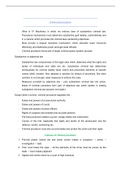
Difference between an investment’s market value and its cost is called the Net
Present Value (NPV). It is a measure of the value that is created/added by
undertaking an investment.
Payback period is the amount of time required for an investment to generate cash
flows sufficient to recover its initial cost. According to the payback rule, an investment
is acceptable if its calculated payback period is less than some pre-specified number of
years.
Advantages of understanding NPV—
1. Easy to understand
2. Adjusts for uncertainty of later cash flows
3. Biased towards liquidity
Disadvantages of NPV—
1. Ignores the time value of money
2. Requires an arbitrary cut off point
3. Ignores cash flow beyond the cut-off date
4. Blend against long-term projects and new projects
Discounted Payback – length of time until the sum of the discounted cash flow is
equal to the investment. It should be less than the specified years for an investment to
be acceptable.
Advantages of Discounted Payback –
1. Includes time value of money
2. Does not accept negative investments
3. Has all the positive features of NPV
Disadvantages of Discounted Payback –
1. Arbitrary cut-off point to be set.
2. May reject positive NPV investments
3. Biased against long-term projects and new projects.
NOTE:
1.Cut-off is the time period that you set for the investment to pay back.
2. If an investment ever pays off on a discounted basis, it will always have a positive
NPV.
Difference between an investment’s market value and its cost is called the Net
Present Value (NPV). It is a measure of the value that is created/added by
undertaking an investment.
Payback period is the amount of time required for an investment to generate cash
flows sufficient to recover its initial cost. According to the payback rule, an investment
is acceptable if its calculated payback period is less than some pre-specified number of
years.
Advantages of understanding NPV—
1. Easy to understand
2. Adjusts for uncertainty of later cash flows
3. Biased towards liquidity
Disadvantages of NPV—
1. Ignores the time value of money
2. Requires an arbitrary cut off point
3. Ignores cash flow beyond the cut-off date
4. Blend against long-term projects and new projects
Discounted Payback – length of time until the sum of the discounted cash flow is
equal to the investment. It should be less than the specified years for an investment to
be acceptable.
Advantages of Discounted Payback –
1. Includes time value of money
2. Does not accept negative investments
3. Has all the positive features of NPV
Disadvantages of Discounted Payback –
1. Arbitrary cut-off point to be set.
2. May reject positive NPV investments
3. Biased against long-term projects and new projects.
NOTE:
1.Cut-off is the time period that you set for the investment to pay back.
2. If an investment ever pays off on a discounted basis, it will always have a positive
NPV.