Issues & debates (IDA)
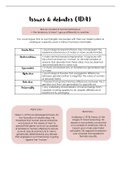
Bias (in context of human behaviour)
= the tendency to treat 1 group differently to another.
You could argue that as psychologists are people with their own belief systems &
working at a specific point in history that bias is inevitable.
Gender Bias = psychological research/theory may not represent the
experience/behaviour of males or more usually females
Androcentrism = male-centred research/explanation. A big issues with
this is that we base our ‘normal’ on all male samples so
anyone that deviates from these ideas may be deemed
abnormal/deficient in some way
Gynocentric = a study conducted only on females but generalised also
to males
Alpha bias = psychological theories that exaggerate differences
between genders (either to heighten the value of women
or devalue them)
Beta bias = theories that ignore/minimise differences between the 2
genders and then are generalised to opposite sex
Universality = any underlying characteristics of human beings that’s
capable of being applied to all, despite differences of
experience & upbringing
Alpha bias –
Beta bias –
Wilson’s (1975) sociobiological theory for
the formation of relationships. He Kohlberg’s (1973) theory of the
theorised that human sexual attraction stages of moral reasoning. His
was based on the desire of men to research was entirely conducted
spread their genes as much as possible on a sample of American men &
& females to nurture offspring to ensure based upon male-orientated
survival. Sexual promiscuity in men is principles. He argued his research
genetically determined & any female was universal and applied to
that engages in such behaviour is going females equally.
against her “nature.”
, AO3
However, there’s sexism within research
Gender biased research may have e.g. most senior researchers are male &
contributed to misleading males are more likely to have their
assumptions about female research published than females & studies
behaviour e.g., reinforced negative that find evidence of a gender difference
stereotypes & increased are more likely to be published than those
discriminatory practices. This could that don’t. Lab studies that do involve
have very widespread implications female ppts often have a male research in
& damaged the prospects of real a position of power. (Nicolson,
women. In any circumstance where 1995). Psychology may be guilty of
a female is judged by male norms, supporting a form of institutional sexism
‘it becomes normal for women to that creates bias in theory & research.
feel abnormal’ (Carol Tavris, 1993). (Denmark et al 1988)
However, many modern researchers are beginning to recognise the effect their own
values & assumptions might have on the nature of their work. Rather than see bias as a
problem that may undermine their research, they embrace it as a critical aspect of
their investigation. E.g., Claire Dambrin & Caroline Lambert (2008) investigated the
lack of women in executive positions in accountancy firms & reflected that their own
experiences may influence their interpretation of events. Reflexivity may be important
for the development of psychology & lead to greater awareness of the role of
personal biases in shaping future research.
However, any gender
However, Judith Worrell (1992)
differences reported by
and other feminist commentators
psychologists over the years are
have suggested a no. of criteria
based on the essentialist
that should be adhered to in
perspective: that gender
order to avoid gender bias in
difference is inevitable &
research: Women should be
determined by nature. In the
studied in real-life contexts and
1930s ‘scientific research’
be true ppts of research, rather
revealed how intellectual
than objects of study, diversity
activity, such as attending
within groups of women should
university, would shrivel a
be examined, rather than
woman’s ovaries & harm her
differences between males &
chances of reproducing. This
females & greater emphasis on
often creates a
collaborative research methods
double standard, in the way a
that collect qualitative, as
same behaviour is viewed from a
opposed to numerical data.
male or female perspective.
Bias (in context of human behaviour)
= the tendency to treat 1 group differently to another.
You could argue that as psychologists are people with their own belief systems &
working at a specific point in history that bias is inevitable.
Gender Bias = psychological research/theory may not represent the
experience/behaviour of males or more usually females
Androcentrism = male-centred research/explanation. A big issues with
this is that we base our ‘normal’ on all male samples so
anyone that deviates from these ideas may be deemed
abnormal/deficient in some way
Gynocentric = a study conducted only on females but generalised also
to males
Alpha bias = psychological theories that exaggerate differences
between genders (either to heighten the value of women
or devalue them)
Beta bias = theories that ignore/minimise differences between the 2
genders and then are generalised to opposite sex
Universality = any underlying characteristics of human beings that’s
capable of being applied to all, despite differences of
experience & upbringing
Alpha bias –
Beta bias –
Wilson’s (1975) sociobiological theory for
the formation of relationships. He Kohlberg’s (1973) theory of the
theorised that human sexual attraction stages of moral reasoning. His
was based on the desire of men to research was entirely conducted
spread their genes as much as possible on a sample of American men &
& females to nurture offspring to ensure based upon male-orientated
survival. Sexual promiscuity in men is principles. He argued his research
genetically determined & any female was universal and applied to
that engages in such behaviour is going females equally.
against her “nature.”
, AO3
However, there’s sexism within research
Gender biased research may have e.g. most senior researchers are male &
contributed to misleading males are more likely to have their
assumptions about female research published than females & studies
behaviour e.g., reinforced negative that find evidence of a gender difference
stereotypes & increased are more likely to be published than those
discriminatory practices. This could that don’t. Lab studies that do involve
have very widespread implications female ppts often have a male research in
& damaged the prospects of real a position of power. (Nicolson,
women. In any circumstance where 1995). Psychology may be guilty of
a female is judged by male norms, supporting a form of institutional sexism
‘it becomes normal for women to that creates bias in theory & research.
feel abnormal’ (Carol Tavris, 1993). (Denmark et al 1988)
However, many modern researchers are beginning to recognise the effect their own
values & assumptions might have on the nature of their work. Rather than see bias as a
problem that may undermine their research, they embrace it as a critical aspect of
their investigation. E.g., Claire Dambrin & Caroline Lambert (2008) investigated the
lack of women in executive positions in accountancy firms & reflected that their own
experiences may influence their interpretation of events. Reflexivity may be important
for the development of psychology & lead to greater awareness of the role of
personal biases in shaping future research.
However, any gender
However, Judith Worrell (1992)
differences reported by
and other feminist commentators
psychologists over the years are
have suggested a no. of criteria
based on the essentialist
that should be adhered to in
perspective: that gender
order to avoid gender bias in
difference is inevitable &
research: Women should be
determined by nature. In the
studied in real-life contexts and
1930s ‘scientific research’
be true ppts of research, rather
revealed how intellectual
than objects of study, diversity
activity, such as attending
within groups of women should
university, would shrivel a
be examined, rather than
woman’s ovaries & harm her
differences between males &
chances of reproducing. This
females & greater emphasis on
often creates a
collaborative research methods
double standard, in the way a
that collect qualitative, as
same behaviour is viewed from a
opposed to numerical data.
male or female perspective.