Statutory Interpretation
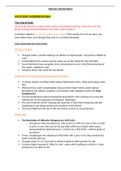
STATUTORY INTERPRETATION:
The Literal Rule:
Gives all the words in a statute their ordinary and natural meaning. Under this rule, the
literal meaning must be followed, even if the result is absurd.
Lord Esher stated in R v City of London Court Judge: 'If the words of an Act are clear, you
must follow them, even though they lead to a manifest absurdity.
Cases illustrating the Literal Rule:
Whitley v Chapell
Charged under a section making it an offence to impersonate “any person entitled to
vote”
D pretended to be a person whose name was on the voting list who had died
Court held that D was not guilty since a dead person is not, in the literal meaning of
the words, 'entitled to vote'
Using the literal rule made the law absurd
London & North-eastern Railway Company v Berriman
A railway worker was killed whilst doing maintenance work, oiling parts along a train
line.
Widow tries to claim compensation because there hadn't been a look-outman
provided by the railway company in accordance with regulation under the Fatal
Accidents Act.
This Act stated that a look-out should be provided for men working on or near the
railway line 'for the purposes of relaying or repairing it'
The court took the words 'relaying and repairing' in their literal meaning and said
maintenance was being carried out not wither of the former.
The claim failed and the use of the rule lead to a harsh or unjust decision
Fisher v Bell
The Restriction of Offensive Weapons Act 1959 S1(1)
o 'Any person who manufactures, sells or hires or offers for sale or hire or lends
or gives to any other person-(a) any knife which has a blade which opens
automatically by hand pressure [...] known as a 'flick knife'...shall be guilty of
an offence'
D was a shopkeeper who displayed a flick knife with a price in his shop window but
hadn't actually sold any
Charged under S1 (1); Court had to decide if guilty of offering knife for sale
Technical legal meaning of 'offers for sale', under which putting an article in a shop
window isn't an offer to sell.
, R v Secretary of state - for the home department (2006) (on the application of Haw)
The courts of appeal refused to apply a literal approach to a new piece of legislation
as they felt it would not reflect the intention of parliament.
The Golden Rule:
If the literal rule provides an absurd result that parliament could not have intended, then
and only then the judge can substitute reasonable meaning in light of the statute as a
whole.
Cases illustrating the Golden Rule:
R V Allen - 2 meanings of the word 'marry'
S.57 Offences Against a Person Act (1861) made it an offence to marry whilst one
original spouse was still alive and there had been no divorce.
'Marry' can have 2 meanings: legally married or go through a ceremony of marriage.
Allen had 'married' a 2nd time whilst legally married to his 1st wife. The court
followed the 2nd meaning of the word because the 1st meaning implied, no one
could be guilty of the offence.
Adler v George
Official Secrets Act 1970 an offence to obstruct HM's Forces 'in the vicinity of a
prohibited place.
D has obstructed HM Forces actually in the prohibited place. They argued they
weren’t guilty as the literal meaning of the Act didn't apply to anyone inside the
prohibited place - it only applied to those 'in the vicinity
The Divisional Court found D guilty as it would be absurd if those obstructing outside
were found guilty and those inside weren't. Words should be read as being 'in or in
the vicinity of’ the prohibited place.
Madox v Storer
Sweet v Parsley
Inco Europe It v First Choice Distribution
STATUTORY INTERPRETATION:
The Literal Rule:
Gives all the words in a statute their ordinary and natural meaning. Under this rule, the
literal meaning must be followed, even if the result is absurd.
Lord Esher stated in R v City of London Court Judge: 'If the words of an Act are clear, you
must follow them, even though they lead to a manifest absurdity.
Cases illustrating the Literal Rule:
Whitley v Chapell
Charged under a section making it an offence to impersonate “any person entitled to
vote”
D pretended to be a person whose name was on the voting list who had died
Court held that D was not guilty since a dead person is not, in the literal meaning of
the words, 'entitled to vote'
Using the literal rule made the law absurd
London & North-eastern Railway Company v Berriman
A railway worker was killed whilst doing maintenance work, oiling parts along a train
line.
Widow tries to claim compensation because there hadn't been a look-outman
provided by the railway company in accordance with regulation under the Fatal
Accidents Act.
This Act stated that a look-out should be provided for men working on or near the
railway line 'for the purposes of relaying or repairing it'
The court took the words 'relaying and repairing' in their literal meaning and said
maintenance was being carried out not wither of the former.
The claim failed and the use of the rule lead to a harsh or unjust decision
Fisher v Bell
The Restriction of Offensive Weapons Act 1959 S1(1)
o 'Any person who manufactures, sells or hires or offers for sale or hire or lends
or gives to any other person-(a) any knife which has a blade which opens
automatically by hand pressure [...] known as a 'flick knife'...shall be guilty of
an offence'
D was a shopkeeper who displayed a flick knife with a price in his shop window but
hadn't actually sold any
Charged under S1 (1); Court had to decide if guilty of offering knife for sale
Technical legal meaning of 'offers for sale', under which putting an article in a shop
window isn't an offer to sell.
, R v Secretary of state - for the home department (2006) (on the application of Haw)
The courts of appeal refused to apply a literal approach to a new piece of legislation
as they felt it would not reflect the intention of parliament.
The Golden Rule:
If the literal rule provides an absurd result that parliament could not have intended, then
and only then the judge can substitute reasonable meaning in light of the statute as a
whole.
Cases illustrating the Golden Rule:
R V Allen - 2 meanings of the word 'marry'
S.57 Offences Against a Person Act (1861) made it an offence to marry whilst one
original spouse was still alive and there had been no divorce.
'Marry' can have 2 meanings: legally married or go through a ceremony of marriage.
Allen had 'married' a 2nd time whilst legally married to his 1st wife. The court
followed the 2nd meaning of the word because the 1st meaning implied, no one
could be guilty of the offence.
Adler v George
Official Secrets Act 1970 an offence to obstruct HM's Forces 'in the vicinity of a
prohibited place.
D has obstructed HM Forces actually in the prohibited place. They argued they
weren’t guilty as the literal meaning of the Act didn't apply to anyone inside the
prohibited place - it only applied to those 'in the vicinity
The Divisional Court found D guilty as it would be absurd if those obstructing outside
were found guilty and those inside weren't. Words should be read as being 'in or in
the vicinity of’ the prohibited place.
Madox v Storer
Sweet v Parsley
Inco Europe It v First Choice Distribution