I
+
"
_
, µ .
pi
battery LDÑ
"
switch to switch LÑ cell
^^
?
✓ ✓ ✓ ✓
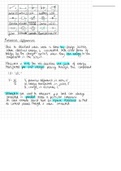
diode resistor ʳTes%ʰ¥ Lamp LED
✓ ✓ ✓
-
✓
fuse voltmeter ammeter thermistor capacitor
Potential difference
Used to described when work is done
by charge carriers .
When electrical
energy is converted into other forms of
the
energy by in the
charge
circuit
carriers when
they lose
energy
to the
components .
Measured in volts .
One volt describes
joule of energy one
transferred per unit charge passing through the component
IV = IJC "
V V,
Wg
in volts V
potential difference
=
, ,
energy transferred joules J
W, ,
in ,
Q in coulombs C
,
charge , ,
Voltmeters are used to measure pd .
and are
always
connected in parallel across a
particular component .
An ideal voltmeter should have an infinite resistance so that
no current passes through it when connected .
, Electromotive force .
Used to describe when work charge carriers is done on the .
The
energy gained by the charge carriers they pass as
through a cell or
battery
to electrical
converted
as other
forms of energy ,
are
energy
.
The
energy transferred from chemical
energy for other)
to electrical unit
energy per charge
.
E
¥ E mf in volts V
=
e.
, , ,
J
energy transferred in joules
w, ,
Q, charge in coulombs C
, ,
.
The electron
gun
Metal filament heated by electric
•
current .
•
Electrons in filament gain kinetic
energy .
•
Meaning some escape from the metal .
•
thermionic emission emission of electrons -
through the action of
heat .
Vacuum + high p.cl filament
between anode make
filament
•
.
+
act like a cathode .
•
Electrons accelerate towards anode -
Electrons
gain kinetic energy
• .
•
If anode has a small hole electrons in line , pass through creating
,
a beam of electrons with specific kinetic
energy
.
Work done electron in kinetic
on an
gain energy
=
eV 1-2 my
2
=
elementary charge 11.6×10 a) in coulombs, C
'
e.
_
,
V,
accelerating p d. in volts V
.
, ,
M Mass . of an electron , in kilograms kg ,
*
' *
take
velocity , in metres per second Ms average speed
-
> an
V, ,
+
"
_
, µ .
pi
battery LDÑ
"
switch to switch LÑ cell
^^
?
✓ ✓ ✓ ✓
diode resistor ʳTes%ʰ¥ Lamp LED
✓ ✓ ✓
-
✓
fuse voltmeter ammeter thermistor capacitor
Potential difference
Used to described when work is done
by charge carriers .
When electrical
energy is converted into other forms of
the
energy by in the
charge
circuit
carriers when
they lose
energy
to the
components .
Measured in volts .
One volt describes
joule of energy one
transferred per unit charge passing through the component
IV = IJC "
V V,
Wg
in volts V
potential difference
=
, ,
energy transferred joules J
W, ,
in ,
Q in coulombs C
,
charge , ,
Voltmeters are used to measure pd .
and are
always
connected in parallel across a
particular component .
An ideal voltmeter should have an infinite resistance so that
no current passes through it when connected .
, Electromotive force .
Used to describe when work charge carriers is done on the .
The
energy gained by the charge carriers they pass as
through a cell or
battery
to electrical
converted
as other
forms of energy ,
are
energy
.
The
energy transferred from chemical
energy for other)
to electrical unit
energy per charge
.
E
¥ E mf in volts V
=
e.
, , ,
J
energy transferred in joules
w, ,
Q, charge in coulombs C
, ,
.
The electron
gun
Metal filament heated by electric
•
current .
•
Electrons in filament gain kinetic
energy .
•
Meaning some escape from the metal .
•
thermionic emission emission of electrons -
through the action of
heat .
Vacuum + high p.cl filament
between anode make
filament
•
.
+
act like a cathode .
•
Electrons accelerate towards anode -
Electrons
gain kinetic energy
• .
•
If anode has a small hole electrons in line , pass through creating
,
a beam of electrons with specific kinetic
energy
.
Work done electron in kinetic
on an
gain energy
=
eV 1-2 my
2
=
elementary charge 11.6×10 a) in coulombs, C
'
e.
_
,
V,
accelerating p d. in volts V
.
, ,
M Mass . of an electron , in kilograms kg ,
*
' *
take
velocity , in metres per second Ms average speed
-
> an
V, ,