Unit 14: Physiological disorders and their care
In this assignment I will explain the treatment and support available for service users with different
physiological disorders. I will also be comparing the types of carers and care setting for service user with
different types of disorders. Finally, I will be justifying the potential benefits of different investigations and
treatment options.
P1- Explain the causes, signs and symptoms of different types of physiological disorder on service users.
COPD
Chronic obstructive pulmonary disease (COPD) is a chronic inflammatory lung disease that causes obstructed
airflow from the lungs. The respiratory system is the main body system that is affected by this disorder as
the airways in your lungs become inflamed and thicken, and the tissue where oxygen is exchanged is
destroyed. The flow of air in and out of your lungs decreases. When that happens, less oxygen gets into your
body tissues, and it becomes harder to get rid of the waste gas carbon dioxide making it difficult to breathe.
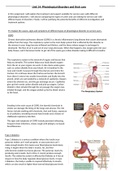
The respiratory system is the network of organs and tissues that
help you breathe. This system helps your body absorb oxygen
from the air so your organs can work. It also cleans waste gases
such as carbon dioxide from your blood. Air is breathed in the
nose and mouth; it passes through the pharynx and enters the
trachea. Air continues down the trachea and enters the bronchi
from there it enters into smaller bronchioles and finally into the
alveoli, which are surrounded by a network of capillaries. Oxygen
enters the alveolar sac, and the gas exchange occurs. Capillaries
give up their waste carbon dioxide and pick up oxygen. Carbon
dioxide is then exhaled through the air passage the oxygen was
inhaled through, and the oxygen picked up by the blood returns
to the heart.
Smoking is the main cause of COPD, the harmful chemicals in
smoke can damage the lining of the lungs and airways. The risk
factors include working with chemicals, dust and fumes, exposure
to air pollution, breathing second-hand smoke and a history of
childhood respiratory infection.
The signs and symptoms of COPD include persistent wheezing,
frequent chest infections, chesty cough with phlegm, increased
breathlessness.
Type 2 diabetes
Type 2 diabetes is a serious condition where the insulin your
pancreas makes can’t work properly, or your pancreas can’t
make enough insulin, this means your blood glucose levels keep
rising. It begins when the body’s muscle, fat, and liver
cells become unable to process glucose. The pancreas reacts by
producing extra insulin, but in time, it cannot produce enough
insulin. The endocrine system is affected by Diabetes as it has an
impact on howPagethe
1 ofbody
8 regulates blood glucose levels. In type
2 diabetes, the body is unable to respond effectively to insulin,
which can also result in higher-than-normal blood glucose levels
, In the endocrine system, the pancreas produces the hormone insulin and
secretes it into the bloodstream, where it regulates the body’s glucose or
sugar level. The body can no longer control blood glucose levels.
Problems with insulin control can lead to diabetes.
Type 2 diabetes is caused by several factors, including lifestyle factors
and genes. Such as if you are not physically active and are overweight or
obese, insulin resistance, genes and family history.
The signs and symptoms of type 2 diabetes include urinating more than
usual, particularly at night, feeling thirsty all the time, feeling very tired,
losing weight without trying to, cuts or wounds taking longer to heal, and
blurred vision. (Type 2 diabetes - Symptoms and causes, 2022)
P2 Compare investigative and diagnostic procedures for different physiological disorders.
Diagnosis is the process of identifying a disease, condition, or injury from its signs and symptoms. A
health history, physical exam, and tests, such as blood tests, imaging tests, and biopsies, may be
used to help make a diagnosis.
An investigation can be a laboratory test such as a blood test or a blood culture. It can also be a
radiological study such as CT scans, MRI’s or x-rays. Whereas a diagnostic procedure is an
examination to identify an individual's specific areas of weakness and strength in order determine a
condition, disease or illness.
The general investigative procedure used by the GP for COPD would be a diagnostic procedure, this
would give the GP information about how severe the patient’s condition is and how it effects their
daily life. The specific diagnostic test that would be carried out to diagnose COPD is a spirometry,
this involves blowing hard into a machine that measures the total amount of air you can breathe out,
called your lung capacity, and how quickly you can empty your lungs. (COPD - Diagnosis and
treatment - Mayo Clinic, 2022)
Chest x rays and blood tests may take place to rule out other causes of a patient’s symptoms. These
tests may be performed by a nurse or doctor at a GP surgery or at a hospital.
The general procedure used by the GP for diabetes is an investigative procedure because blood tests
will need to be taken to identify if a patient has type 2 diabetes. The test used to diagnose type 2
diabetes is usually the glycated haemoglobin (A1C) test. This blood test indicates your average blood
sugar levels for the past two to three months. Alternative blood tests include a random blood sugar
test, fasting blood sugar test and an oral glucose tolerance test. These tests would take place at a GP
surgery or at the hospital. (Type 2 diabetes - Diagnosis and treatment - Mayo Clinic, 2022)
Page 2 of 8
In this assignment I will explain the treatment and support available for service users with different
physiological disorders. I will also be comparing the types of carers and care setting for service user with
different types of disorders. Finally, I will be justifying the potential benefits of different investigations and
treatment options.
P1- Explain the causes, signs and symptoms of different types of physiological disorder on service users.
COPD
Chronic obstructive pulmonary disease (COPD) is a chronic inflammatory lung disease that causes obstructed
airflow from the lungs. The respiratory system is the main body system that is affected by this disorder as
the airways in your lungs become inflamed and thicken, and the tissue where oxygen is exchanged is
destroyed. The flow of air in and out of your lungs decreases. When that happens, less oxygen gets into your
body tissues, and it becomes harder to get rid of the waste gas carbon dioxide making it difficult to breathe.
The respiratory system is the network of organs and tissues that
help you breathe. This system helps your body absorb oxygen
from the air so your organs can work. It also cleans waste gases
such as carbon dioxide from your blood. Air is breathed in the
nose and mouth; it passes through the pharynx and enters the
trachea. Air continues down the trachea and enters the bronchi
from there it enters into smaller bronchioles and finally into the
alveoli, which are surrounded by a network of capillaries. Oxygen
enters the alveolar sac, and the gas exchange occurs. Capillaries
give up their waste carbon dioxide and pick up oxygen. Carbon
dioxide is then exhaled through the air passage the oxygen was
inhaled through, and the oxygen picked up by the blood returns
to the heart.
Smoking is the main cause of COPD, the harmful chemicals in
smoke can damage the lining of the lungs and airways. The risk
factors include working with chemicals, dust and fumes, exposure
to air pollution, breathing second-hand smoke and a history of
childhood respiratory infection.
The signs and symptoms of COPD include persistent wheezing,
frequent chest infections, chesty cough with phlegm, increased
breathlessness.
Type 2 diabetes
Type 2 diabetes is a serious condition where the insulin your
pancreas makes can’t work properly, or your pancreas can’t
make enough insulin, this means your blood glucose levels keep
rising. It begins when the body’s muscle, fat, and liver
cells become unable to process glucose. The pancreas reacts by
producing extra insulin, but in time, it cannot produce enough
insulin. The endocrine system is affected by Diabetes as it has an
impact on howPagethe
1 ofbody
8 regulates blood glucose levels. In type
2 diabetes, the body is unable to respond effectively to insulin,
which can also result in higher-than-normal blood glucose levels
, In the endocrine system, the pancreas produces the hormone insulin and
secretes it into the bloodstream, where it regulates the body’s glucose or
sugar level. The body can no longer control blood glucose levels.
Problems with insulin control can lead to diabetes.
Type 2 diabetes is caused by several factors, including lifestyle factors
and genes. Such as if you are not physically active and are overweight or
obese, insulin resistance, genes and family history.
The signs and symptoms of type 2 diabetes include urinating more than
usual, particularly at night, feeling thirsty all the time, feeling very tired,
losing weight without trying to, cuts or wounds taking longer to heal, and
blurred vision. (Type 2 diabetes - Symptoms and causes, 2022)
P2 Compare investigative and diagnostic procedures for different physiological disorders.
Diagnosis is the process of identifying a disease, condition, or injury from its signs and symptoms. A
health history, physical exam, and tests, such as blood tests, imaging tests, and biopsies, may be
used to help make a diagnosis.
An investigation can be a laboratory test such as a blood test or a blood culture. It can also be a
radiological study such as CT scans, MRI’s or x-rays. Whereas a diagnostic procedure is an
examination to identify an individual's specific areas of weakness and strength in order determine a
condition, disease or illness.
The general investigative procedure used by the GP for COPD would be a diagnostic procedure, this
would give the GP information about how severe the patient’s condition is and how it effects their
daily life. The specific diagnostic test that would be carried out to diagnose COPD is a spirometry,
this involves blowing hard into a machine that measures the total amount of air you can breathe out,
called your lung capacity, and how quickly you can empty your lungs. (COPD - Diagnosis and
treatment - Mayo Clinic, 2022)
Chest x rays and blood tests may take place to rule out other causes of a patient’s symptoms. These
tests may be performed by a nurse or doctor at a GP surgery or at a hospital.
The general procedure used by the GP for diabetes is an investigative procedure because blood tests
will need to be taken to identify if a patient has type 2 diabetes. The test used to diagnose type 2
diabetes is usually the glycated haemoglobin (A1C) test. This blood test indicates your average blood
sugar levels for the past two to three months. Alternative blood tests include a random blood sugar
test, fasting blood sugar test and an oral glucose tolerance test. These tests would take place at a GP
surgery or at the hospital. (Type 2 diabetes - Diagnosis and treatment - Mayo Clinic, 2022)
Page 2 of 8