LECTURE 1
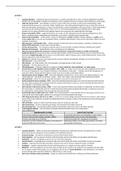
Learning objectives – understand what self-awareness is; consider and predict how, when. And why self-identity may differ;
identify how self-knowledge is shaped and changed by various cognitive processes; recognise cultural difference in self-images
Tajfel and Turner (1979) – social identity is a person’s sense of who they are based on their group membership(s); Tajfel
proposed that the groups (e.g. social class, family, football team, etc) which people belonged to were an important source of
pride and self-esteem; groups give us a sense of social identity (a sense of belonging to the social world); a social categorisation
was done and the world was divided into “them” and “us”; the central hypothesis of social identity theory is that group
members of an in-group will seek to find negative aspects of an out-group, thus enhancing their self-image
Brewer and Gardner (1996) – suggested that there are 3 types of self; individual (personal traits that distinguish you from
others); relational (dyadic relationships that assimilate you to others); collective (group membership)
Types of self and identity – “all the world’s a stage” by Shakespeare; private (thoughts, feelings, attitudes) vs public (social
image); public self can be seen and evaluated by others, evaluation apprehension, enjoy success, admiration, adhere to social
standards of behaviour
Self-awareness = psychological state – reflexive thought ‘fundamental part of human beings’; realisation of being human;
Gallup (1970) mirror test; no one is born to be self-aware
Chronic self-awareness – very stressful (constantly aware of shortcomings); avoidance behaviour (drinking and suicide)
Reduced self-awareness – deindividuation and no monitoring of own behaviour
Self-consciousness (being self-conscious in a private environment vs being self-conscious in a public environment) –
heightened private(more intense emotion, accurate self-perception, adhere to personal beliefs, less stress related illness like
depression); heightened public (nervousness, loss of self-esteem, adhere to group norms, avoid embarrassment, concern with
physical appearance, both self and others)
Schemas are cognitive structures that represent the concept of stimulus including the attributes of yourself and others
Self-awareness – access information
Self-schemas – act, think, behave, feel; self-schematic is an important part of self-concept
Aschematic – not that important for me
Self-development – 6 theories divided into categories of how it should be, other individuals, and other groups
Control theory of self-regulation (Carver & Scheier, 1981, 1998) - is a system of conscious personal management that involves
the process of guiding one's own thoughts, behaviours, and feelings to reach goals. ... impulse control, the management of
short-term desires. People with low impulse control are prone to acting on immediate desires
Self-discrepancy theory (Higgins, 1987) - states that individuals compare their “actual” self to internalized standards or the
“ideal/ought self”; inconsistencies between “actual”, “ideal” and “ought” to be associated with emotional discomforts
Self-assessment – desire for accurate and valid information; seek out the truth about self
Social comparison theory (Festinger, 1954) - states that individuals determine their own social and personal worth based on
how they stack up against others; people sometimes compare themselves to others as a way of fostering self-improvement,
self-motivation, and a positive self-image
Self-evaluation maintenance (Tesser, 1988) - concerns discrepancies between two people in a relationship; the theory posits
that two people in a relationship each aim to keep themselves feeling good psychologically through a comparison process to
the other person; self-evaluation is the way a person views him/herself
Social identity theory (Tajfel and Turner, 1979) - the central hypothesis of social identity theory is that group members of an
in-group will seek to find negative aspects of an out-group, thus enhancing their self-image
Self-categorisation theory (Turner et al. 1987) - is a theory in social psychology that describes the circumstances under which a
person will perceive collections of people (including themselves) as a group, as well as the consequences of perceiving people
in group terms
Self-verification – desire to confirm what they know; seek out consistency about self
Self-enhancement – desire to maintain good image; seek favourable information about self
Self-enhancing triad – overestimate positive aspects; overestimate control over events; unrealistic optimism
Psychologically adaptive – low self-esteem associated with mental health issues such as depression
Cultural differences –
INDIVIDUALISTIC CULTURE COLLECTIVIST CULTURE
Autonomous individual, separate from context Connected with others and embedded in social context
Focus on internal traits feelings, thoughts, abilities Represented in terms of roles and relationships
Unitary and stable across situations Fluid and variable self, changing across situations
Acting true to internal beliefs and feelings, promoting own Belonging, fitting in and acting appropriately, promoting
goals and differences from others group goals and harmony
LECTURE 2
Learning objectives – define and understand attribution; describe classic attribution theories and apply these to real life
phenomena; discuss examples of errors and biases in the attribution process
Social psychology – perceptions and behaviour and how influenced by others
Social cognition – how we process and store social information and how this affects our perception and behaviour
Attribution – process of assigning a cause to our own and other’s behaviour
(social) schemas – knowledge about concepts (make sense with limited information and facilitate top-down processing)
Category – organised hierarchically (associative network); fuzzy sets of features organised around a prototype
Prototypes – cognitive representation of typical defining features of a category (average category member)
EXAMPLE – you have studied for an exam but when you find out the result it is not as good as you expected; why this might
be? In trying to answer this question, you are engaging in the process of causal attribution; causal attribution is an inference
process through which perceivers attribute an effect to one or more causes
How naïve scientists practice psychology – people are rational and scientific-like in making cause-effect attributions
, How intuitionists practice psychology – information is limited and driven by motivations leads to errors and biases
How cognitive miser practice psychology – people use least complex and demanding information processing leading to
cognitive shortcuts
Motivated tactician – think deeply when required… and only then; think carefully and scientifically about certain things when
personally important or necessary; think quickly and use heuristics for others when less important so that can-do things quickly
and get more done
Naïve scientist (Fritz Heider, 1958) - this theory holds that humans think and act with dispassionate rationality whilst engaging
in detailed and nuanced thought processes for both complex and routine actions; three principles of needs we have (need to
form a coherent view of the world; need to gain control over the environment; need to identify internal vs external factors)
Attributional theory (Weiner, 1979) – created the attribution theory of motivation as a framework to explain why people do
what they do; he stated that people seek causal factors that allow them to maintain a positive self-image, and it is these
attributions that determine an individual's motivation to repeat behaviours; causality of success or failure (locus, stability, and
controllability)
Correspondent inference theory (Jones & Davis, 1965) – systematically accounts for a perceiver's inferences about what an
actor was trying to achieve by a particular action; particular focus on whether something is caused internally or externally
Covariation model (Kelley, 1967) - covariation model is an attribution theory in which people make causal inferences to explain
why other people and we behave in a certain way; use multiple observations to try to identify factors that covary with
behaviour; look at consistency if this behaviour always co-occur with the case; look at distinctiveness if this behaviour is
exclusively linked to this cause or is it a common reaction; look at consensus if do other people react in the same way to the
cause/situation
Attributional biases – systematic errors indicative of shortcuts, gut feeling, intuition
False consensus – use our opinions as a concept to base on what others might do
We tend to group together with people who are similar to ourselves
Actor-observer bias – more likely to make situational attributions for ourselves and dispositional attribution for others
Fundamental attribution error (FAE), also known as correspondence bias or attribution effect, is the tendency for people to
under-emphasize situational explanations for an individual's observed behaviour while over-emphasizing dispositional and
personality-based explanations for their behaviour
The self-serving bias is defined as people's tendency to attribute positive events to their own character but attribute negative
events to external factors
Heuristics – are cognitive shortcuts; used to avoid effort; rule of thumb, not complex mental judgement; quick and easy
Availability heuristics – judge frequency or probability of events by how easy it is to think of examples
Representative heuristics – categorise based on similarity between instance and prototypical category members
Anchoring and adjustment heuristics – starting point (or initial standard) influences subsequent judgements
LECTURE 3
Learning objectives – to describe what attitudes are; to outline the structure and functions of attitudes and how they are
formed; to discuss the methods available for measuring attitudes; can attitudes predict behaviour; to understand how attitudes
are changed
Attitude – a relatively enduring organisation of beliefs, feelings and behavioural tendencies towards socially significant objects,
events or symbols; a general feeling or evaluation – positive or negative – about some person, object or issue (Hogg &
Vaughan, 2014)
Three component model (Rosenberg & Hovland, 1960) – affective (expressions of feelings towards an attitude object; ; an
attitude object includes anything including people, issues, events etc.); cognitive (expressions of beliefs about an attitude
object; an attitude object includes anything including people, issues, events etc.); behavioural (overt actions/verbal statements
concerning behaviour)
Mere exposure effect (Zajonc, 2001) – repeated exposure of a stimulus leads to the enhancement of preference for that
stimulus; this is the idea that if a person is exposed to a particular stimulus, the person develops a preference over that
stimulus; with repetition, a positive attitude can be built towards that stimulus
Classical conditioning – through repeated association; previously neutral stimulus elicits reaction that was previously elicited
only by another stimulus
Learning objectives – understand what self-awareness is; consider and predict how, when. And why self-identity may differ;
identify how self-knowledge is shaped and changed by various cognitive processes; recognise cultural difference in self-images
Tajfel and Turner (1979) – social identity is a person’s sense of who they are based on their group membership(s); Tajfel
proposed that the groups (e.g. social class, family, football team, etc) which people belonged to were an important source of
pride and self-esteem; groups give us a sense of social identity (a sense of belonging to the social world); a social categorisation
was done and the world was divided into “them” and “us”; the central hypothesis of social identity theory is that group
members of an in-group will seek to find negative aspects of an out-group, thus enhancing their self-image
Brewer and Gardner (1996) – suggested that there are 3 types of self; individual (personal traits that distinguish you from
others); relational (dyadic relationships that assimilate you to others); collective (group membership)
Types of self and identity – “all the world’s a stage” by Shakespeare; private (thoughts, feelings, attitudes) vs public (social
image); public self can be seen and evaluated by others, evaluation apprehension, enjoy success, admiration, adhere to social
standards of behaviour
Self-awareness = psychological state – reflexive thought ‘fundamental part of human beings’; realisation of being human;
Gallup (1970) mirror test; no one is born to be self-aware
Chronic self-awareness – very stressful (constantly aware of shortcomings); avoidance behaviour (drinking and suicide)
Reduced self-awareness – deindividuation and no monitoring of own behaviour
Self-consciousness (being self-conscious in a private environment vs being self-conscious in a public environment) –
heightened private(more intense emotion, accurate self-perception, adhere to personal beliefs, less stress related illness like
depression); heightened public (nervousness, loss of self-esteem, adhere to group norms, avoid embarrassment, concern with
physical appearance, both self and others)
Schemas are cognitive structures that represent the concept of stimulus including the attributes of yourself and others
Self-awareness – access information
Self-schemas – act, think, behave, feel; self-schematic is an important part of self-concept
Aschematic – not that important for me
Self-development – 6 theories divided into categories of how it should be, other individuals, and other groups
Control theory of self-regulation (Carver & Scheier, 1981, 1998) - is a system of conscious personal management that involves
the process of guiding one's own thoughts, behaviours, and feelings to reach goals. ... impulse control, the management of
short-term desires. People with low impulse control are prone to acting on immediate desires
Self-discrepancy theory (Higgins, 1987) - states that individuals compare their “actual” self to internalized standards or the
“ideal/ought self”; inconsistencies between “actual”, “ideal” and “ought” to be associated with emotional discomforts
Self-assessment – desire for accurate and valid information; seek out the truth about self
Social comparison theory (Festinger, 1954) - states that individuals determine their own social and personal worth based on
how they stack up against others; people sometimes compare themselves to others as a way of fostering self-improvement,
self-motivation, and a positive self-image
Self-evaluation maintenance (Tesser, 1988) - concerns discrepancies between two people in a relationship; the theory posits
that two people in a relationship each aim to keep themselves feeling good psychologically through a comparison process to
the other person; self-evaluation is the way a person views him/herself
Social identity theory (Tajfel and Turner, 1979) - the central hypothesis of social identity theory is that group members of an
in-group will seek to find negative aspects of an out-group, thus enhancing their self-image
Self-categorisation theory (Turner et al. 1987) - is a theory in social psychology that describes the circumstances under which a
person will perceive collections of people (including themselves) as a group, as well as the consequences of perceiving people
in group terms
Self-verification – desire to confirm what they know; seek out consistency about self
Self-enhancement – desire to maintain good image; seek favourable information about self
Self-enhancing triad – overestimate positive aspects; overestimate control over events; unrealistic optimism
Psychologically adaptive – low self-esteem associated with mental health issues such as depression
Cultural differences –
INDIVIDUALISTIC CULTURE COLLECTIVIST CULTURE
Autonomous individual, separate from context Connected with others and embedded in social context
Focus on internal traits feelings, thoughts, abilities Represented in terms of roles and relationships
Unitary and stable across situations Fluid and variable self, changing across situations
Acting true to internal beliefs and feelings, promoting own Belonging, fitting in and acting appropriately, promoting
goals and differences from others group goals and harmony
LECTURE 2
Learning objectives – define and understand attribution; describe classic attribution theories and apply these to real life
phenomena; discuss examples of errors and biases in the attribution process
Social psychology – perceptions and behaviour and how influenced by others
Social cognition – how we process and store social information and how this affects our perception and behaviour
Attribution – process of assigning a cause to our own and other’s behaviour
(social) schemas – knowledge about concepts (make sense with limited information and facilitate top-down processing)
Category – organised hierarchically (associative network); fuzzy sets of features organised around a prototype
Prototypes – cognitive representation of typical defining features of a category (average category member)
EXAMPLE – you have studied for an exam but when you find out the result it is not as good as you expected; why this might
be? In trying to answer this question, you are engaging in the process of causal attribution; causal attribution is an inference
process through which perceivers attribute an effect to one or more causes
How naïve scientists practice psychology – people are rational and scientific-like in making cause-effect attributions
, How intuitionists practice psychology – information is limited and driven by motivations leads to errors and biases
How cognitive miser practice psychology – people use least complex and demanding information processing leading to
cognitive shortcuts
Motivated tactician – think deeply when required… and only then; think carefully and scientifically about certain things when
personally important or necessary; think quickly and use heuristics for others when less important so that can-do things quickly
and get more done
Naïve scientist (Fritz Heider, 1958) - this theory holds that humans think and act with dispassionate rationality whilst engaging
in detailed and nuanced thought processes for both complex and routine actions; three principles of needs we have (need to
form a coherent view of the world; need to gain control over the environment; need to identify internal vs external factors)
Attributional theory (Weiner, 1979) – created the attribution theory of motivation as a framework to explain why people do
what they do; he stated that people seek causal factors that allow them to maintain a positive self-image, and it is these
attributions that determine an individual's motivation to repeat behaviours; causality of success or failure (locus, stability, and
controllability)
Correspondent inference theory (Jones & Davis, 1965) – systematically accounts for a perceiver's inferences about what an
actor was trying to achieve by a particular action; particular focus on whether something is caused internally or externally
Covariation model (Kelley, 1967) - covariation model is an attribution theory in which people make causal inferences to explain
why other people and we behave in a certain way; use multiple observations to try to identify factors that covary with
behaviour; look at consistency if this behaviour always co-occur with the case; look at distinctiveness if this behaviour is
exclusively linked to this cause or is it a common reaction; look at consensus if do other people react in the same way to the
cause/situation
Attributional biases – systematic errors indicative of shortcuts, gut feeling, intuition
False consensus – use our opinions as a concept to base on what others might do
We tend to group together with people who are similar to ourselves
Actor-observer bias – more likely to make situational attributions for ourselves and dispositional attribution for others
Fundamental attribution error (FAE), also known as correspondence bias or attribution effect, is the tendency for people to
under-emphasize situational explanations for an individual's observed behaviour while over-emphasizing dispositional and
personality-based explanations for their behaviour
The self-serving bias is defined as people's tendency to attribute positive events to their own character but attribute negative
events to external factors
Heuristics – are cognitive shortcuts; used to avoid effort; rule of thumb, not complex mental judgement; quick and easy
Availability heuristics – judge frequency or probability of events by how easy it is to think of examples
Representative heuristics – categorise based on similarity between instance and prototypical category members
Anchoring and adjustment heuristics – starting point (or initial standard) influences subsequent judgements
LECTURE 3
Learning objectives – to describe what attitudes are; to outline the structure and functions of attitudes and how they are
formed; to discuss the methods available for measuring attitudes; can attitudes predict behaviour; to understand how attitudes
are changed
Attitude – a relatively enduring organisation of beliefs, feelings and behavioural tendencies towards socially significant objects,
events or symbols; a general feeling or evaluation – positive or negative – about some person, object or issue (Hogg &
Vaughan, 2014)
Three component model (Rosenberg & Hovland, 1960) – affective (expressions of feelings towards an attitude object; ; an
attitude object includes anything including people, issues, events etc.); cognitive (expressions of beliefs about an attitude
object; an attitude object includes anything including people, issues, events etc.); behavioural (overt actions/verbal statements
concerning behaviour)
Mere exposure effect (Zajonc, 2001) – repeated exposure of a stimulus leads to the enhancement of preference for that
stimulus; this is the idea that if a person is exposed to a particular stimulus, the person develops a preference over that
stimulus; with repetition, a positive attitude can be built towards that stimulus
Classical conditioning – through repeated association; previously neutral stimulus elicits reaction that was previously elicited
only by another stimulus