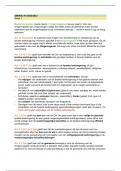
Military threats to security from states
Main points: The twin global issues of the Cold War and decolonization dominated the conduct
of International Relations in the latter half of the twentieth century and help explain the
preoccupation of states today with externally focused military security.
The legacies of the Cold War and decolonization remain prominent and many neo-
Realists contend that the disappearance of the Cold War balance of power brought with it
new, and more destabilizing, military threats.
When to use: discussion of deterrence, examples, IR theories regarding inevitability of war
- The Realist morel of powerful states vying for supremacy seems to be borne out by
considering the scale and nature of the major wars in history.
- That the potential ‘mother of all’ clashes of the Titans, the Cold War, should end with a
peaceful transition to a new order, rather than military victory, served to challenge the
ascendancy of Realism in the study of military security.
Clausewitz’s On War:
On War contains a number of gaps and has frequently been misinterpreted
glorification of war misinterpretation
Shared Machiavelli’s pessimism about human cynicism but advocated war only when
absolutely necessary and justifiable
Cold War
- Many proxy wars were fought, direct war was avoided by the maintenance of a balance
of terror, whereby both sides were deterred from such action by the massive scale of each
other’s military capabilities (nuclear weapon as key variable)
3 views of why the divide after ww2 happened:
- Traditionalists blame USSR - expansion from East Europe and Northern Iran, turned
down Marshall Plan (Feis 1970, Schlesinger 1967)
- Revisionists – US aggression towards the USSR (Kolko and Kolko 1972) - argue that the
USSR’s dominance of the ‘Eastern Bloc’ after 1945 was merely a defensive measure to
create a buffer against American dominance of Europe and ideological hostility to
Communism.
- Post-Revisionists - both sides acted expansively in an inevitable process of filling the
power vacuum that had been created in Europe (Gaddis 1997).
Late 1940s: American Foreign Policy underwent a profound shift: from isolationism to
the Truman Doctrine
Explanation of shift: new president + apparent evidence of soviet expansionist intentions
Decolonisation
- Wave of decolonisation of 20th century did not happen at the same time as the Cold War
just randomly.
- The balance of power shift + Marxist ideology saw colonialism as a symptom of
capitalism
- Example: Vietnam war starts as anti-colonial war against France
, - In general, however, it was post-colonial power struggles rather than the overthrow of
European rule which tended to be transformed into Cold War conflict.
- The USA used its position of mastery over the old powers of Europe to assert its moral
support for the principle of self-rule for colonies.
- CA: hypocrisy USSR’s recent acquisition of six satellite states in Eastern Europe and
the USA’s colonial rule of Puerto Rico and suzerainty over South Korea, South Vietnam,
Taiwan and the Philippines
A new world order?
- Optimism for a brighter future while basking the afterglow of triumphant victory is
nothing new in IR: Napoleon and the Concert of Europe, which ended after the Crimean
War; 1919-20 Paris Settlement and the League of Nations
- The 1945–90 world order, in character, in many ways may be said to have been a hybrid
of both the Concert and the League systems.
- The optimism of 1945 was shorter lived than in either 1815 or 1920, however, as a new
conflict cast its shadow over the world almost immediately as the worst conflict in human
history came to an end. The year 1990 saw reawakened optimism, particularly since the
Cold War had ended with the leading protagonists on good terms and seeming to share a
common vision for the future of the world.
Democratisation
- Fukuyama and the ‘end of history’ like-minded liberal democratic states conduct their
relations in peace Kantian idea of perpetual peace
- the Cold War was more of a struggle between Communism and ‘non-communism’ than
between totalitarianism and democracy
- The West’s victory over the Soviet Union and its ‘allies’ did, though, serve to accelerate
the progress of democratization on both sides of the Iron Curtain.
- The USA in the 1990s switched from the Truman Doctrine to the ‘Clinton Doctrine’ in
which promoting the spread of democracy became an explicit foreign policy aim.
- The proposition that democracies do not go to war with each other is well supported
empirically,
Collective security
- Under this system acts of aggression prompt collective responses against the aggressors
by the whole international community, rather than just by the attacked state and its allies
or other states who consider their interests to be affected by the action.
LoN adopted, but League’s peacekeeping mechanism failed and collective security was never
activated.
Arms control
- Manifestation of dangers – the strain put on global arms control agreements by the new
alignment
- Deterrence, like arms control, was not new to the Cold War period but took on an added
dimension to displays of ‘gunboat diplomacy’ in earlier ages due to the sheer scale of the
threat now being projected.
Main points: The twin global issues of the Cold War and decolonization dominated the conduct
of International Relations in the latter half of the twentieth century and help explain the
preoccupation of states today with externally focused military security.
The legacies of the Cold War and decolonization remain prominent and many neo-
Realists contend that the disappearance of the Cold War balance of power brought with it
new, and more destabilizing, military threats.
When to use: discussion of deterrence, examples, IR theories regarding inevitability of war
- The Realist morel of powerful states vying for supremacy seems to be borne out by
considering the scale and nature of the major wars in history.
- That the potential ‘mother of all’ clashes of the Titans, the Cold War, should end with a
peaceful transition to a new order, rather than military victory, served to challenge the
ascendancy of Realism in the study of military security.
Clausewitz’s On War:
On War contains a number of gaps and has frequently been misinterpreted
glorification of war misinterpretation
Shared Machiavelli’s pessimism about human cynicism but advocated war only when
absolutely necessary and justifiable
Cold War
- Many proxy wars were fought, direct war was avoided by the maintenance of a balance
of terror, whereby both sides were deterred from such action by the massive scale of each
other’s military capabilities (nuclear weapon as key variable)
3 views of why the divide after ww2 happened:
- Traditionalists blame USSR - expansion from East Europe and Northern Iran, turned
down Marshall Plan (Feis 1970, Schlesinger 1967)
- Revisionists – US aggression towards the USSR (Kolko and Kolko 1972) - argue that the
USSR’s dominance of the ‘Eastern Bloc’ after 1945 was merely a defensive measure to
create a buffer against American dominance of Europe and ideological hostility to
Communism.
- Post-Revisionists - both sides acted expansively in an inevitable process of filling the
power vacuum that had been created in Europe (Gaddis 1997).
Late 1940s: American Foreign Policy underwent a profound shift: from isolationism to
the Truman Doctrine
Explanation of shift: new president + apparent evidence of soviet expansionist intentions
Decolonisation
- Wave of decolonisation of 20th century did not happen at the same time as the Cold War
just randomly.
- The balance of power shift + Marxist ideology saw colonialism as a symptom of
capitalism
- Example: Vietnam war starts as anti-colonial war against France
, - In general, however, it was post-colonial power struggles rather than the overthrow of
European rule which tended to be transformed into Cold War conflict.
- The USA used its position of mastery over the old powers of Europe to assert its moral
support for the principle of self-rule for colonies.
- CA: hypocrisy USSR’s recent acquisition of six satellite states in Eastern Europe and
the USA’s colonial rule of Puerto Rico and suzerainty over South Korea, South Vietnam,
Taiwan and the Philippines
A new world order?
- Optimism for a brighter future while basking the afterglow of triumphant victory is
nothing new in IR: Napoleon and the Concert of Europe, which ended after the Crimean
War; 1919-20 Paris Settlement and the League of Nations
- The 1945–90 world order, in character, in many ways may be said to have been a hybrid
of both the Concert and the League systems.
- The optimism of 1945 was shorter lived than in either 1815 or 1920, however, as a new
conflict cast its shadow over the world almost immediately as the worst conflict in human
history came to an end. The year 1990 saw reawakened optimism, particularly since the
Cold War had ended with the leading protagonists on good terms and seeming to share a
common vision for the future of the world.
Democratisation
- Fukuyama and the ‘end of history’ like-minded liberal democratic states conduct their
relations in peace Kantian idea of perpetual peace
- the Cold War was more of a struggle between Communism and ‘non-communism’ than
between totalitarianism and democracy
- The West’s victory over the Soviet Union and its ‘allies’ did, though, serve to accelerate
the progress of democratization on both sides of the Iron Curtain.
- The USA in the 1990s switched from the Truman Doctrine to the ‘Clinton Doctrine’ in
which promoting the spread of democracy became an explicit foreign policy aim.
- The proposition that democracies do not go to war with each other is well supported
empirically,
Collective security
- Under this system acts of aggression prompt collective responses against the aggressors
by the whole international community, rather than just by the attacked state and its allies
or other states who consider their interests to be affected by the action.
LoN adopted, but League’s peacekeeping mechanism failed and collective security was never
activated.
Arms control
- Manifestation of dangers – the strain put on global arms control agreements by the new
alignment
- Deterrence, like arms control, was not new to the Cold War period but took on an added
dimension to displays of ‘gunboat diplomacy’ in earlier ages due to the sheer scale of the
threat now being projected.