Tourism Notes:
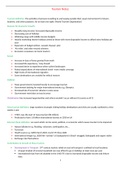
Tourism Definition: The activities of persons travelling to and staying outside their usual environment for leisure,
business, and other purposes, for at least one night. (World Tourism Organisation)
Reasons for Economic Growth:
Steadily rising income/ increased disposable income
Decreasing cost of holidays
Widening range with middle income budgets
Heavily marketing shorter holidays aimed at those with more disposable income to afford extra holidays per
year
Expansion of budget airlines- easyJet, Ryanair, jet2
‘Air miles’ and other reward schemes
Economic recessions can harm tourism
Social:
Increase in days of leave granted from work
Increased life expectancy, ‘Grey Pound’
Increased desire to experience other cutlers/landscapes
Raised expectations of international travel- more media coverage
High levels of international migration
Some destinations are avoided for ethical reasons
Political:
Many governments invested heavily to encourage tourism
Government backing for major international events e.g. Olympics
Perceived ide of terrorists’ attacks in some areas
Government restriction on tourist areas
Globalisation has increased opportunities and others wouldn’t occur without it (counts as all 3)
Mass tourism definition: large numbers of people visiting holiday destinations and visits are usually confined to a few
weeks a year
1960’s was the start of mass tourism (80 million)
Predicted to have 1.8 billion international tourists in 2030 in UK
External Shock definition: an event which can be social, political, or economic which causes tourism to be impacted.
Natural disasters e.g. flooding, volcanoes, earthquakes, etc…
Terrorism
Health scares e.g. SARS March 2003, Covid-19 China 2020
International image e.g. 2006 film ‘turistas’ US backpackers in Brazil- drugged, kidnapped and organs stolen
Exchange rate fluctuations
Contribution to Growth of Mass Tourism:
Development in Transport- 19th century tourists relied on sea/rail transport- confined to local locations
A larger bracket of income household can now afford to go on holidays at least once per year
International trips from UK doubled in the 1960-70’s due to increased disposable income and leisure
time
1
, Development in regional airports e.g. George best Belfast
Budget airlines e.g. EasyJet
In the UK, visits abroad increased from 31.2million to 53.9 million from 1990-1999 (73% increase)
Increase in Disposable Income: Income remaining after taxation and national insurance contributions have
been deducted from a worker’s wage
Family of 4 trip to Spain for 7 days in 2016 was £4000 plus extra spending money
The average disposable income has doubled from 1977
Credit cards have become more popular for short time loans
Packaged Holidays- A booked holiday that includes transport, accommodation, food, and activities organised
by a tour operator
46% of British travellers opt for packaged holidays (ABTA)
Benefits- easy to book, good value for money, wide range, etc…
All-inclusive 7 nights in Spain= £679 per person
Internet Access- 89% of UK residents have access to the internet.
In 2016, 76% of all holidays booked online which increased by 51% from 10yrs prior
E.g. trivago
Butlers model Definition: The prediction of the evolution of a tourism resort over time.
Stage 1 (Exploration): Majorca 1960’s
Small number of visitors attracted by natural beauty or cultural characteristics
Tourist numbers limited, few facilities
Stage 2 (Involvement): Majorca 1970’s
Limited involvement by locals to provide facilities for tourists
Recognised ‘tourist season’
Begins to ‘tourist market’
Stage 3 (Development): Majorca 1970’s
Large number of tourists arrive
Control passes from locals to external organisations (TNC’s)
Increased tension between locals and tourists
Stage 4 (Consolidation): Majorca 1980’s
Tourism becomes a major part of the economy
Visitor level off (high numbers)
Some older facilities are seen as second rate/run down
Stage 5 (Stagnation): Majorca 1990’s
Peak numbers have been reached
No longer considered fashionable
Stage 6 (Rejuvenation and Decline): Majorca’s rejuvenation in 1990’s and 2000’s
Attractiveness continues to decline
Visitors lost to other resorts/destinations
Resort becomes dependent on day visitors or locals with a limited geographical area
Decline will continue unless rejuvenation and modernisation
2
Tourism Definition: The activities of persons travelling to and staying outside their usual environment for leisure,
business, and other purposes, for at least one night. (World Tourism Organisation)
Reasons for Economic Growth:
Steadily rising income/ increased disposable income
Decreasing cost of holidays
Widening range with middle income budgets
Heavily marketing shorter holidays aimed at those with more disposable income to afford extra holidays per
year
Expansion of budget airlines- easyJet, Ryanair, jet2
‘Air miles’ and other reward schemes
Economic recessions can harm tourism
Social:
Increase in days of leave granted from work
Increased life expectancy, ‘Grey Pound’
Increased desire to experience other cutlers/landscapes
Raised expectations of international travel- more media coverage
High levels of international migration
Some destinations are avoided for ethical reasons
Political:
Many governments invested heavily to encourage tourism
Government backing for major international events e.g. Olympics
Perceived ide of terrorists’ attacks in some areas
Government restriction on tourist areas
Globalisation has increased opportunities and others wouldn’t occur without it (counts as all 3)
Mass tourism definition: large numbers of people visiting holiday destinations and visits are usually confined to a few
weeks a year
1960’s was the start of mass tourism (80 million)
Predicted to have 1.8 billion international tourists in 2030 in UK
External Shock definition: an event which can be social, political, or economic which causes tourism to be impacted.
Natural disasters e.g. flooding, volcanoes, earthquakes, etc…
Terrorism
Health scares e.g. SARS March 2003, Covid-19 China 2020
International image e.g. 2006 film ‘turistas’ US backpackers in Brazil- drugged, kidnapped and organs stolen
Exchange rate fluctuations
Contribution to Growth of Mass Tourism:
Development in Transport- 19th century tourists relied on sea/rail transport- confined to local locations
A larger bracket of income household can now afford to go on holidays at least once per year
International trips from UK doubled in the 1960-70’s due to increased disposable income and leisure
time
1
, Development in regional airports e.g. George best Belfast
Budget airlines e.g. EasyJet
In the UK, visits abroad increased from 31.2million to 53.9 million from 1990-1999 (73% increase)
Increase in Disposable Income: Income remaining after taxation and national insurance contributions have
been deducted from a worker’s wage
Family of 4 trip to Spain for 7 days in 2016 was £4000 plus extra spending money
The average disposable income has doubled from 1977
Credit cards have become more popular for short time loans
Packaged Holidays- A booked holiday that includes transport, accommodation, food, and activities organised
by a tour operator
46% of British travellers opt for packaged holidays (ABTA)
Benefits- easy to book, good value for money, wide range, etc…
All-inclusive 7 nights in Spain= £679 per person
Internet Access- 89% of UK residents have access to the internet.
In 2016, 76% of all holidays booked online which increased by 51% from 10yrs prior
E.g. trivago
Butlers model Definition: The prediction of the evolution of a tourism resort over time.
Stage 1 (Exploration): Majorca 1960’s
Small number of visitors attracted by natural beauty or cultural characteristics
Tourist numbers limited, few facilities
Stage 2 (Involvement): Majorca 1970’s
Limited involvement by locals to provide facilities for tourists
Recognised ‘tourist season’
Begins to ‘tourist market’
Stage 3 (Development): Majorca 1970’s
Large number of tourists arrive
Control passes from locals to external organisations (TNC’s)
Increased tension between locals and tourists
Stage 4 (Consolidation): Majorca 1980’s
Tourism becomes a major part of the economy
Visitor level off (high numbers)
Some older facilities are seen as second rate/run down
Stage 5 (Stagnation): Majorca 1990’s
Peak numbers have been reached
No longer considered fashionable
Stage 6 (Rejuvenation and Decline): Majorca’s rejuvenation in 1990’s and 2000’s
Attractiveness continues to decline
Visitors lost to other resorts/destinations
Resort becomes dependent on day visitors or locals with a limited geographical area
Decline will continue unless rejuvenation and modernisation
2