,
, 1) Registered/Unregistered Estates
What is the structure of a real estate transaction?
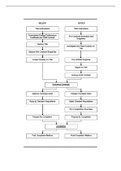
In the pre-contract stage, neither party is legally bound. They will carry out marketing by
exchanging contracts, investigating searches/titles/pre-contract enquiries, and gazundering.
In the post-contract stage, contracts must be exchanged until completion. Parties will then
become legally bound.
In the post-completion stage, the land will become registered at the Land Registry, the buyer
will take possession, original documents will be used, and the buyer will notify HMRC and
pay SDLT.
The title plan will include visual representation of the estate, physical extent, lease extent,
what the land has benefit of, and title number.
What official copy entries may be found at the Land Registry?
In the Property Register, you can find the geographical location, reference to official plan,
particulars of rights, leasehold titles, unique reference title number, data and type of estate.
In the Proprietorship Register, you can find quality of title, legal owner’s name, restitutions,
value, title grade and entry date.
In the Charges Register, you can find restrictive covenants, easements, registered charges.
What is in the epitome of title?
Epitome of title will include schedule of deeds as well as photocopies of relevant title
documents.
You can find good root of title that is at least 15 years old, accurate description of the
property, title validity with no doubts.
However, you cannot find original deeds nor non-registered official copies.
How may ownership be deducted in unregistered titles?
It may be deducted by finding good root of title that is less than 15 years old, voluntary
conveyance/assets, best documents in conveyances/legal mortgages to the seller.
Also, intermediate documents for title transfer may be useful, such as conveyances, grants of
representations, leases, deeds, mortgages, discharge documents, power of attorneys,
death/marriage certificates.
What is required for title investigation?
For registered lands, parties can review register entries remaining on title or supporting
documents. For unregistered land, parties can review documents contained in epitome.
, 1) Registered/Unregistered Estates
What is the structure of a real estate transaction?
In the pre-contract stage, neither party is legally bound. They will carry out marketing by
exchanging contracts, investigating searches/titles/pre-contract enquiries, and gazundering.
In the post-contract stage, contracts must be exchanged until completion. Parties will then
become legally bound.
In the post-completion stage, the land will become registered at the Land Registry, the buyer
will take possession, original documents will be used, and the buyer will notify HMRC and
pay SDLT.
The title plan will include visual representation of the estate, physical extent, lease extent,
what the land has benefit of, and title number.
What official copy entries may be found at the Land Registry?
In the Property Register, you can find the geographical location, reference to official plan,
particulars of rights, leasehold titles, unique reference title number, data and type of estate.
In the Proprietorship Register, you can find quality of title, legal owner’s name, restitutions,
value, title grade and entry date.
In the Charges Register, you can find restrictive covenants, easements, registered charges.
What is in the epitome of title?
Epitome of title will include schedule of deeds as well as photocopies of relevant title
documents.
You can find good root of title that is at least 15 years old, accurate description of the
property, title validity with no doubts.
However, you cannot find original deeds nor non-registered official copies.
How may ownership be deducted in unregistered titles?
It may be deducted by finding good root of title that is less than 15 years old, voluntary
conveyance/assets, best documents in conveyances/legal mortgages to the seller.
Also, intermediate documents for title transfer may be useful, such as conveyances, grants of
representations, leases, deeds, mortgages, discharge documents, power of attorneys,
death/marriage certificates.
What is required for title investigation?
For registered lands, parties can review register entries remaining on title or supporting
documents. For unregistered land, parties can review documents contained in epitome.