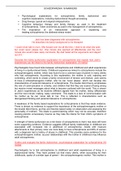
SCHIZOPHRENIA 16 MARKERS
Psychological explanations for schizophrenia: family dysfunction and
cognitive explanations, including dysfunctional thought processing.
Drug therapy: typical and atypical antipsychotics.
Cognitive behaviour therapy and family therapy as used in the treatment
of schizophrenia. Token economies as used in the management of schizophrenia.
The importance of an interactionist approach in explaining and
treating schizophrenia; the diathesis-stress model.
Jack has been diagnosed with schizophrenia.
He describes his family background to his therapist:
‘I could never talk to mum. She fussed over me all the time. I tried to do what she said,
but could never please her. One minute she seemed all affectionate and the next
minute she would make nasty comments. My dad hated all the arguments and stayed
out of it.’
Describe the family dysfunction explanation for schizophrenia and explain how Jack’s
experiences can be linked to the family dysfunction explanation. [8 marks]
Psychologists have found links between schizophrenia and childhood and adult experiences
of living in a dysfunctional family. Childhood experiences linked to schizophrenia include the
schizophrenogenic mother, which was found to be a common type of parent in many clients
who had schizophrenia. According to this explanation, the mother is cold, rejecting and
controlling, which tends to create a family environment of tension and distrust. Jack seems
to have a schizophrenogenic mother, who he can ‘never please’, which can develop into
characteristics of paranoid delusions in schizophrenia. The double blind theory emphasises
the role of communication in a family, and children that find they are scared of being wrong
but receive mixed messages about what is become confused with the world. This is shown
in Jack’s experiences as he receives different signals from his mother, being ‘affectionate
and the next minute’ making ‘nasty comments’. This leads to a lack of communication with
his mother as he can ‘never talk to’ her. This is reflected in characteristics such as
disorganised thinking and paranoid delusions in schizophrenia.
A weakness of the family based explanations for schizophrenia is that they weak evidence.
There is almost no evidence to support the importance of the schizophrenogenic mother or
the double blind theory, as they are theories based solely on observation and assessing the
personality of mothers. This leads to parent-blaming which may not be accurate, therefore
causing parents unnecessary trauma as they take the blame for their child’s symptoms of
schizophrenia.
A strength of family dysfunction as a risk factor of schizophrenia is that it has does still have
some supporting evidence. Evidence suggests difficult family relationships in childhood are
associated with increased risk in adulthood of schizophrenia. Adults with insecure
attachments to their primary carer are more likely to have schizophrenia and 69% of women
with a diagnosis had a history of abuse in childhood. This provides some evidence for the
schizophrenogenic mother, as poor relationships with the mother in childhood may influence
adult schizophrenia.
Outline and evaluate the family dysfunction, psychological explanation for schizophrenia [16
marks]
Psychologists try to link schizophrenia to childhood and adult experiences of living in a
dysfunctional family. They have pointed out that many clients, when accounting for their
childhoods, spoke of a similar type of parent – the schizophrenogenic mother. This mother is
, SCHIZOPHRENIA 16 MARKERS
characterised as cold and controlling, which tends to create a family environment of tension
and secrecy, which leads to distrust and paranoid delusions. Psychologists also emphasised
the importance of communication within a family. The double blind theory states that when
children are scared of being wrong but receive mixed messages about what is, this can lead
to symptoms of schizophrenia. The child is punished by the withdrawal of love which can
create a sense of confusion that is reflected in disorganised thinking and paranoid delusions.
Levels of expressed emotions expressed towards someone with schizophrenia by their
caregivers can trigger the onset of someone who is vulnerable to schizophrenia. Verbal
criticism, hostility and emotional over-involvement in the life of the individual with the
disorder can contribute to serious stress which can explain the relapse in people with
schizophrenia.
A strength of the family dysfunction explanation is that there is evidence to suggest difficult
family relationships in childhood are associated with an increased risk in adulthood of
schizophrenia. Psychologists reviewed 46 studies of childhood abuse and schizophrenia and
concluded that 69% of women and 59% of men with schizophrenia also had a history of
abuse in childhood. This strengthens the family explanations of schizophrenia as it
demonstrates that adults with insecure attachments to their primary caregiver are more likely
to have schizophrenia.
On the other hand, a weakness of this psychological explanation is that there is weak
evidence for the family based explanations. Although the study of abuse linked with
schizophrenia displays a link between family dysfunction and schizophrenia, it does not
directly provide evidence for the schizophrenogenic mother and double blind theory in
particular. These are theories that are mainly based on observation and assessing the
personality type of the mothers, which weakens the scientific credibility of the theories. This
is a weakness because it can lead to parent blaming, based on little evidence, which causes
parents to undergo trauma as they feel they are the cause of their child’s schizophrenia.
Another weakness of the family dysfunction explanation for schizophrenia is that evidence
for biological factors is not adequately considered. Psychological explanations for
schizophrenia can be hard to reconcile with the biological explanations. It could be that both
biological and psychological factors can separately produce the same symptoms, raising the
question of whether both outcomes are really schizophrenia. Alternatively, this can be
viewed in terms of the diathesis-stress model, where the diathesis may be biological or
psychological. This is a weakness for the family dysfunction explanation as it underestimates
the influence of biology.
Outline and evaluate the cognitive explanation for schizophrenia [16 marks]
Cognitive explanations claim that schizophrenia is associated with several types of abnormal
information processing. It is characterised by the disruption to normal thought processing.
We can see this in many symptoms such as reduced processing in the ventral striatum
associated with negative symptoms of schizophrenia. Metarepresentation is an example of
one of these cognitive distortions. This occurs when someone is unable to recognise their
own actions which can lead to hallucinations and delusions. Central control is the ability to
suppress automatic responses while we perform deliberate actions instead. Disorganised
speech and thought disorder could result from the inability to suppress these automatic
thoughts and speech is triggered by other thoughts. For example, those with schizophrenia
tend to experience derailment of thoughts and sentences because each word triggers
association that they cannot suppress automatic responses to.
A strength of the cognitive explanations for schizophrenia is that there is strong evidence for
dysfunctional information processing. A study compared 30 people with schizophrenia
against 18 controls across a range of cognitive tasks. One of these tasks asks participants to
Psychological explanations for schizophrenia: family dysfunction and
cognitive explanations, including dysfunctional thought processing.
Drug therapy: typical and atypical antipsychotics.
Cognitive behaviour therapy and family therapy as used in the treatment
of schizophrenia. Token economies as used in the management of schizophrenia.
The importance of an interactionist approach in explaining and
treating schizophrenia; the diathesis-stress model.
Jack has been diagnosed with schizophrenia.
He describes his family background to his therapist:
‘I could never talk to mum. She fussed over me all the time. I tried to do what she said,
but could never please her. One minute she seemed all affectionate and the next
minute she would make nasty comments. My dad hated all the arguments and stayed
out of it.’
Describe the family dysfunction explanation for schizophrenia and explain how Jack’s
experiences can be linked to the family dysfunction explanation. [8 marks]
Psychologists have found links between schizophrenia and childhood and adult experiences
of living in a dysfunctional family. Childhood experiences linked to schizophrenia include the
schizophrenogenic mother, which was found to be a common type of parent in many clients
who had schizophrenia. According to this explanation, the mother is cold, rejecting and
controlling, which tends to create a family environment of tension and distrust. Jack seems
to have a schizophrenogenic mother, who he can ‘never please’, which can develop into
characteristics of paranoid delusions in schizophrenia. The double blind theory emphasises
the role of communication in a family, and children that find they are scared of being wrong
but receive mixed messages about what is become confused with the world. This is shown
in Jack’s experiences as he receives different signals from his mother, being ‘affectionate
and the next minute’ making ‘nasty comments’. This leads to a lack of communication with
his mother as he can ‘never talk to’ her. This is reflected in characteristics such as
disorganised thinking and paranoid delusions in schizophrenia.
A weakness of the family based explanations for schizophrenia is that they weak evidence.
There is almost no evidence to support the importance of the schizophrenogenic mother or
the double blind theory, as they are theories based solely on observation and assessing the
personality of mothers. This leads to parent-blaming which may not be accurate, therefore
causing parents unnecessary trauma as they take the blame for their child’s symptoms of
schizophrenia.
A strength of family dysfunction as a risk factor of schizophrenia is that it has does still have
some supporting evidence. Evidence suggests difficult family relationships in childhood are
associated with increased risk in adulthood of schizophrenia. Adults with insecure
attachments to their primary carer are more likely to have schizophrenia and 69% of women
with a diagnosis had a history of abuse in childhood. This provides some evidence for the
schizophrenogenic mother, as poor relationships with the mother in childhood may influence
adult schizophrenia.
Outline and evaluate the family dysfunction, psychological explanation for schizophrenia [16
marks]
Psychologists try to link schizophrenia to childhood and adult experiences of living in a
dysfunctional family. They have pointed out that many clients, when accounting for their
childhoods, spoke of a similar type of parent – the schizophrenogenic mother. This mother is
, SCHIZOPHRENIA 16 MARKERS
characterised as cold and controlling, which tends to create a family environment of tension
and secrecy, which leads to distrust and paranoid delusions. Psychologists also emphasised
the importance of communication within a family. The double blind theory states that when
children are scared of being wrong but receive mixed messages about what is, this can lead
to symptoms of schizophrenia. The child is punished by the withdrawal of love which can
create a sense of confusion that is reflected in disorganised thinking and paranoid delusions.
Levels of expressed emotions expressed towards someone with schizophrenia by their
caregivers can trigger the onset of someone who is vulnerable to schizophrenia. Verbal
criticism, hostility and emotional over-involvement in the life of the individual with the
disorder can contribute to serious stress which can explain the relapse in people with
schizophrenia.
A strength of the family dysfunction explanation is that there is evidence to suggest difficult
family relationships in childhood are associated with an increased risk in adulthood of
schizophrenia. Psychologists reviewed 46 studies of childhood abuse and schizophrenia and
concluded that 69% of women and 59% of men with schizophrenia also had a history of
abuse in childhood. This strengthens the family explanations of schizophrenia as it
demonstrates that adults with insecure attachments to their primary caregiver are more likely
to have schizophrenia.
On the other hand, a weakness of this psychological explanation is that there is weak
evidence for the family based explanations. Although the study of abuse linked with
schizophrenia displays a link between family dysfunction and schizophrenia, it does not
directly provide evidence for the schizophrenogenic mother and double blind theory in
particular. These are theories that are mainly based on observation and assessing the
personality type of the mothers, which weakens the scientific credibility of the theories. This
is a weakness because it can lead to parent blaming, based on little evidence, which causes
parents to undergo trauma as they feel they are the cause of their child’s schizophrenia.
Another weakness of the family dysfunction explanation for schizophrenia is that evidence
for biological factors is not adequately considered. Psychological explanations for
schizophrenia can be hard to reconcile with the biological explanations. It could be that both
biological and psychological factors can separately produce the same symptoms, raising the
question of whether both outcomes are really schizophrenia. Alternatively, this can be
viewed in terms of the diathesis-stress model, where the diathesis may be biological or
psychological. This is a weakness for the family dysfunction explanation as it underestimates
the influence of biology.
Outline and evaluate the cognitive explanation for schizophrenia [16 marks]
Cognitive explanations claim that schizophrenia is associated with several types of abnormal
information processing. It is characterised by the disruption to normal thought processing.
We can see this in many symptoms such as reduced processing in the ventral striatum
associated with negative symptoms of schizophrenia. Metarepresentation is an example of
one of these cognitive distortions. This occurs when someone is unable to recognise their
own actions which can lead to hallucinations and delusions. Central control is the ability to
suppress automatic responses while we perform deliberate actions instead. Disorganised
speech and thought disorder could result from the inability to suppress these automatic
thoughts and speech is triggered by other thoughts. For example, those with schizophrenia
tend to experience derailment of thoughts and sentences because each word triggers
association that they cannot suppress automatic responses to.
A strength of the cognitive explanations for schizophrenia is that there is strong evidence for
dysfunctional information processing. A study compared 30 people with schizophrenia
against 18 controls across a range of cognitive tasks. One of these tasks asks participants to