Samenvatting Macro-economie Hoofdstuk 1-20 + Gastcollege
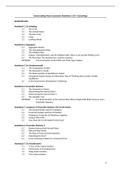
INHOUDSTAFEL:
Hoofdstuk 1: De Inleiding
1.1 The Crisis
1.2 The United States
1.3 The Euro Area
1.4 China
1.5 Looking Ahead
Hoofdstuk 2: Begrippen
2.1 Aggregate Output
2.2 The Unemployment Rate
2.3 The Inflation Rate
2.4 Output, Unemployment, and the Inflation Rate: Okun’s Law and the Phillips Curve
2.5 The Short Run, the Medium Run, and the Long Run
APPENDIX The Construction of Real GDP and Chain-Type Indexes
Hoofdstuk 3: De Goederenmarkt
3.1 The Composition of GDP
3.2 The Demand for Goods
3.3 The Determination of Equilibrium Output
3.4 Investment Equals Saving: An Alternative Way of Thinking about Goods: Market
Equilibrium
3.5 Is the Government Omnipotent? A Warning
Hoofdstuk 4: Financiële Markten
4.1 The Demand for Money
4.2 Determining the Interest Rate: I
4.3 Determining the Interest Rate: II
4.4 The Liquidity Trap
APPENDIX The Determination of the Interest Rate When People Hold Both Currency and a
Checkable Deposits
Hoofdstuk 5: Goederen & Financiële Markten: Het IS-LM Model
5.1 The Goods Market and the IS Relation
5.2 Financial Markets and the LM Relation
5.3 Putting the IS and the LM Relations Together
5.4 Using a Policy Mix
5.5 How Does the IS-LM Model Fit the Facts?
Hoofdstuk 6: Financiële Markten II
6.1 Nominal versus Real Interest Rates
6.2 Risk and Risk Premia
6.3 The Role of Financial Intermediaries
6.4 Extending the IS-LM
6.5 From a Housing Problem to a Financial Crisis
Hoofdstuk 7: De Arbeidsmarkt
7.1 A Tour of the Labour Market
7.2 Movements in Unemployment
7.3 Wage Determination
7.4 Price Determination
1
, 7.5 The Natural Rate of Unemployment
7.6 Where We Go from Here
APPENDIX Wage- and Price-Setting Relations versus labour Supply and Labour Demand
Hoofdstuk 8: Philips Curve, Natuurlijke Werkloos-Heidsgraad En Inflatie
8.1 Inflation, Expected Inflation, and Unemployment
8.2 The Phillips Curve and Its Mutations
8.3 The Phillips Curve and the Natural Rate of Unemployment
8.4 A Summary and Many Warnings
APPENDIX How to go from the Relation between the Price Level, the Expected Price Level,
and Unemployment to a Relation between Inflation, Expected Inflation, and
Unemployment
Hoofdstuk 9: Van Korte Naar Middellange Termijn: Het IS-LM-PC Model
9.1 The IS-LM-PC Model
9.2 Dynamics and the Medium Run Equilibrium
9.3 Fiscal Consolidation Revisited
9.4 The Effects of an Increase in the Price of Oil
9.5 Conclusions
Hoofdstuk 10: De Feiten Van Groei
10.1 Measuring the Standard of Living
10.2 Growth in Rich Countries since 1950
10.3 A Broader Look across Time and Space
10.4 Thinking about Growth: A Primer
Hoofdstuk 11: Sparen, kapitaal accumulatie en output
11.1 Interactions between Output and Capital
11.1 The Implications of Alternative Saving Rates
11.3 Getting a Sense of Magnitudes
11.4 Physical versus Human Capital
APPENDIX The Cobb-Douglas Production Function and the Steady State
Hoofdstuk 12: Technologische Vooruitgang En Groei
12.1 Technological Progress and the Rate of Growth
12.2 The Determinants of Technological Progress
12.3 Institutions, Technological Progress, and Growth
12.4 The Facts of Growth Revisited
APPENDIX Constructing a Measure of Technological Progress
HOOFDSTUK 13: Technologische Vooruitgang: De Korte, Middellange En De Lange Termijn
13.1 Productivity, Output, and Unemployment in the Short Run
13.2 Productivity and the Natural Rate of Unemployment
13.3 Technological Progress, Churning, and Distribution Effects
Hoofdstuk 17: Openheid In De Goederenmarkten En De Financiële Markten
17.1 Openness in Goods Markets
17.2 Openness in Financial Markets
17.3 Conclusions and a Look Ahead
Hoofdstuk 18: De Goederenmarkt In Een Open Economie
18.1 The IS Relation in the Open Economy
18.2 Equilibrium Output and the Trade Balance
18.3 Increases in Demand−Domestic or Foreign
2
, 18.4 Depreciation, the Trade Balance, and Output
18.5 Looking at Dynamics: The J-Curve
18.6 Saving, Investment, and the Current Account Balance
Hoofdstuk 19: Output, Het Rentetarief En De Wisselkoers
19.1 Equilibrium in the Goods Markets
19.2 Equilibrium in the Financial Markets
19.3 Putting Goods and Financial Markets Together
19.4 The Effects of Policy in an Open Economy
19.5 Fixed Exchange Rates
APPENDIX Fixed Exchange Rates, Interest Rates, and Capital Mobility
Hoofdstuk 20: Wisselkoersregimes
20.1 The Medium Run
20.2 Exchange Rate Crises under Fixed Exchange Rates
20.3 Exchange Rate Movements under Flexible Exchange Rates
20.4 Choosing between Exchange Rate Regimes
APPENDIX 1 Deriving the IS Relation under Fixed Exchange Rates
APPENDIX 2 The Real Exchange Rate and Domestic and Foreign Real Interest Rates
Gastcollege Marcia De Wachter: Uitdagingen Voor Duurzame Groei
3
, HOOFDSTUK 1: DE INLEIDING
De crisis
Van 2000 tot 2007: aanhoudende economische groei
In 2007: huizenprijzen daalden enorm in VS => enorme financiële crisis
Gevolg: grote economische crisis en dalende aandelenkoersen
Derde kwartaal 2008 - 2009: negatieve economische groei in de VS
Door de handel en financiële kanalen werd de Amerikaanse crisis al snel een wereldcrisis
Consumptie in de VS daalde sterk, wat leidde tot minder import van goederen
De export van veel landen daalde sterk, wat ook daar leidde tot een daling
van de output
Figuur 1.1: outputgroeipercentages voor de wereldeconomie, voor ontwikkelde economieën
en ontwikkelingseconomieën
In ontwikkelde landen was de weerslag van de crisis het grootst
Figuur 1.2: aandelenprijzen in de VS, de Eurozone en ontwikkelingslanden
Ondanks het feit dat de crisis begon in de
VS, daalden de aandelenprijzen even hard
in de Eurozone en in economieën in
ontwikkeling
De verenigde staten
Groot: een output van $17.4 biljoen in 2014 was goed voor 23% van de wereldoutput
Hoge levenstandaard: output per capita is $54,000 (bijna de hoogste ter wereld)
Economisten kijken naar 3 belangrijke variabelen:
Output: zowel het niveau als de groei ervan
Een land kan heel snel groeien, maar nog steeds een laag outputniveau
hebben, bv. een ontwikkelingsland
Werkloosheidsgraad
Inflatiegraad
4
INHOUDSTAFEL:
Hoofdstuk 1: De Inleiding
1.1 The Crisis
1.2 The United States
1.3 The Euro Area
1.4 China
1.5 Looking Ahead
Hoofdstuk 2: Begrippen
2.1 Aggregate Output
2.2 The Unemployment Rate
2.3 The Inflation Rate
2.4 Output, Unemployment, and the Inflation Rate: Okun’s Law and the Phillips Curve
2.5 The Short Run, the Medium Run, and the Long Run
APPENDIX The Construction of Real GDP and Chain-Type Indexes
Hoofdstuk 3: De Goederenmarkt
3.1 The Composition of GDP
3.2 The Demand for Goods
3.3 The Determination of Equilibrium Output
3.4 Investment Equals Saving: An Alternative Way of Thinking about Goods: Market
Equilibrium
3.5 Is the Government Omnipotent? A Warning
Hoofdstuk 4: Financiële Markten
4.1 The Demand for Money
4.2 Determining the Interest Rate: I
4.3 Determining the Interest Rate: II
4.4 The Liquidity Trap
APPENDIX The Determination of the Interest Rate When People Hold Both Currency and a
Checkable Deposits
Hoofdstuk 5: Goederen & Financiële Markten: Het IS-LM Model
5.1 The Goods Market and the IS Relation
5.2 Financial Markets and the LM Relation
5.3 Putting the IS and the LM Relations Together
5.4 Using a Policy Mix
5.5 How Does the IS-LM Model Fit the Facts?
Hoofdstuk 6: Financiële Markten II
6.1 Nominal versus Real Interest Rates
6.2 Risk and Risk Premia
6.3 The Role of Financial Intermediaries
6.4 Extending the IS-LM
6.5 From a Housing Problem to a Financial Crisis
Hoofdstuk 7: De Arbeidsmarkt
7.1 A Tour of the Labour Market
7.2 Movements in Unemployment
7.3 Wage Determination
7.4 Price Determination
1
, 7.5 The Natural Rate of Unemployment
7.6 Where We Go from Here
APPENDIX Wage- and Price-Setting Relations versus labour Supply and Labour Demand
Hoofdstuk 8: Philips Curve, Natuurlijke Werkloos-Heidsgraad En Inflatie
8.1 Inflation, Expected Inflation, and Unemployment
8.2 The Phillips Curve and Its Mutations
8.3 The Phillips Curve and the Natural Rate of Unemployment
8.4 A Summary and Many Warnings
APPENDIX How to go from the Relation between the Price Level, the Expected Price Level,
and Unemployment to a Relation between Inflation, Expected Inflation, and
Unemployment
Hoofdstuk 9: Van Korte Naar Middellange Termijn: Het IS-LM-PC Model
9.1 The IS-LM-PC Model
9.2 Dynamics and the Medium Run Equilibrium
9.3 Fiscal Consolidation Revisited
9.4 The Effects of an Increase in the Price of Oil
9.5 Conclusions
Hoofdstuk 10: De Feiten Van Groei
10.1 Measuring the Standard of Living
10.2 Growth in Rich Countries since 1950
10.3 A Broader Look across Time and Space
10.4 Thinking about Growth: A Primer
Hoofdstuk 11: Sparen, kapitaal accumulatie en output
11.1 Interactions between Output and Capital
11.1 The Implications of Alternative Saving Rates
11.3 Getting a Sense of Magnitudes
11.4 Physical versus Human Capital
APPENDIX The Cobb-Douglas Production Function and the Steady State
Hoofdstuk 12: Technologische Vooruitgang En Groei
12.1 Technological Progress and the Rate of Growth
12.2 The Determinants of Technological Progress
12.3 Institutions, Technological Progress, and Growth
12.4 The Facts of Growth Revisited
APPENDIX Constructing a Measure of Technological Progress
HOOFDSTUK 13: Technologische Vooruitgang: De Korte, Middellange En De Lange Termijn
13.1 Productivity, Output, and Unemployment in the Short Run
13.2 Productivity and the Natural Rate of Unemployment
13.3 Technological Progress, Churning, and Distribution Effects
Hoofdstuk 17: Openheid In De Goederenmarkten En De Financiële Markten
17.1 Openness in Goods Markets
17.2 Openness in Financial Markets
17.3 Conclusions and a Look Ahead
Hoofdstuk 18: De Goederenmarkt In Een Open Economie
18.1 The IS Relation in the Open Economy
18.2 Equilibrium Output and the Trade Balance
18.3 Increases in Demand−Domestic or Foreign
2
, 18.4 Depreciation, the Trade Balance, and Output
18.5 Looking at Dynamics: The J-Curve
18.6 Saving, Investment, and the Current Account Balance
Hoofdstuk 19: Output, Het Rentetarief En De Wisselkoers
19.1 Equilibrium in the Goods Markets
19.2 Equilibrium in the Financial Markets
19.3 Putting Goods and Financial Markets Together
19.4 The Effects of Policy in an Open Economy
19.5 Fixed Exchange Rates
APPENDIX Fixed Exchange Rates, Interest Rates, and Capital Mobility
Hoofdstuk 20: Wisselkoersregimes
20.1 The Medium Run
20.2 Exchange Rate Crises under Fixed Exchange Rates
20.3 Exchange Rate Movements under Flexible Exchange Rates
20.4 Choosing between Exchange Rate Regimes
APPENDIX 1 Deriving the IS Relation under Fixed Exchange Rates
APPENDIX 2 The Real Exchange Rate and Domestic and Foreign Real Interest Rates
Gastcollege Marcia De Wachter: Uitdagingen Voor Duurzame Groei
3
, HOOFDSTUK 1: DE INLEIDING
De crisis
Van 2000 tot 2007: aanhoudende economische groei
In 2007: huizenprijzen daalden enorm in VS => enorme financiële crisis
Gevolg: grote economische crisis en dalende aandelenkoersen
Derde kwartaal 2008 - 2009: negatieve economische groei in de VS
Door de handel en financiële kanalen werd de Amerikaanse crisis al snel een wereldcrisis
Consumptie in de VS daalde sterk, wat leidde tot minder import van goederen
De export van veel landen daalde sterk, wat ook daar leidde tot een daling
van de output
Figuur 1.1: outputgroeipercentages voor de wereldeconomie, voor ontwikkelde economieën
en ontwikkelingseconomieën
In ontwikkelde landen was de weerslag van de crisis het grootst
Figuur 1.2: aandelenprijzen in de VS, de Eurozone en ontwikkelingslanden
Ondanks het feit dat de crisis begon in de
VS, daalden de aandelenprijzen even hard
in de Eurozone en in economieën in
ontwikkeling
De verenigde staten
Groot: een output van $17.4 biljoen in 2014 was goed voor 23% van de wereldoutput
Hoge levenstandaard: output per capita is $54,000 (bijna de hoogste ter wereld)
Economisten kijken naar 3 belangrijke variabelen:
Output: zowel het niveau als de groei ervan
Een land kan heel snel groeien, maar nog steeds een laag outputniveau
hebben, bv. een ontwikkelingsland
Werkloosheidsgraad
Inflatiegraad
4