

Human Endocrine System
Chemical co-ordination
• Chemical co-ordination many be described as a slow, prolonged process of communicating
information throughout the body by way of chemical hormones.
• Many hormones are secreted by endocrine glands
• The endocrine system works with the nervous system
What is A Hormone?
• A hormone is an organic chemical substance, usually a protein but sometimes a steroid, secreted
by an endocrine gland and carried in the blood stream to its target organs where it will regulate
metabolic functions.
What is a Target Organ?
• Hormones carried in blood stream, only a ects certain cells.
• The speci c cells that respond to a given hormone have receptor sites for that hormone.
• They are known as target tissues or target hormones
• They can be a single gland, or hormone scattered throughout the body.
What is a endocrine gland?
• An endocrine gland is a vascular, ductless gland that secretes hormones which are carried in the
bloodstream to their target hormones.
How do exo- and endocrine glands di er?
• The secretion of an excocrine gland are carried in ducts to where they are needed. (Eg. Salivary
glands, liver, pancreas)
• Endocrine glands do not have ducts and their secretions are carried in the bloodstream to their
target hormone.
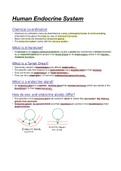
ExocrineGlands
EndocrineGlands Chasducts
ductless
, Endocrine glands in the body
1. Hypothalamus
• The hypothalamus is part of the brain, situated above the pituitary gland.
• Secretes hormones such as ADH (anti-diuretic hormone)
What is the role of ADH?
• Osmorecptors in the blood vessels of the hypothalamus detect an increase in the ormolarity (low
water levels) of the blood.
• The hypothalamus responds and releases ADH.
• ADH helps to conserve water if the body is dehydrated.
• It is done by causing more water to be re absorbed back into the blood from the collecting ducts
of the kidneys, so less water is lost in the urine.
2. Pituitary Gland
• This gland acts as the chemical co-ordination of most of the endocrine glands and is therefore,
called the MASTER GLAND.
• It is attached at the base of the hypothalamus of the brain by a short Stalk.
hyphothalamu
y Pituitarygland
Chemical co-ordination
• Chemical co-ordination many be described as a slow, prolonged process of communicating
information throughout the body by way of chemical hormones.
• Many hormones are secreted by endocrine glands
• The endocrine system works with the nervous system
What is A Hormone?
• A hormone is an organic chemical substance, usually a protein but sometimes a steroid, secreted
by an endocrine gland and carried in the blood stream to its target organs where it will regulate
metabolic functions.
What is a Target Organ?
• Hormones carried in blood stream, only a ects certain cells.
• The speci c cells that respond to a given hormone have receptor sites for that hormone.
• They are known as target tissues or target hormones
• They can be a single gland, or hormone scattered throughout the body.
What is a endocrine gland?
• An endocrine gland is a vascular, ductless gland that secretes hormones which are carried in the
bloodstream to their target hormones.
How do exo- and endocrine glands di er?
• The secretion of an excocrine gland are carried in ducts to where they are needed. (Eg. Salivary
glands, liver, pancreas)
• Endocrine glands do not have ducts and their secretions are carried in the bloodstream to their
target hormone.
ExocrineGlands
EndocrineGlands Chasducts
ductless
, Endocrine glands in the body
1. Hypothalamus
• The hypothalamus is part of the brain, situated above the pituitary gland.
• Secretes hormones such as ADH (anti-diuretic hormone)
What is the role of ADH?
• Osmorecptors in the blood vessels of the hypothalamus detect an increase in the ormolarity (low
water levels) of the blood.
• The hypothalamus responds and releases ADH.
• ADH helps to conserve water if the body is dehydrated.
• It is done by causing more water to be re absorbed back into the blood from the collecting ducts
of the kidneys, so less water is lost in the urine.
2. Pituitary Gland
• This gland acts as the chemical co-ordination of most of the endocrine glands and is therefore,
called the MASTER GLAND.
• It is attached at the base of the hypothalamus of the brain by a short Stalk.
hyphothalamu
y Pituitarygland


