Fundamentals of Nursing NCLEX RN Exam Practice Q&A| 75 Questions
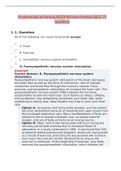
Fundamentals of Nursing NCLEX RN Exam Practice Q&A| 75 Questions 1. 1. Question All of the following can cause tachycardia except: o A. Fever o B. Exercise o C. Sympathetic nervous system stimulation o D. Parasympathetic nervous system stimulation Incorrect Correct Answer: D. Parasympathetic nervous system stimulation Parasympathetic nervous system stimulation of the heart decreases the heart rate as well as the force of contraction, rate of impulse conduction and blood flow through the coronary vessels. Fever, exercise, and sympathetic stimulation all increase the heart rate. The parasympathetic nervous system (PNS) releases the hormone acetylcholine to slow the heart rate. Such factors as stress, caffeine, and excitement may temporarily accelerate your heart rate, while meditating or taking slow, deep breaths may help to slow your heart rate. o Option A: Tachypnea and tachycardia develop, and the patient becomes dehydrated because of sweating and vapor losses from the increased respiratory rate. Many manifestations of fever are related to the increased metabolic rate, increased need for oxygen, and use of body proteins as an energy source. o Option B: Often, ventricular tachycardia will occur during the recovery period post exercise due to increased levels of adrenaline. In a study conducted in 1991, it was found that 70% of patients tested experienced idiopathic ventricular tachycardia as a result of exercise. Exercising for any duration will increase your heart rate and will remain elevated for as long as the exercise is continued. At the beginning of exercise, your body removes the parasympathetic stimulation, which enables the heart rate to gradually increase. As you exercise more strenuously, the sympathetic system “kicks in” to accelerate your heart rate even more. o Option C: Heart rate is controlled by the two branches of the autonomic (involuntary) nervous system. The sympathetic nervous system (SNS) and the parasympathetic nervous system (PNS). The sympathetic nervous system (SNS) releases the hormones (catecholamines – epinephrine and norepinephrine) to accelerate the heart rate. 2. 2. Question Palpating the midclavicular line is the correct technique for assessing: o A. Baseline vital signs o B. Systolic blood pressure o C. Respiratory rate o D. Apical pulse Incorrect Correct Answer: D. Apical pulse The apical pulse (the pulse at the apex of the heart) is located on the midclavicular line at the fourth, fifth, or sixth intercostal space. Assessing whether the rhythm of the pulse is regular or irregular is essential. The pulse could be regular, irregular, or irregularly irregular. Changes in the rate of the pulse, along with changes in respiration is called sinus arrhythmia. In sinus arrhythmia, the pulse rate becomes faster during inspiration and slows down during expiration. Irregularly irregular pattern is more commonly indicative of processes like atrial flutter or atrial fibrillation. o Option A: Baseline vital signs include pulse rate, temperature, respiratory rate, and blood pressure. Vital signs are an objective measurement for the essential physiological functions of a living organism. They have the name “vital” as their measurement and assessment is the critical first step for any clinic evaluation. The first set of clinical examinations is an evaluation of the vital signs of the patient. o Option B: Blood pressure is typically assessed at the antecubital fossa. The arm should be supported at the heart level. Unsupported arm leads to 10 mmHg to the pressure readings. The patient’s blood pressure should get checked in each arm, and in younger patients, it should be tested in an upper and lower extremity to rule out the coarctation of the aorta. o Option C: Respiratory rate is assessed best by observing chest movement with each inspiration and expiration. The respiratory rate is the number of breaths per minute. The normal breathing rate is about 12 to 20 beats per minute in an average adult. In the pediatric age group, it is defined by the particular age group. Parameters important here again include its rate, depth of breathing, and its pattern rate of breathing is a crucial parameter. 3. 3. Question The absence of which pulse may not be a significant finding when a patient is admitted to the hospital? o A. Apical o B. Radial o C. Pedal o D. Femoral Incorrect Correct Answer: C. Pedal Because the pedal pulse cannot be detected in 10% to 20% of the population, its absence is not necessarily a significant finding. However, the presence or absence of the pedal pulse should be documented upon admission so that changes can be identified during the hospital stay. Absent peripheral pulses may be indicative of peripheral vascular disease (PVD). PVD may be caused by atherosclerosis, which can be complicated by an occluding thrombus or embolus. This may be life-threatening and may cause the loss of a limb. o Option A: Apical pulse rate is indicated during some assessments, such as when conducting a cardiovascular assessment and when a client is taking certain cardiac medications (e.g., digoxin). Sometimes the apical pulse is auscultated pre and post medication administration. It is also a best practice to assess apical pulse in infants and children up to five years of age because radial pulses are difficult to palpate and count in this population. o Option B: Examiners frequently evaluate the radial artery during a routine examination of adults, due to the unobtrusive position required to palpate it and it’s easy accessibility in various types of clothing. Like other distal peripheral pulses (such as those in the feet) it also may be quicker to show signs of pathology. Palpation is at the anterior wrist just proximal to the base of the thumb. o Option D: The femoral pulse may be the most sensitive in assessing for septic shock and is routinely checked during resuscitation. It is palpated distally to the inguinal ligament at a point less than halfway from the pubis to the anterior superior iliac spine. 4. 4. Question Which of the following patients is at greatest risk for developing pressure ulcers? o A. An alert, chronic arthritic patient treated with steroids and aspirin. o B. An 88-year old incontinent patient with gastric cancer who is confined to his bed at home. o C. An apathetic 63-year old COPD patient receiving nasal oxygen via cannula. o D. A confused 78-year old patient with congestive heart failure (CHF) who requires assistance to get out of bed. Incorrect Correct Answer: B. An 88-year old incontinent patient with gastric cancer who is confined to his bed at home. Pressure ulcers are most likely to develop in patients with impaired mental status, mobility, activity level, nutrition, circulation and bladder or bowel control. Age is also a factor. Thus, the 88-year old incontinent patient who has impaired nutrition (from gastric cancer) and is confined to bed is at greater risk. Pressure injuries are defined as localized damage to the skin as well as underlying soft tissue, usually occurring over a bony prominence or related to medical devices. They are the result of prolonged or severe pressure with contributions from shear and friction forces. o Option A: Risk factors for developing pressure injuries, in general, include immobility, reduced perfusion, malnutrition, and sensory loss. Other patients at increased risk for pressure injury development include those with cerebrovascular or cardiovascular disease, recent fracture of a lower extremity, diabetes, and incontinence. Older patients are also at increased risk for the formation of pressure injuries due to skin changes associated with aging, including thinning of the dermis and epidermis, resulting in decreased resistance to shear forces. o Option C: The pressure of an individual’s body weight or pressure from a medical device above a certain threshold for a prolonged period is thought to be the cause of pressure injuries. In patients with sensory deficits, an absent pressure feedback response may result in sustained pressure for a prolonged period, leading to tissue injury. Many factors are identified in contributing to pressure ulcer and injury formation, such as increased arteriole pressure, shearing forces, friction, moisture, and nutrition status. o Option D: Pressure injuries of the skin and soft tissues affect an estimated 1 to 3 million people in the United States each year. The incidence differs based on the clinical setting. For example, the prevalence of pressure injuries among hospitalized patients is 5% to 15%, with the percentage considerably higher in some long-term care environments and intensive care units. 5. 5. Question The physician orders the administration of high-humidity oxygen by face mask and placement of the patient in a high Fowler’s position. After assessing Mrs. Paul, the nurse writes the following nursing diagnosis: Impaired gas exchange related to increased secretions. Which of the following nursing interventions has the greatest potential for improving this situation? o A. Encourage the patient to increase her fluid intake to 200 ml every 2 hours. o B. Place a humidifier in the patient’s room. o C. Continue administering oxygen by a high humidity face mask. o D. Perform chest physiotherapy on a regular schedule. Incorrect Correct Answer: A. Encourage the patient to increase her fluid intake to 200 ml every 2 hours Adequate hydration thins and loosens pulmonary secretions and also helps to replace fluids lost from elevated temperature, diaphoresis, dehydration, and dyspnea. Encourage patients to increase fluid intake to 3 liters per day within the limits of cardiac reserve and renal function. Fluids help minimize mucosal drying and maximize ciliary action to move secretions. o Option B: Consider the need for humidifiers in-home care settings. This facilitates the liquefaction of secretions. Teach the patient the proper ways of coughing and breathing. (e.g., take a deep breath, hold for 2 seconds, and cough two or three times in succession). The most convenient way to remove most secretions is coughing. So it is necessary to assist the patient during this activity. Deep breathing, on the other hand, promotes oxygenation before controlled coughing. o Option C: Maintain humidified oxygen as prescribed. Increasing humidity of inspired air will reduce the thickness of secretions and aid their removal. Provide supplemental oxygen if the patient experiences bradycardia, an increase in ventricular ectopy, and/or significant desaturation. Oxygen therapy is recommended to improve oxygen saturation and reduce possible complications. o Option D: Coordinate with a respiratory therapist for chest physiotherapy and nebulizer management as indicated. Chest physiotherapy includes the techniques of postural drainage and chest percussion to mobilize secretions from smaller airways that cannot be eliminated by means of coughing or suctioning. 6. 6. Question The most common deficiency seen in alcoholics is: o A. Thiamine o B. Riboflavin o C. Pyridoxine o D. Pantothenic acid Incorrect Correct Answer: A. Thiamine Chronic alcoholism commonly results in thiamine deficiency and other symptoms of malnutrition. Chronic alcohol consumption can cause thiamine deficiency and thus reduced enzyme activity through several mechanisms, including inadequate dietary intake, malabsorption of thiamine from the gastrointestinal tract, and impaired utilization of thiamine in the cells. o Option B: Riboflavin, vitamin B2, is a water-soluble and heat-stable vitamin that the body uses to metabolize fats, protein, and carbohydrates into glucose for energy. In addition to boosting energy, riboflavin functions as an antioxidant for the proper function of the immune system, healthy skin, and hair. Riboflavin deficiency can result from inadequate dietary intake or by endocrine abnormalities. Riboflavin deficiency also correlates with other vitamin B complexes. o Option C: Vitamin B6 deficiency is usually caused by pyridoxine-inactivating drugs (eg, isoniazid), protein-energy undernutrition, malabsorption, alcoholism, or excessive loss. Deficiency can cause peripheral neuropathy, seborrheic dermatitis, glossitis, and cheilosis, and, in adults, depression, confusion, and seizures. o Option D: Pantothenic acid deficiency is very rare in the United States. Severe deficiency can cause numbness and burning of the hands and feet, headache, extreme tiredness, irritability, restlessness, sleeping problems, stomach pain, heartburn, diarrhea, nausea, vomiting, and loss of appetite. 7. 7. Question Which of the following statements is incorrect about a patient with dysphagia? o A. The patient will find pureed or soft foods, such as custards, easier to swallow than water. o B. Fowler’s or semi Fowler’s position reduces the risk of aspiration during swallowing. o C. The patient should always feed himself. o D. The nurse should perform oral hygiene before assisting with feeding. Incorrect Correct Answer: C. The patient should always feed himself. A patient with dysphagia (difficulty swallowing) requires assistance with feeding. Feeding himself is a long-range expected outcome. Dysphagia is defined as objective impairment or difficulty in swallowing, resulting in an abnormal delay in the transit of a liquid or solid bolus. The delay may be during the oropharyngeal or esophageal phase of swallowing. o Option A: The Academy of Nutrition and Dietetics has created a diet plan for people with dysphagia. The plan is called the National Dysphagia Diet. The dysphagia diet has 4 levels of foods. Level 1 foods are foods that are pureed or smooth, like pudding. They need no chewing. This includes foods such as yogurt, mashed potatoes with gravy to moisten it, smooth soups, and pureed vegetables and meats. o Option B: While eating or drinking, it may help to sit upright, with the back straight. The client may need support pillows to get into the best position. It may also help to have few distractions while eating or drinking. Changing between solid food and liquids may also help the swallowing. Stay upright for at least 30 minutes after eating. This can help reduce the risk for aspiration. o Option D: After meals, it’s important to do proper oral care. The SLP (speech-language pathologist) can give the client instructions for the teeth or dentures. Make sure to not swallow any water during the oral care routine. While on a dysphagia diet, the client may have trouble taking in enough fluid. This can cause dehydration, which can lead to serious health problems. Talk with the healthcare team about how it can be prevented. In some cases drinking thicker liquids may make some of the medicines work less well. Because of this, the client may need some of the medicines changed for a while. 8. 8. Question To assess the kidney function of a patient with an indwelling urinary (Foley) catheter, the nurse measures his hourly urine output. She should notify the physician if the urine output is: o A. Less than 30 ml/hour o B. 64 ml in 2 hours o C. 90 ml in 3 hours o D. 125 ml in 4 hours Incorrect Correct Answer: A. Less than 30 ml/hour A urine output of less than 30ml/hour indicates hypovolemia or oliguria, which is related to kidney function and inadequate fluid intake. Urine output is a noninvasive method to measure fluid balance once intravascular volume has been restored. Normal urine output is defined as 1.5 to 2 mL/kg per hour o Option B: Micturition process entails contraction of the detrusor muscle and relaxation of the internal and external urethral sphincter. The process is slightly different based on age. Children younger than three years old have the micturition process coordinated by the spinal reflex. o Option C: It starts with urine accumulation in the bladder that stretches the detrusor muscle causing activation of stretch receptors. The stretch sensation is carried by the visceral afferent to the sacral region of the spinal cord where it synapses with the interneuron that excites the parasympathetic neurons and inhibits the sympathetic neurons. The visceral afferent impulse concurrently decreases the firing of the somatic efferent that normally keeps the external urethral sphincter closed allowing reflexive urine output. o Option D: Low bladder volume activates the pontine storage center which activates the sympathetic nervous system and inhibits the parasympathetic nervous system cumulatively allowing the accumulation of urine in the bladder. High bladder volume activates the pontine micturition center which activates the parasympathetic nervous system and inhibits the sympathetic nervous system as well as triggers awareness of a full bladder; consequently leading to relaxation of the internal sphincter and a choice to relax the external urethral sphincter once ready to void. 9. 9. Question Certain substances increase the amount of urine produced. These include: o A. Caffeine-containing drinks, such as coffee and cola o B. Beets o C. Urinary analgesics o D. Kaolin with pectin (Kaopectate) Incorrect Correct Answer: A. Caffeine-containing drinks, such as coffee and cola. Fluids containing caffeine have a diuretic effect. Drinking caffeine-containing beverages as part of a normal lifestyle doesn’t cause fluid loss in excess of the volume ingested. While caffeinated drinks may have a mild diuretic effect — meaning that they may cause the need to urinate — they don’t appear to increase the risk of dehydration. o Option B: In some people, eating beets turn urine pink or red—which can be alarming because it looks like blood in the urine. These odor and color changes are harmless. But if urine smells sweet, that’s a cause for concern because it could mean diabetes. o Option C: Pyridium will most likely darken the color of urine to an orange or red color. This is a normal effect and is not cause for alarm unless there are other symptoms such as pale or yellowed skin, fever, stomach pain, nausea, and vomiting. o Option D: Kaopectate is an antidiarrheal medication. This medication is used to treat occasional upset stomach, heartburn, and nausea. It is also used to treat diarrhea and help prevent travelers’ diarrhea. It works by helping to slow the growth of bacteria that might be causing diarrhea. This product should not be used to self-treat diarrhea if there is also fever or blood/mucus in the stools. These could be signs of a serious health condition. 10. 10. Question A male patient who had surgery 2 days ago for head and neck cancer is about to make his first attempt to ambulate outside his room. The nurse notes that he is steady on his feet and that his vision was unaffected by the surgery. Which of the following nursing interventions would be appropriate? o A. Encourage the patient to walk in the hall alone. o B. Discourage the patient from walking in the hall for a few more days. o C. Accompany the patient for his walk. o D. Consult a physical therapist before allowing the patient to ambulate. Incorrect Correct Answer: C. Accompany the patient for his walk. Accompanying him will offer moral support, enabling him to face the rest of the world. Ambulation stimulates circulation which can help stop the development of stroke-causing blood clots. Walking improves blood flow which aids in quicker wound healing. The gastrointestinal, genitourinary, pulmonary and urinary tract functions are all improved by walking. o Option A: A hospitalized surgical patient leaving his room for the first time fears rejection and others staring at him, so he should not walk alone. Refusal to ambulate correlated with those that eventually developed a complication. Those that eventually developed a postoperative complication were more likely to be in the higher refusal group. Thorn et al. suggested that patient compliance may be a marker of underlying complications. If patients are not engaged in their recovery, there may be a physiologic reason for refusal (i.e., a developing abscess). o Option B: Patients should begin ambulation as soon as possible after surgery to decrease complications and to regain strength and confidence. The multiple physiological benefits of patient ambulation have been documented including the prevention of muscular and cardiovascular deconditioning, reducing the risk of pulmonary and thromboembolic events, and stimulating gastrointestinal recovery through prokinetic effects o Option D: Waiting to consult a physical therapist is unnecessary. Daily ambulation requires collaboration between hospital resources, patient education and available personnel. Second, aggressive non-opioid pain medication regimens are critical to maintain a low mLOS. The increasing use of narcotics especially with a PCA prolonged the LOS. Third, refusal of ambulation often predicted the development of a postoperative complication.
Written for
- Institution
- Fundamentals of Nursing NCLEX RN
- Course
- Fundamentals of Nursing NCLEX RN
Document information
- Uploaded on
- June 3, 2022
- Number of pages
- 82
- Written in
- 2021/2022
- Type
- Exam (elaborations)
- Contains
- Questions & answers
Subjects
-
fundamentals of nursing nclex rn exam practice qampa| 75 questions
-
fundamentals of nursing nclex rn exam practice qampa| 75 questions 1 1 question all of the following can cause tachycardia exc

Also available in package deal