Wijsbegeerte van het wetenschappelijk denken :
samenvatting.
Hoc : 1,2,3,4,5,6,7,8,9 en 10. 2020-2021
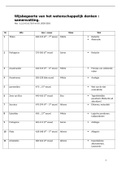
Nr Wie Jaar + eeuw Waar Wat
de de
1 Thales 640-545 (6 – 7 eeuw) Milete Reductie
Abstractie
2 Pythagoras 570-500 (6de eeuw) Samos Reductie
3 Anaximander 610-545 (5de – 6de eeuw) Milete Principe van voldoende
reden
4 Anaximenes 585-528 (6de eeuw) Milete Analogie
5 parmenides 475-… (5de eeuw) Wet van de niet
contradictie
6 Zeno van Elea 490-430 (5de eeuw) Elea Tegenfeitelijke
paradoxen (Reductio ad
absurdum)
7 Socrates 470-399 (4de – 5de eeuw) Athene Dilemma, maieutiek
8 Eubulides 450-… (5de eeuw) Milete Logische paradoxen,
taalparadoxen
9 Protagoras 481-411 (5de eeuw) Samos Antilogie
10 Plato 428-348 (4de – 5de eeuw) Athene Allegorie
11 Aristoteles 384-322 (4de eeuw) Athene Essentialisme,
alternativiteit,
taxonomie
1
,12 Jean – Paul Sartre 1905-1980 parijs
13 Pyrcho 360-270 (3de – 4de eeuw) Ellis Epochè
(oordeelopschorting)
14 Sextus Empiricus 150-230(2de – 3de eeuw) ? Regressus ad infinitum,
trilemma
15 Euklides 325-265 (3de – 4de eeuw) Megara Axiomatiek
16 Augustinus 354-430 Numidië Twijfel, poëzie, mystiek
17 Decartes 1596-1650 Frankrijk Methodische twijfel
18 Johannes Scottus Eriugena 810-877 Ierland (Schotland) Linguïsme
19 Ahmed ibn-Rushd 1126-1198 Cordoba/Marrakesh Leer van de dubbele
(Averroës) weg
20 Thomas van Aquino 1225-1274 Roccasecca Scholatische methode
21 John Duns Scotus 1266-1308 Duns Scheermes
& & &
Willem van Ockham 1288-1347 Surray
22 Thomas More 1478-1533 Londen Utopie
23 Michel de Montaigne 1533-1592 Bordeaux Essayisme, aforisme
24 Francis Bacon 1561-1626 Londen Inductie,
intersubjectiviteit
25 Galileo Galileï 1564-1642 Pisa Correspondentieprincipe
26 Thomas Hobbes 1588-1679 Westport Monisme/dualisme,
& & & mechanisering
René Descartes 1596-1650 La Hayo en Touraine
2
,27 Isaac Newton 1643-1726 Woolsthorpe Universalisering
28 George Berkeley 1685-1753 Ierland Redundantie
29 David Hume 1711-1776 Edinburgh Anomalieën
30 Immanuel Kant 1724-1804 Pruisen Analystisch/synthetisch,
tu quoque
31 G. W. F. Hegel 1770-1831 Duitsland Dialectiek, dialectisch
& & & materialisme
Karl Marx 1818-1883 Duitsland/Engeland
32 Sören Kierkegaard 1813-1855 Denemarken Absurdisme
33 Ernst Mach 1838-1916 Tsjechië/Duitsland Denkeconomie,
relationisme, gedachte-
experiment
34 Friederich Nietzsche 1844-1900 Duitsland Ficties, perspectivisme,
antitraditionalisme,
hameren
35 Edmund Husseri 1859-1938 Prostejov, Oostenrijk- Eidetische reductie
Hongarije (fenomenologie)
36 Martin Heidegger 1889-1976 Duitsland Verworteling
37 Hannah Arendt 1906-1975 Duitsland/USA Banaliteit
3
, 1. Thales = Reductie
= de eerste natuurfilosoof
Reductie = Herleiding van een complexiteit tot eenvoudigere zaken
vb : Wat is een theorie ?
door mensen gedeelde visie
visie = sterk beargumenteerde OPINIE
Opinie = gefundeerde MENING
Mening = persoonlijke OPVATTING
Opvatting = geheel van proposities die een
individu aanneemt en gelooft
De stelling van Thales = Herleiden van de wereld tot de wiskunde.
Opzoek naar de archè (= oorsprong) om de physis te verklaren
Archè blijft steeds aanwezig in de natuur
Herleiden van veelheid naar eenheid
Water is 1 en onveranderlijk ( kleine of grote hoeveelheid water blijft nog steeds water)
= veranderd wel in de loop van de geschiedenis (de archè)
Etymologie is reduceren (= woorden verklaren, analyseren) geschiedenis van een woord)
Biedt inzicht
Mnemotechniek (= methode om dingen te onthouden)
4
samenvatting.
Hoc : 1,2,3,4,5,6,7,8,9 en 10. 2020-2021
Nr Wie Jaar + eeuw Waar Wat
de de
1 Thales 640-545 (6 – 7 eeuw) Milete Reductie
Abstractie
2 Pythagoras 570-500 (6de eeuw) Samos Reductie
3 Anaximander 610-545 (5de – 6de eeuw) Milete Principe van voldoende
reden
4 Anaximenes 585-528 (6de eeuw) Milete Analogie
5 parmenides 475-… (5de eeuw) Wet van de niet
contradictie
6 Zeno van Elea 490-430 (5de eeuw) Elea Tegenfeitelijke
paradoxen (Reductio ad
absurdum)
7 Socrates 470-399 (4de – 5de eeuw) Athene Dilemma, maieutiek
8 Eubulides 450-… (5de eeuw) Milete Logische paradoxen,
taalparadoxen
9 Protagoras 481-411 (5de eeuw) Samos Antilogie
10 Plato 428-348 (4de – 5de eeuw) Athene Allegorie
11 Aristoteles 384-322 (4de eeuw) Athene Essentialisme,
alternativiteit,
taxonomie
1
,12 Jean – Paul Sartre 1905-1980 parijs
13 Pyrcho 360-270 (3de – 4de eeuw) Ellis Epochè
(oordeelopschorting)
14 Sextus Empiricus 150-230(2de – 3de eeuw) ? Regressus ad infinitum,
trilemma
15 Euklides 325-265 (3de – 4de eeuw) Megara Axiomatiek
16 Augustinus 354-430 Numidië Twijfel, poëzie, mystiek
17 Decartes 1596-1650 Frankrijk Methodische twijfel
18 Johannes Scottus Eriugena 810-877 Ierland (Schotland) Linguïsme
19 Ahmed ibn-Rushd 1126-1198 Cordoba/Marrakesh Leer van de dubbele
(Averroës) weg
20 Thomas van Aquino 1225-1274 Roccasecca Scholatische methode
21 John Duns Scotus 1266-1308 Duns Scheermes
& & &
Willem van Ockham 1288-1347 Surray
22 Thomas More 1478-1533 Londen Utopie
23 Michel de Montaigne 1533-1592 Bordeaux Essayisme, aforisme
24 Francis Bacon 1561-1626 Londen Inductie,
intersubjectiviteit
25 Galileo Galileï 1564-1642 Pisa Correspondentieprincipe
26 Thomas Hobbes 1588-1679 Westport Monisme/dualisme,
& & & mechanisering
René Descartes 1596-1650 La Hayo en Touraine
2
,27 Isaac Newton 1643-1726 Woolsthorpe Universalisering
28 George Berkeley 1685-1753 Ierland Redundantie
29 David Hume 1711-1776 Edinburgh Anomalieën
30 Immanuel Kant 1724-1804 Pruisen Analystisch/synthetisch,
tu quoque
31 G. W. F. Hegel 1770-1831 Duitsland Dialectiek, dialectisch
& & & materialisme
Karl Marx 1818-1883 Duitsland/Engeland
32 Sören Kierkegaard 1813-1855 Denemarken Absurdisme
33 Ernst Mach 1838-1916 Tsjechië/Duitsland Denkeconomie,
relationisme, gedachte-
experiment
34 Friederich Nietzsche 1844-1900 Duitsland Ficties, perspectivisme,
antitraditionalisme,
hameren
35 Edmund Husseri 1859-1938 Prostejov, Oostenrijk- Eidetische reductie
Hongarije (fenomenologie)
36 Martin Heidegger 1889-1976 Duitsland Verworteling
37 Hannah Arendt 1906-1975 Duitsland/USA Banaliteit
3
, 1. Thales = Reductie
= de eerste natuurfilosoof
Reductie = Herleiding van een complexiteit tot eenvoudigere zaken
vb : Wat is een theorie ?
door mensen gedeelde visie
visie = sterk beargumenteerde OPINIE
Opinie = gefundeerde MENING
Mening = persoonlijke OPVATTING
Opvatting = geheel van proposities die een
individu aanneemt en gelooft
De stelling van Thales = Herleiden van de wereld tot de wiskunde.
Opzoek naar de archè (= oorsprong) om de physis te verklaren
Archè blijft steeds aanwezig in de natuur
Herleiden van veelheid naar eenheid
Water is 1 en onveranderlijk ( kleine of grote hoeveelheid water blijft nog steeds water)
= veranderd wel in de loop van de geschiedenis (de archè)
Etymologie is reduceren (= woorden verklaren, analyseren) geschiedenis van een woord)
Biedt inzicht
Mnemotechniek (= methode om dingen te onthouden)
4