

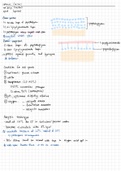
spherical ( coccus )
rod ( bacillus )
shape
spiral ( spirillum)
Gram positive
↳ thicker
↳ no
layer at
lipopolysaccharide
peptidoglycan
layer
] -
peptidoglycan
↳ crystal violet stain
peptidoglycan retains
violet stain
*
crystal
Gram negative
lipopolysaccharide
-
↳ thin layer of peptidoglycan
↳ has
lipopolysaccharide layer -
peptidoglycan
and
→ protect against penicillin lysozyme
* Safran in .
.
Condition for cell
growth
① nutrients :
glucose ,
nitrogen
④ water
③ temperature 125-4500
↳ 37°C mammalian
pathogens
↳ above 90°C ( thermophiles)
④ pH , optimum slightly alkaline
⑤ oxygen : -
obligate aerobe
-
facultative anaerobe
-
obligate anaerobes .
Aseptic technique
-
heat at 121°C for 15° in autoclave/ pressure cooker
-
benches → disinfect with 3% lysol
☒ incubate bacteria at 250C instead of 37°C
↳ pathogenic microorganisms .
Petri dishes should secured in
be with tape so
oxygen could get
-
* work wear Bunsen flame → air no microbes .
rod ( bacillus )
shape
spiral ( spirillum)
Gram positive
↳ thicker
↳ no
layer at
lipopolysaccharide
peptidoglycan
layer
] -
peptidoglycan
↳ crystal violet stain
peptidoglycan retains
violet stain
*
crystal
Gram negative
lipopolysaccharide
-
↳ thin layer of peptidoglycan
↳ has
lipopolysaccharide layer -
peptidoglycan
and
→ protect against penicillin lysozyme
* Safran in .
.
Condition for cell
growth
① nutrients :
glucose ,
nitrogen
④ water
③ temperature 125-4500
↳ 37°C mammalian
pathogens
↳ above 90°C ( thermophiles)
④ pH , optimum slightly alkaline
⑤ oxygen : -
obligate aerobe
-
facultative anaerobe
-
obligate anaerobes .
Aseptic technique
-
heat at 121°C for 15° in autoclave/ pressure cooker
-
benches → disinfect with 3% lysol
☒ incubate bacteria at 250C instead of 37°C
↳ pathogenic microorganisms .
Petri dishes should secured in
be with tape so
oxygen could get
-
* work wear Bunsen flame → air no microbes .


