NSG C489 Task 3.
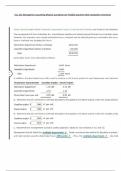
NSG C489 Task 3. Organizational Systems and Quality Leadership Task 3, SAT1-0517/1217 Sara Lopez Western Governors University Healthcare Financing A1. Country to Compare In this paper, I will be comparing the healthcare system of the United States with the healthcare system of Japan. A1. Access Healthcare access for children in the United States Healthcare system derives from the Patient Protection and Affordable Care Act (PPACA). According to Cherry & Jacob, President Obama signed into law the PPACA specifically “designed to expand health insurance coverage to uninsured Americans while controlling costs and improving the quality of health care” (2017). The plan provides coverage for children and dependents up to the age of 26. America also offers insurance coverage under the Medicaid program. Medicaid is a public insurance plan and covers low-income residents and families with dependent children (Cherry & Jacob, 2017). The Children’s Health Insurance Program (CHIP) also works along with the Medicaid program to provide health insurance coverage to infants and children in America. Healthcare access for children in Japan is included in the country’s Statutory Health Insurance System (SHIS). Healthcare in Japan is mandatory and required of all persons. According to the International Commonwealth Fund, copayments for services are paid for and covered by local governments for children’s healthcare (2017). Coinsurance funds for services for children require 20% payment. This includes children up to and around the age of 6 years old and there are no deductibles. Healthcare coverage for unemployed persons in America also come from the PPACA. These persons also have health care coverage options through the Medicaid programs. There is also unemployment insurance offered by the US government. In order to qualify for this insurance an individual has to have been laid off from his/her job due to no fault of their own and also meet certain wage requirements (U.S. Department of Labor, n.d). The Japanese government provide a sort of safety net for individuals who become unemployed. For one, if you lose your job, you do not lose your insurance. Instead, you join Citizens Health Insurance which is a community insurer (International Commonwealth Fund, 2017). With this insurance, individuals are eligible for reduced premium payments and reduced coinsurance rates. The average retirement age in the United States is 65 years old. The U.S provides a health insurance plan for persons 65 years old and over called Medicare. According to Cherry & Jacob, Medicare can best be defined as a health insurance program for “persons 65 years of age and older who qualify for Social Security benefits” (2017). The plan has two parts: part A and part B. In part A, the plan covers hospital stays and skilled nursing facilities if needed. While in part B a premium payment is required but it covers provider services and supplies (Cherry & Jacob, 2017). In Japan, the average of retirees is also 65 years old. Retirees must depend on the National Health Insurance (NHI) system for health insurance. It covers retired persons under the age of 75 and enrollees pay the plans through premiums. There is also health insurance for individuals 75 years and older in which the premiums for the plan are deducted from their pension (Health and Global Policy Institute, n.d). A2A. Coverage of Medications Coverage of medications in Japan are covered by the NHI and Employee Insurance. The insurances are comprehensive and will cover anywhere from 70% to 90% of illness or injury related charges, depending on your age (InterNationsGO! 2018). In the United States, medication coverage is dependent on your healthcare plan. Many enrollees are required to pay the difference of medication costs that the insurance does not cover. This can cause many problems for patients with minimal income and are unable to pay. The PPACA established a benefits package that included many components including prescription medication coverage and Medicare also has added a prescription medication benefit (Cherry & Jacob, 2017). A2B. Referral to See a Specialist According to PBS Frontline, there is no required referral or mandatory “gate keeper” necessary to see a specialist in Japan. Enrollees can go and see any specialist they want, and no appointments are ever necessary (PBS Frontline, 2008). In the U. S, insurance plans such as the Health Maintenance Organization (HMO) plan requires a referral be placed by a primary provider and approved before a patient can be seen by any specialist (Cherry & Jacob, 2017). A2C. Coverage for Preexisting Conditions In Japan, insurance coverage is mandatory. Health Insurance companies are forbidden from denying any Japanese citizen health insurance due to their medical problems. Although public health insurance is the most popular choice in Japan, private health insurance can benefit those with multiple comorbidities. According to InterNations GO!, private insurance is a good means for patients with multiple medical problems to use to cover the 30% of health expenses that public health insurance doesn’t cover (2018). In addition, Americans receive the same privilege. According to the U.S. Department of Health & Human Services, the Affordable Care Act prohibits health insurance companies from refusing coverage based on a patients pre-existing conditions (2017). A3. Finance Implications for Healthcare Delivery One financial implication of healthcare in Japan is the price of private insurance. Private insurance in Japan remains very expensive. The price of private insurance is 35-40,000 JPY per month which equals to 330-770 USD (InterNations GO! 2018). A financial implication in the U.S is the growing number of Americans struggling to pay their medical bills and medical debt. According to Collins, the percentage of Americans with problems paying their medical bills has increased from 34% to 41% since the year 2005 (Collins, 2008). References Cherry, B & Jacob, S. (2017). Contemporary nursing: Issues, trends, and management (7th ed.) [Vitalsource learning resource]. Available from .0 Collins, S. R. (2008, October 1). Testimony--Rising Health Care Costs: Implications for the Health and Financial Security of U.S. Families. Retrieved from Health and Global Policy Institute. (n.d). Japan Health Policy Now - Health Insurance System. Retrieved from International Commonwealth Fund. (2017). International Profiles of Health Care Systems. Retrieved from InterNations GO! (2018). Healthcare in Japan: What Does the Public Healthcare Cover? Retrieved from PBS Frontline. (2008). Sick Around the World [Video file]. Retrieved from U.S. Department of Health & Human Services. (2017). HHS.gov – Pre-existing conditions. Retrieved from U.S Department of Labor. (n.d). Unemployment Insurance. Retrieved from
Written for
- Institution
- NSG C489
- Course
- NSG C489
Document information
- Uploaded on
- May 17, 2022
- Number of pages
- 7
- Written in
- 2022/2023
- Type
- Exam (elaborations)
- Contains
- Questions & answers
Subjects
-
nsg c489 task 3
-
nsg c489 task 3 organizational systems and quality leadership task 3
-
sat1 05171217 sara lopez western governors university healthcare financing a1 country to