MDC II Exam 2 Study Guide
Module 3 and 4: Fluids and Electrolytes: Chapter 11
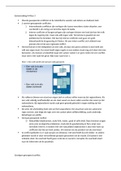
Osmosis: Movement of water only through a selectively permeable membrane
Physiological Action
Hypotonic/Isotonic/Hypertonic Fluids: Clinical Applications
Isotonic: When osmolarity of all body fluid spaces is close to 300 mOsm/L (e.g. 0.9% NaCl, Lactated Ringer’s)
- Used to ↑ extracellular fluid volume due to blood loss, surgery, dehydration, fluid loss that has been extracellular
Hypertonic: > 300 mOsm/L, greater osmotic pressure (e.g. 5% Dextrose in Lactated Ringer’s, 10% Dextrose in water-
D10W)
- Causes cell shrinking, usually given in ICU through central line due to vesicant status (causes blisters if
infiltration occurs), cerebral edema
Hypotonic: < 270 mOsm/L, lower osmotic pressure (e.g. 0.45 % NS)
- Causes cell swelling, used when the cell is dehydrated and fluids need to be put back in intracellularly such as in
diabetic ketoacidosis (DKA) or hyperosmolar hyperglycemia
Fluid Imbalances
Factors that affect fluid balance: Age (regulated thirst drive changes, older adults at increased risk),
gender, amount of fat (fat cells contain almost no water), dietary intake (kidney excretion and absorption),
CKD, endocrine disorders, certain drugs that alter fluid and electrolyte balance
Fluid Overload/Hypervolemia: excessive intake or inadequate excretion of fluids, can lead to HF and PE,
dilution of Na+ and K+ can lead to seizures, coma, and death
Assessment Findings:
o Pitting edema (Anasarca)
o ↑ HR (bounding), BP, RR
o Distended neck (jugular vein)/hand veins
o Weight gain
, o SOB
o Moist crackles on auscultation
o Pale/cool skin
o Altered LOC, H/A, visual disturbances
o Decreased lab values (hypokalemia, hypocalcemia, hyponatremia, hypomagnesemia)
Interventions:
o Patient safety- 1st priority-assess patient every 2 hours to recognize pulmonary edema
o Assess for skin breakdown (skin care)
o Assess Na+ and K+ values (supplemental O2 and semi-fowlers for SOB)
o Drug therapy to remove excess fluids: loop diuretics (e.g. furosemide (Lasix)), fluid restriction
o Nutrition therapy (monitor I & O, daily weight, restrict Na because water will follow, check labels)
Dehydration (total body water loss)/Hypovolemia (ECF fluid loss): insufficient fluid intake to meet body’s
demands, decreased perfusion low blood O2, (dehydration: too little intake, too much loss, diarrhea,
vomiting, excess sweating, blood loss/hemorrhage, kidney disease, inadequate intake) diuretics, DKA,
severe
dehydration can cause hypovolemia
Assessment Findings:
o Weight loss (1L = 2.2 lbs or 1 lb = about 500 mL)
o ↑ HR to help maintain BP with less blood volume
o Weak peripheral pulses (thready pulse)
o Orthostatic hypotension (perfusion to the brain ↓ causing light-headedness/dizziness = ↑ risk
for falling)
o Flattened neck/hand veins
o ↑ RR due to ↓ blood volume which reduces perfusion and gas exchange (compensatory
mechanism that attempts to maintain O2 delivery when perfusion is decreased)
o ↓ turgor, dry/warm skin and mucous membranes
o Changes in cognition (common in older adults, may be 1st sign of fluid imbalance)
o Low-grade fever (every degree above normal temp, minimum of 500 mL of body fluid is lost)
o ↓ Urine volume and ↑ concentration (1.030 specific gravity, dark amber, strong odor)
o Urine output < 500 mL/day for a patient without kidney disease is cause for concern
o Dehydration: increased lab values/electrolytes, CBC, CMP, serum osmolarity, Hgb, Hct, BUN, protein
o CBC, CMP, and serum osmolarity elevation not present with blood loss, only water
loss (hemoconcentration)
Interventions:
o Fluid replacement
Mild: moderate can be done orally if swallowing intact and alert
Severe: IVFs
The 2 most important areas to monitor during rehydration: pulse rate/quality and urine output
o Drug therapy
Antidiarrheals
Antiemetics
Antipyretics
o Safety
Instruct the patient to get up slowly from lying to sitting position; immediately sit down if
he/she feels light-headed
Educate patient to ask for assistance to ambulate
Educate to prevent reoccurrence
Module 3 and 4: Fluids and Electrolytes: Chapter 11
Osmosis: Movement of water only through a selectively permeable membrane
Physiological Action
Hypotonic/Isotonic/Hypertonic Fluids: Clinical Applications
Isotonic: When osmolarity of all body fluid spaces is close to 300 mOsm/L (e.g. 0.9% NaCl, Lactated Ringer’s)
- Used to ↑ extracellular fluid volume due to blood loss, surgery, dehydration, fluid loss that has been extracellular
Hypertonic: > 300 mOsm/L, greater osmotic pressure (e.g. 5% Dextrose in Lactated Ringer’s, 10% Dextrose in water-
D10W)
- Causes cell shrinking, usually given in ICU through central line due to vesicant status (causes blisters if
infiltration occurs), cerebral edema
Hypotonic: < 270 mOsm/L, lower osmotic pressure (e.g. 0.45 % NS)
- Causes cell swelling, used when the cell is dehydrated and fluids need to be put back in intracellularly such as in
diabetic ketoacidosis (DKA) or hyperosmolar hyperglycemia
Fluid Imbalances
Factors that affect fluid balance: Age (regulated thirst drive changes, older adults at increased risk),
gender, amount of fat (fat cells contain almost no water), dietary intake (kidney excretion and absorption),
CKD, endocrine disorders, certain drugs that alter fluid and electrolyte balance
Fluid Overload/Hypervolemia: excessive intake or inadequate excretion of fluids, can lead to HF and PE,
dilution of Na+ and K+ can lead to seizures, coma, and death
Assessment Findings:
o Pitting edema (Anasarca)
o ↑ HR (bounding), BP, RR
o Distended neck (jugular vein)/hand veins
o Weight gain
, o SOB
o Moist crackles on auscultation
o Pale/cool skin
o Altered LOC, H/A, visual disturbances
o Decreased lab values (hypokalemia, hypocalcemia, hyponatremia, hypomagnesemia)
Interventions:
o Patient safety- 1st priority-assess patient every 2 hours to recognize pulmonary edema
o Assess for skin breakdown (skin care)
o Assess Na+ and K+ values (supplemental O2 and semi-fowlers for SOB)
o Drug therapy to remove excess fluids: loop diuretics (e.g. furosemide (Lasix)), fluid restriction
o Nutrition therapy (monitor I & O, daily weight, restrict Na because water will follow, check labels)
Dehydration (total body water loss)/Hypovolemia (ECF fluid loss): insufficient fluid intake to meet body’s
demands, decreased perfusion low blood O2, (dehydration: too little intake, too much loss, diarrhea,
vomiting, excess sweating, blood loss/hemorrhage, kidney disease, inadequate intake) diuretics, DKA,
severe
dehydration can cause hypovolemia
Assessment Findings:
o Weight loss (1L = 2.2 lbs or 1 lb = about 500 mL)
o ↑ HR to help maintain BP with less blood volume
o Weak peripheral pulses (thready pulse)
o Orthostatic hypotension (perfusion to the brain ↓ causing light-headedness/dizziness = ↑ risk
for falling)
o Flattened neck/hand veins
o ↑ RR due to ↓ blood volume which reduces perfusion and gas exchange (compensatory
mechanism that attempts to maintain O2 delivery when perfusion is decreased)
o ↓ turgor, dry/warm skin and mucous membranes
o Changes in cognition (common in older adults, may be 1st sign of fluid imbalance)
o Low-grade fever (every degree above normal temp, minimum of 500 mL of body fluid is lost)
o ↓ Urine volume and ↑ concentration (1.030 specific gravity, dark amber, strong odor)
o Urine output < 500 mL/day for a patient without kidney disease is cause for concern
o Dehydration: increased lab values/electrolytes, CBC, CMP, serum osmolarity, Hgb, Hct, BUN, protein
o CBC, CMP, and serum osmolarity elevation not present with blood loss, only water
loss (hemoconcentration)
Interventions:
o Fluid replacement
Mild: moderate can be done orally if swallowing intact and alert
Severe: IVFs
The 2 most important areas to monitor during rehydration: pulse rate/quality and urine output
o Drug therapy
Antidiarrheals
Antiemetics
Antipyretics
o Safety
Instruct the patient to get up slowly from lying to sitting position; immediately sit down if
he/she feels light-headed
Educate patient to ask for assistance to ambulate
Educate to prevent reoccurrence